|
Newsletter #433 - May 19, 2026 |
|
|
|
|
 |
The Water Operator Continuing Education Fund |
|
The Water Operator Continuing Education Fund supports non-traditional education programs, including trade schools, certification programs, and community college coursework for water operators. Applications are accepted on a monthly basis throughout the year.
-
Sections can apply on behalf of a water operator.
-
Sections can match the award requested up to $1,000.
-
Applicants do not have to be a member of AWWA.
-
Applicants who receive an award from the fund are given a free, one year student membership.
All applications are reviewed by a committee of water sector professionals. Awards are made
on a rolling basis throughout the year. Award amount varies by program and course.
For questions about specific program eligibility, contact Margo Hatton, CFRE – Senior Manager Development and Donor Relations mhatton@awwa.org.
The Water Operator Continuing Education Fund does not fund scholarships for undergraduate, graduate, or PhD programs. To apply for academic scholarships, visit the Water Equation Scholarships webpage. Water Equation offers 23 merit-based science, technology, engineering, and match academic scholarships for higher degrees. |
|
|
|
|
 |
Tap Talk |
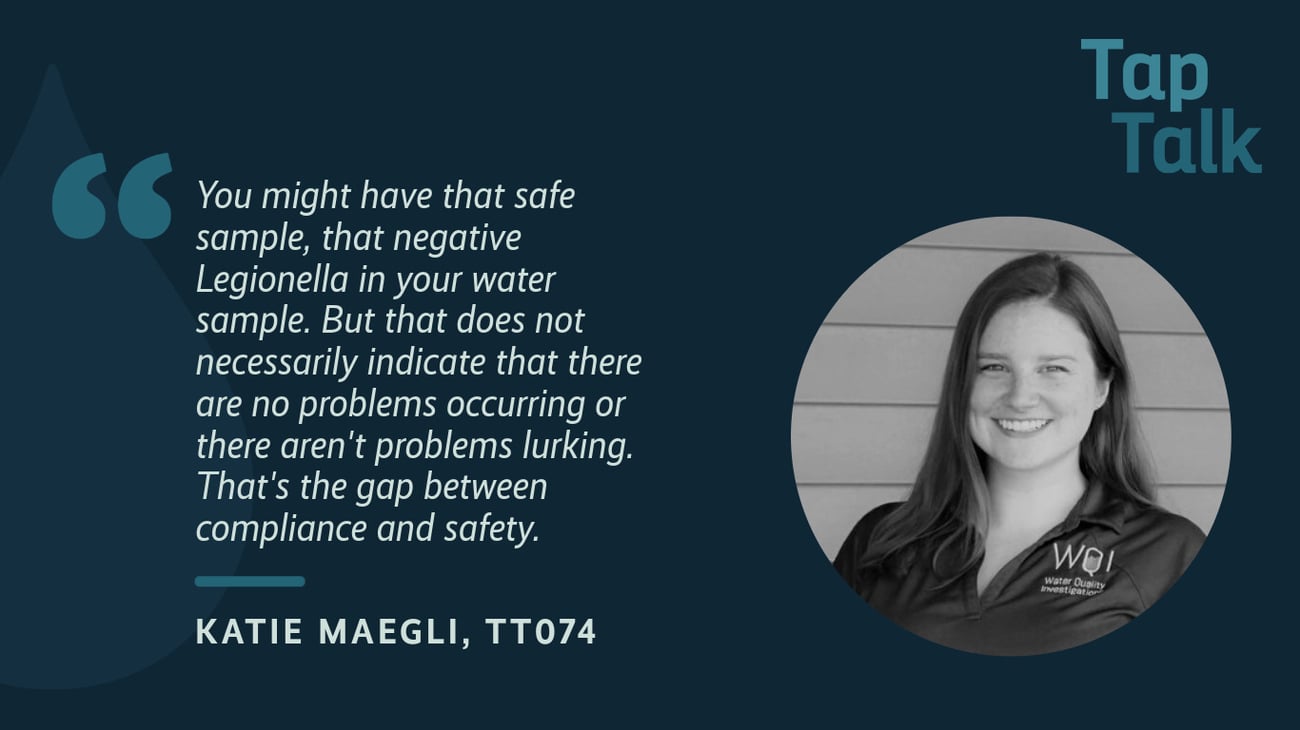
Mitigating Legionella Risks in Water Systems: Lessons from a Microbiologist
In this episode, we welcome Katie Maegli of Water Quality Investigations to Tap Talk! WQI is a private water testing lab in southern Wisconsin, where Katie serves as the lab’s microbiologist with specializations in buildings’ water systems and Legionella management. This conversation dives deep into Legionella; from where the bacteria is commonly found, the regulatory guidelines that help reduce Legionella risk, the actions individuals can take to avoid Legionella growth in their wells, health impacts from Pontiac fever and Legionnaires’ disease, and the complexities of accurate testing of Legionella.
|
|
|
|
|
|
|
New CISA Initiative for Infrastructure Resilience |
|
The Cybersecurity and Infrastructure Security Agency (CISA) has launched a new nationwide initiative called CI Fortify to strengthen the resilience of critical infrastructure systems, including water and wastewater utilities. Developed with federal and international partners, the initiative aims to help operators maintain essential services during severe cyber incidents such as attacks that disrupt communications, compromise control systems, or affect third-party connections. It provides centralized resources, guidance, and planning tools to help organizations prepare for high-impact cyber scenarios.
CI Fortify is especially relevant for rural water utilities, which often rely on interconnected IT and operational technology systems and external service providers. The initiative emphasizes the importance of being able to continue operations even in a disconnected or degraded state. It also aligns with established cybersecurity best practices, such as incident response planning, limiting control system exposure, and securing supply chains.
|
|
|
|
|
Featured Video |
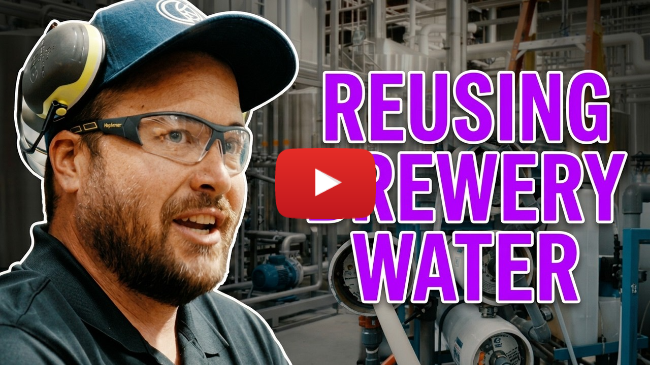 |
How This Brewery Reuses Millions of Gallons of Water
waterloop
"Inside this brewery, water isn’t just used—it’s captured, treated, and put back to work. At Stone Brewing in Escondido, California, water efficiency, conservation, and reuse are built into the operation. The facility runs an on-site treatment and reclamation system—recovering close to 70% of its wastewater and putting it back to work across the brewery. That reclaimed water is used for cleaning, mechanical systems, and day-to-day operations—reducing how much needs to be pulled from the local supply. And this isn’t small-scale. Stone has repurposed tens of millions of gallons of water in a single year at this facility alone. Behind the scenes, the system looks more like advanced water infrastructure than a brewery: wastewater is treated through biological processes and membrane filtration, with microorganisms removing about 99% of the organic load before reuse or discharge. Even the byproducts don’t go to waste. Solids from the brewing process are recovered and reused, often as agricultural feed, while high-strength waste streams can help generate energy at local treatment facilities. In drought-prone Southern California, that kind of approach matters. Every gallon reused here is water that doesn’t have to come from the community in the first place."
|
|
|
|
|
 |
ACE is a month away! Are you registered? |
|
Don't forget to register for the American Water Works Association's (AWWA's) Annual Conference and Exposition (ACE)! ACE 2026 will take place from June 21-24, 2026 at the Walter E. Washington Convention Center in Washington, D.C.
ACE is one of the largest gatherings of water community professionals worldwide. It features four days of educational programs, an exhibit hall, annual competitions, networking events, and much more. Attendees will discover the latest strategies, technologies, and tools to address prominent challenges water systems face everywhere.
For more information and to register, make hotel room reservations, and request travel support, visit the ACE 2026 Registration Page.
For general registration questions, contact AWWA (Mon-Fri 8 AM - 5 PM MST):
|
|
|
|
|
|
|
|
How Water Sector Utilities are Building Resilience to Natural Hazards: Utilities Recount their Engagement with EPA SWIFT Technical Assistance
May 20, 2026 | 1:00 PM ET
U.S. Environmental Protection Agency
In this free webinar, learn how water sector utilities are benefitting from SWIFT technical assistance. Hear directly from utility representatives across the country that have engaged in the process to build system resilience to various natural hazards. SWIFT technical assistance is tailored to meet the needs of each utility request, from improving the understanding of natural hazard impacts to their system to quantifying the potential reductions in risk that specific projects can deliver. |
|
|
|
Microorganisms and PFAS Remediation: Practical Insights for Small Water and Wastewater Systems
May 21, 2026 | 2:00 PM ET
Environmental Finance Center Network
This free seminar is part of EFCN's Water Research series and will discuss per- and polyfluoroalkyl substances (PFAS), known as “forever chemicals." This presentation explores how aquatic microorganisms, particularly biofilms growing on submerged plants such as Vallisneria americana, respond to PFAS exposure. Participants will gain practical knowledge on microbial processes, monitoring considerations, and how biological approaches may support PFAS management in small systems.
|
|
|
|
Addressing Power Outages in RRAs and ERP
May 27, 2026 | 2:00 PM ET
U.S. Environmental Protection Agency
RRAs and ERPs must address risks from natural hazards and malevolent acts. Power outages are common across many hazards. Maintaining power is critical for continued water service. This free webinar will share practical ways CWSs can address loss of power in their RRA and ERP.
The Safe Drinking Water Act (SDWA) section 1433, which was revised by America's Water Infrastructure Act (AWIA) section 2013, requires community water systems (CWS) serving over 3,300 people to prepare (or revise) and certify risk and resilience assessments (RRAs) and emergency response plans (ERPs) to the U.S. EPA every five years.
Recertification deadlines are coming up in June 2026 for CWSs serving 3,301 – 99,999 people.
CEUs: 1 hour
Accepted in: AK, AZ, CA, FL, ID, IL, IA, KS, KY, LA, ME, MA, MI, MN, MO, MT, NE, NV, NJ, NM, NY, NC, ND, OK, SC, SD, TN, TX, VT, VA, WI, and WY. |
|
|
|
|
|
|
|
|
|
|
Recent Blog Posts at WaterOperator.org |
|
|
 |
|
Essential Safety Resources for Wastewater Operators
Read Here » |
|
|
 |
|
Preparing for LCRI Compliance: Key Insights from NRWA
Read Here » |
|
 |
|
Community Engagement Resources for Wastewater Utilities
Read Here » |
|
|
|
|
|
Groundwater & Well Care for Public Water Systems is a free online course from WaterOperator.org. Certificates are provided and the course is currently pre-approved for 2 hours continuing education credit in a number of states.
Click here to learn more. |
|
|
|
|
|
|
|
|
|
WaterOperator.org is a free service, grant-funded to support small community water and wastewater operators with comprehensive resources and information in one easy-to-use place. We also serve the 800+ training, primacy, and technical service organizations, by helping operators get to their information. We aren't selling or advertising anything. Call us at 1-866-522-2681 for assistance. |
|
|
|
|
|
Visit our other websites: |
|
|
|
|
|
|
|
Click here to unsubscribe | Sent to: _t.e.s.t_@example.com
Illinois State Water Survey, 2204 Griffith Drive, Champaign, IL 61820, United States |
|
|
|
|


