|
Newsletter #438 - July 21, 2026 |
|
|
|
|
 |
RCAP's FY 2025 Impact Report is out! |
|
A new report from the Rural Community Assistance Partnership (RCAP) demonstrates the critical role technical assistance plays in helping small and rural utilities access funding, strengthen operations, and deliver reliable water and wastewater services.
In fiscal year 2025, RCAP and its regional partners served 2,622 rural, tribal, and indigenous communities, reaching more than 4.1 million residents across all 50 states and five U.S. territories. Through hands-on assistance, RCAP helped communities secure over $397 million in infrastructure funding awards and submit applications for an additional $835.6 million in projects.
The report highlights a variety of support services that benefited utilities, including asset mapping, rate studies, funding application assistance, operator training, compliance support, and long-term infrastructure planning. RCAP also delivered 567 trainings nationwide, reaching more than 11,500 participants and helping utility staff and operators build the skills needed to manage increasingly complex systems.
In addition, RCAP recently developed several free resources for small systems, including guides on innovative treatment technologies, stormwater program management , asset management, and a course on cybersecurity for water and wastewater utilities.
This report shows that successful infrastructure projects depend on more than funding alone. Communities that have access to technical expertise and capacity-building support are better positioned to secure financing, address operational challenges, and maintain reliable service over the long term.
Need assistance?
Small and rural communities can connect with RCAP's network of regional partners for technical assistance related to drinking water, wastewater, stormwater, funding applications, asset management, operator support, utility planning, and more.
Learn more and find your regional RCAP partner on RCAP's website.
|
|
|
|
|
|
|
 |
Register for our upcoming webinar! |
|
Communication Strategies for Wastewater Compliance and Building Public Trust
July 30, 2026 | 10:00 AM CDT
WaterOperator.org
This free webinar provides a practical overview of communication strategies wastewater utilities can use to support compliance and build public trust. Participants will explore common communication challenges faced by utilities and learn about publicly available resources for improving public communication, notification, and engagement. The session also includes a demonstration of our free search tools at WaterOperator.org to find additional free resources and training events.
This webinar series from WaterOperator.org covers topics relevant to wastewater operators, including funding, asset management, compliance, and water quality.
Certificates of attendance will be delivered upon request. Check with your certification body for acceptance criteria. |
| Register Now |
|
|
|
|
Featured Video |
 |
He Left Football for Water—Now He's Tackling The Workforce Crisis
waterloop
"Charles Moore thought his future would be on a football field, not in the water industry. But a simple piece of advice from his mother changed the course of his life: "Go work in the water industry. We'll always need water." Today, Moore is focused on one of the biggest challenges facing utilities across the country: who will lead the workforce of tomorrow.
With many experienced operators, supervisors, and executives approaching retirement, Columbus is taking action before the knowledge gap becomes a crisis. The utility has launched apprenticeship programs, partnered with local high schools, expanded mentoring opportunities, and created pathways for employees to explore leadership roles and advance their careers.
Internally, shadowing, one-on-one coaching, and additional training are helping employees see opportunities they may not have considered. Externally, outreach efforts are introducing young people to the wide range of careers available in water—from field operations to leadership positions.
Moore believes workforce development isn't just about filling vacancies. It's about inspiring the next generation to see water as a meaningful career with purpose, stability, and impact.
His message is simple: talk to someone about water. The future of the industry may depend on it." |
|
|
|
|
 |
EPA, States, and Water Sector Partners Focus on Accelerating Infrastructure Funding
|
|
The U.S. Environmental Protection Agency (EPA) recently convened a first-of-its-kind roundtable with states, water utilities, technical assistance providers, and small communities to identify ways to accelerate drinking water, wastewater, and stormwater infrastructure investments. The discussion focused on challenges that can delay project implementation and explored practical solutions to help communities access funding more efficiently.
The roundtable centered on improving delivery of funding through programs such as the Drinking Water and Clean Water State Revolving Funds (SRFs), the Water Infrastructure Finance and Innovation Act (WIFIA) program, and the Emerging Contaminants in Small and Disadvantaged Communities grant program. Since their creation, the SRF programs alone have provided more than $265 billion to support approximately 76,000 water infrastructure projects nationwide.
Several actions emerged from the meeting, including EPA's commitment to develop an online resource toolbox for funding recipients and lenders, and to establish collaborative workgroups with states, water sector organizations, and technical assistance providers. These efforts are intended to reduce barriers, share best practices, and help communities move projects from planning to construction more quickly.
The conversation also highlighted the unique challenges facing small and rural systems. According to the National Rural Water Association, more than 92% of community water systems serve fewer than 10,000 people, yet these communities often face disproportionately high infrastructure needs and limited financial capacity. Participants emphasized that improving access to affordable financing and technical assistance will be critical to ensuring federal investments reach the communities that need them most.
For utility leaders and water professionals, the roundtable highlights ongoing efforts to make federal water infrastructure funding more accessible and efficient. The planned resources and partnerships could help communities better navigate funding programs, reduce project delays, and move critical infrastructure improvements forward. |
|
|
|
|
 |
Tap Talk |
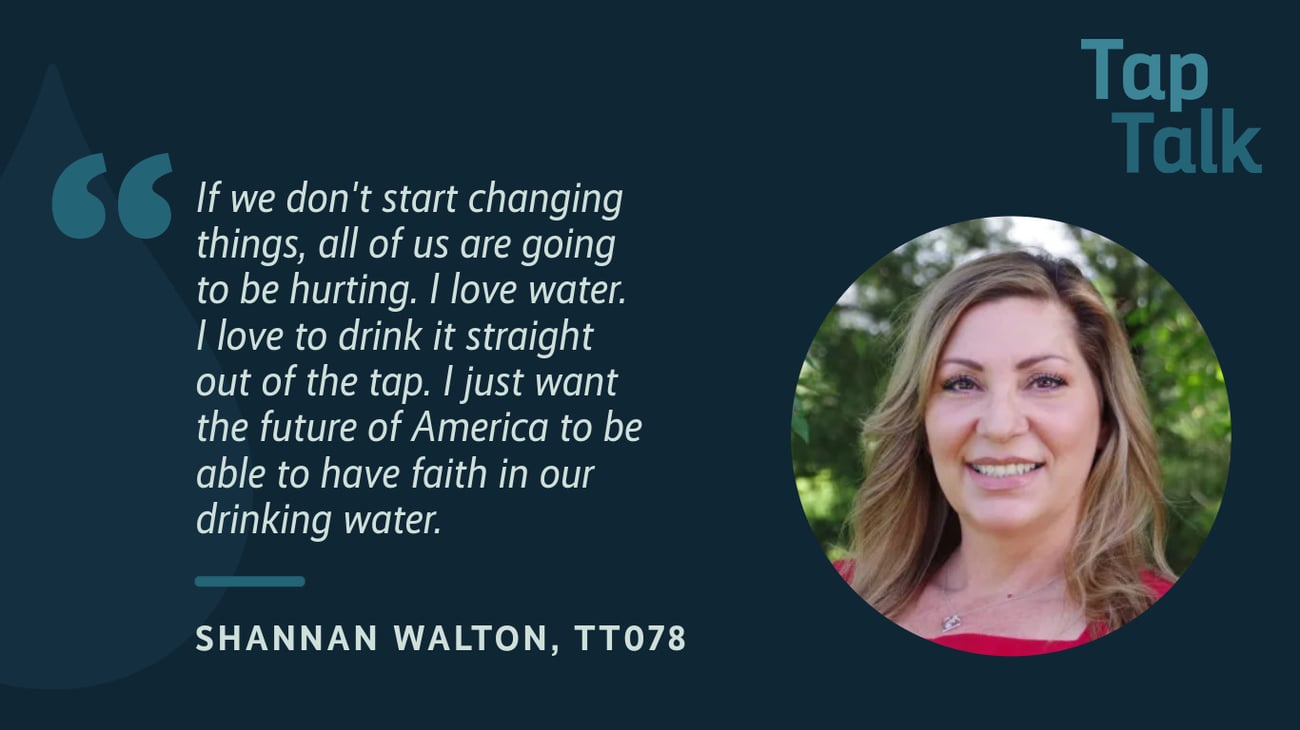
Building the Future Workforce with Rural Water Apprentices
Next up on Tap Talk, we are welcoming Shannan Walton, the National Rural Water Association‘s Director of Workforce Development, to the show. At NRWA, Shannan has been integral in running the organization’s successful NRWA Apprenticeship Program for training new operators across the country. Listen to her conversation with Steve and Jennifer to learn all about the history, development, and the future of this program, as well as Shannan’s thoughts on what else we can do to bring young people into the water industry.
|
|
|
|
|
|
|
Featured Video |
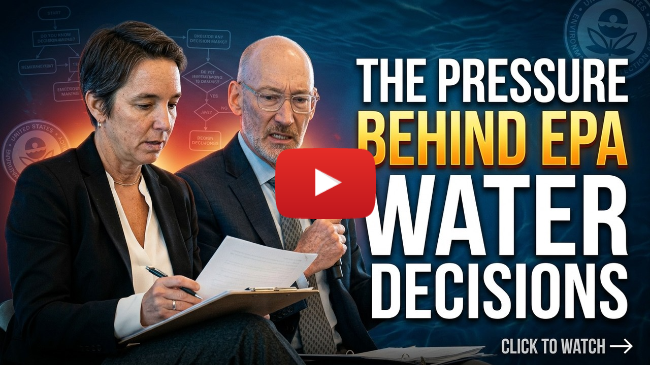 |
The Pressure Behind Every EPA Water Decision
waterloop
"Water regulations often appear as final rules, permit decisions, or funding announcements. What the public rarely sees is the years of negotiation, technical analysis, legal review, and leadership required to get there.
Former EPA Office of Water leaders Anna Wildeman and Bruno Pigott offered a rare behind-the-scenes look at how one of the federal government's most influential water offices actually operates—from managing large teams of career staff to navigating pressure from courts, Congress, states, the White House, utilities, and environmental groups. Their discussion revealed the complexity of turning scientific understanding and policy goals into practical regulations that communities can implement."
Topics covered in this video include:
-
Leading EPA's Office of Water
-
Managing Teams and Building Trust
-
Why Water Regulations Take So Long
-
Navigating Politics, Science, and Policy
-
State Innovation and Federal Oversight
-
The Growing Momentum Behind Water Reuse
-
Infrastructure, Affordability, and Future Demand
-
Leadership Lessons from EPA
-
The Future of U.S. Water Policy and Water Security
|
|
|
|
|
|
|
|
Water Efficiency: Infiltration and Inflow (I/I)
July 23, 2026 | 2:00 PM ET
Environmental Finance Center Network
Water efficiency is a critical priority for utilities seeking to optimize their wastewater collection systems and reduce unnecessary operational costs. A major obstacle to achieving this efficiency is Infiltration and Inflow (I/I) — the entry of unwanted non-domestic water into wastewater collection systems through cracked pipes, faulty connections, and stormwater inputs. Left unaddressed, I/I significantly increases the volume of water requiring treatment, strains system capacity, and drives up operational costs for utilities.
This free webinar will examine the causes and consequences of I/I and provide attendees with practical, actionable strategies for detecting and reducing I/I in their systems. By addressing I/I, utilities can improve system performance, extend the life of their infrastructure, conserve resources, and build more sustainable and cost-effective wastewater operations for the communities they serve. |
|
|
|
Water Sector Cybersecurity Vulnerability Snapshot Quarterly Webinar
July 29, 2026 | 2:00 PM ET
U.S. Environmental Protection Agency
Join EPA and the Cybersecurity and Infrastructure Security Agency (CISA) for a free overview of cybersecurity vulnerabilities identified at water systems through EPA’s Proactive Vulnerability Identification Program and CISA’s vulnerability scanning services. Water systems will receive recommended mitigations and resources to help reduce these vulnerabilities and strengthen resilience. |
|
|
|
Changes and Simplifications to Preliminary Engineering Report Requirements for USDA Water and Waste Projects
July 30, 2026 | 11:00 AM CT
U.S. Department of Agriculture
An important piece of an application for infrastructure funding from USDA's Rural Utilities Service (RUS) Water and Waste Disposal Program is the preliminary engineering report (PER). RUS Bulletin 1780-2, Preliminary Engineering Reports for the Water and Waste Disposal Program, was recently updated to simplify the process and provide more options to engineers writing PERs.
This free presentation will explain the new options, demonstrating how the updates make applying for funding easier. |
|
|
|
Cybersecurity 102 Training
August 5, 2026 | 1:00 PM ET
U.S. Environmental Protection Agency
This free training builds on EPA’s Cybersecurity 101 Training for Water Systems and provides deeper insight into cybersecurity for those with basic knowledge, with an emphasis on operational technology (OT). Whether you are an information technology (IT) professional or simply interested in protecting yourself online, this training offers practical skills for navigating today’s digital threats. *CEU credits available* |
|
|
|
Connecting with Your Community: Bridging the Gap Between Operations and Communication
August 6, 2026 | 1:00 PM ET
Environmental Finance Center Network
This free webinar will cover communications with community members, which can be challenging due to staff and time constraints and lack of resources. However, you can engage with your community about your utility in easy, efficient ways. Existing resources, basic understanding of communication techniques, and a little planning can strengthen your communication strategies. This session will build on the basis that an informed community will support the efforts of the utility to continue to provide the necessary service of clean, safe drinking water. |
|
|
|
|
|
|
|
|
|
|
Recent Blog Posts at WaterOperator.org |
|
|
 |
|
Lagoon Wastewater Systems Practical Tools and Resources for Compliance
Read Here » |
|
|
 |
|
Energy Optimization and Cost‑Saving Strategies for Wastewater Utilities
Read Here »
|
|
|
|
|
|
Groundwater & Well Care for Public Water Systems is a free online course from WaterOperator.org. Certificates are provided and the course is currently pre-approved for 2 hours continuing education credit in a number of states.
Click here to learn more. |
|
|
|
|
|
|
|
|
|
WaterOperator.org is a free service, grant-funded to support small community water and wastewater operators with comprehensive resources and information in one easy-to-use place. We also serve the 800+ training, primacy, and technical service organizations, by helping operators get to their information. We aren't selling or advertising anything. Call us at 1-866-522-2681 for assistance. |
|
|
|
|
|
Visit our other websites: |
|
|
|
|
|
|
|
Click here to unsubscribe | Sent to: _t.e.s.t_@example.com
Illinois State Water Survey, 2204 Griffith Drive, Champaign, IL 61820, United States |
|
|
|
|
|
|