Newsletter #108 for December 2024
|
|
|
|
|
One Year of DecentralizedWastewater.org's
From the Trenches Newsletter
|
|
On December 16, our sister program DecentralizedWastewater.org will release its final newsletter of 2024 and twelfth total — officially marking one year of From the Trenches newsletters for decentralized and septic professionals. We are striving to continue to grow the presence and reach of From the Trenches, so today we would like to ask you to consider a few questions:
Are you an environmental health professional who works with both private wells and septic systems? If yes, then From the Trenches is perfectly suited for you, in addition to this newsletter!
Do you have colleagues and friends in the decentralized and septic industry who would be interested in receiving From the Trenches? If yes, then send them the links below to check out!
Do you or anyone you know just like to follow news and information in any sector of the water and wastewater industries? If yes, then subscribing to From the Trenches is an excellent opportunity to keep up on what is happening with decentralized and septic systems.
If the answer to any of these questions is yes, here are some handy links to check out and share:
Or, to make things even easier, you can simply forward this newsletter itself on to your contacts.
Any inquiries about DecentralizedWastewater.org or From the Trenches can be directed to info@decentralizedwastewater.org. Thank you!
|
|
|
|
|
Tap Talk Season 5 Debuts in January
|
|
|
|
Start the countdown! Season 5 of our podcast, Tap Talk: Drinking Water in Rural America, is officially returning in the new year. The first episode of Season 5, TT049, is scheduled to debut on January 2. The episode will feature Terry Morse, CEO of the National Ground Water Association,
discussing NGWA's Groundwater Foundation and Water Well Wish program.
TT049 will release on Tap Talk's website, in addition to audio platforms like Spotify, Apple Podcasts, iHeartRadio, and more. Subscribe to Tap Talk wherever you get your podcasts!
|
|
|
From the Help Center |
|
|
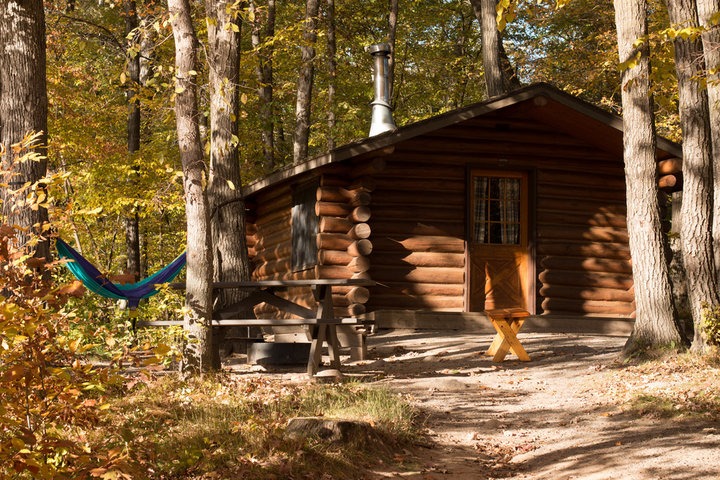
How do I care for a seasonal water well?
Learn about the basics of operating a water well that is not used year-round, whether it's a summer cabin in Minnesota or a winter home in Florida!
Read this article to find the steps for both closing and reopening a well for the season. For more articles and resources for private well owners, explore our Private Well Help Center.
|
|
|
|
|
Upcoming Webinars & Recent Recordings
|
|
|
Is My Water Safe to
Drink?
Common Questions about Private Wells
December 19, 2024 | 1 PM CT
Hosted by PrivateWellClass.org
In this free webinar training hosted by The Private Well Class, you’ll learn how to get your well water tested, what to do to take care of your well, and if your well is susceptible to contamination. There will be an opportunity to submit questions in advance as well as live on the webinar. The event will be recorded.
Register »
We'd love your support in distributing this information, please feel free to share this link.
|
|
|
Well Care 101 -
What You Need to Know to Protect Your Family
Recorded on November 21, 2024
This webinar recording details how to determine if your water is safe for drinking, simple best practices for well maintenance, and solutions to the most common well problems.
Watch Recording »
|
|
|
Groundwater and Well Construction 101
Recorded on October 30, 2024
This webinar recording discusses how water moves through the ground to your well and how well construction can increase contamination vulnerability.
Watch Recording »
|
|
|
|
|
Wells in the News |
We all know the necessity of properly sealing off both in-use and out-of-use wells, for the sake of water quality and physical safety. Unfortunately, there are still hundreds of thousands of wells that are not properly capped or filled that pose a risk to humans and animals. Not every instance of getting trapped in a well is as dire as Baby Jessica's, but it's never an enjoyable experience. Read about these two recent trapped well incidents, and be sure to encourage everyone you know to safety-proof their wells!
|
|
|
Father and son hear neighbor's shouts, find him trapped In 30-foot-deep well
HuffPost
In this case, a Maryland man was trapped at the bottom of a 30-foot well overnight, and would have remained trapped, had neighbors not heard his cries for help while retrieving their dogs from the yard. There were no signs of the well on the property until the ground gave way to a two-and-a-half-foot-wide hole.
Read here.
|
|
|
‘It was a perilous situation:’ Central Illinois fire department rescues two kids trapped in a well
WCIA
In this case, which was very close to home for us at the Illinois State Water Survey, a teenager and a toddler were trapped together in 15 feet of water in another 30-foot deep well. Luckily, local firefighters were able to rescue the children within five minutes of arriving on the scene.
Read here.
|
|
|
|
|
Partner Events & Workshops
|
|
|
On-Lot Septic System Questions
and Answers
December 10 | 12:00 pm CT | Online
Hosted by Penn State Extension
This webinar is designed for septic system owners, land developers, and anyone interested in exploring the critical connections between on-lot septic systems, water quality, and public health. Engage directly with experts as they address your questions and provide valuable insights to enhance your understanding and management of on-lot septic systems.
Register here.
|
|
|
Proactive Preparedness: Recovery
is Easier if you are Prepared!
December 12 | 4:30 pm CT | Online
Hosted by the Midwest Assistance Program
In this webinar, participants will explore how best practices are
part of a greater strategy to assist private well owners
with emergency preparedness. Furthermore, the session will
explore how using best practices and additional directly
targeted processes to prepare for future disasters and
emergencies will greatly lessen the impact and decrease
the time to full recovery for private well owners.
Register here.
|
|
|
Texas Well Owner Network Water
Screenings and Results Meetings: Wilson Counties
December 17 & 18 | 8:30 am - 6:30 pm CT | Floresville, TX
Hosted by the Texas Well Owner Network
The Texas Well Owner Network (TWON) is hosting an upcoming event in Wilson County on December 17-18 to allow residents to have their well water screened. Water samples will be screened for contaminants, including total coliform bacteria, E. coli, nitrate-nitrogen and salinity. Water samples should be dropped off on December 17 and a follow-up meeting to explain results will be held the next day.
More information here.
|
|
|
Impacts of Deicing Salt on Water
Quality
December 18 | 11 am ET | Online
Hosted by University of Maryland Extension
The negative impacts of deicing salts on the environment, road infrastructure, cars, and home appliances, and drinking water quality can be significant. An overview of these impacts with emphasis on drinking water, and recommendations will be presented at this webinar.
Register here.
|
|
|
Septic Maintenance, Connecting to
Sewer, & Wells:
Silver Springs Shores
January 8 | 10 am ET | Ocala, FL
Hosted by University of Florida IFAS Extension
In this class, Silver Springs Shores residents will learn about septic systems, wells, and septic-to-sewer as they pertain to the community. Representatives from UF/IFAS Extension, Marion County, and the Florida Department of Health in Marion County will be available to answer questions.
Register here.
|
|
|
|
|
Featured Podcast:
The CDC's Listen Up!
|
|
|
AI for Good: Maximizing AI in Health Communication
"Artificial intelligence technology and generative AI have the potential to revolutionize health communication practice—providing an onslaught of solutions, in seconds, and with just a stroke of a key. While organizations are implementing policies to support the best use of these technologies in the workplace, the onramp to engagement with AI can feel steep. What applications hold the most promise for health communicators? What are the risks and pitfalls? What digital fluency is needed to meet the moment?"
Listen here.
|
|
|
|
|
Wellcare® Information
for You About
Winterizing and De-winterizing Your Well
Water Systems Council
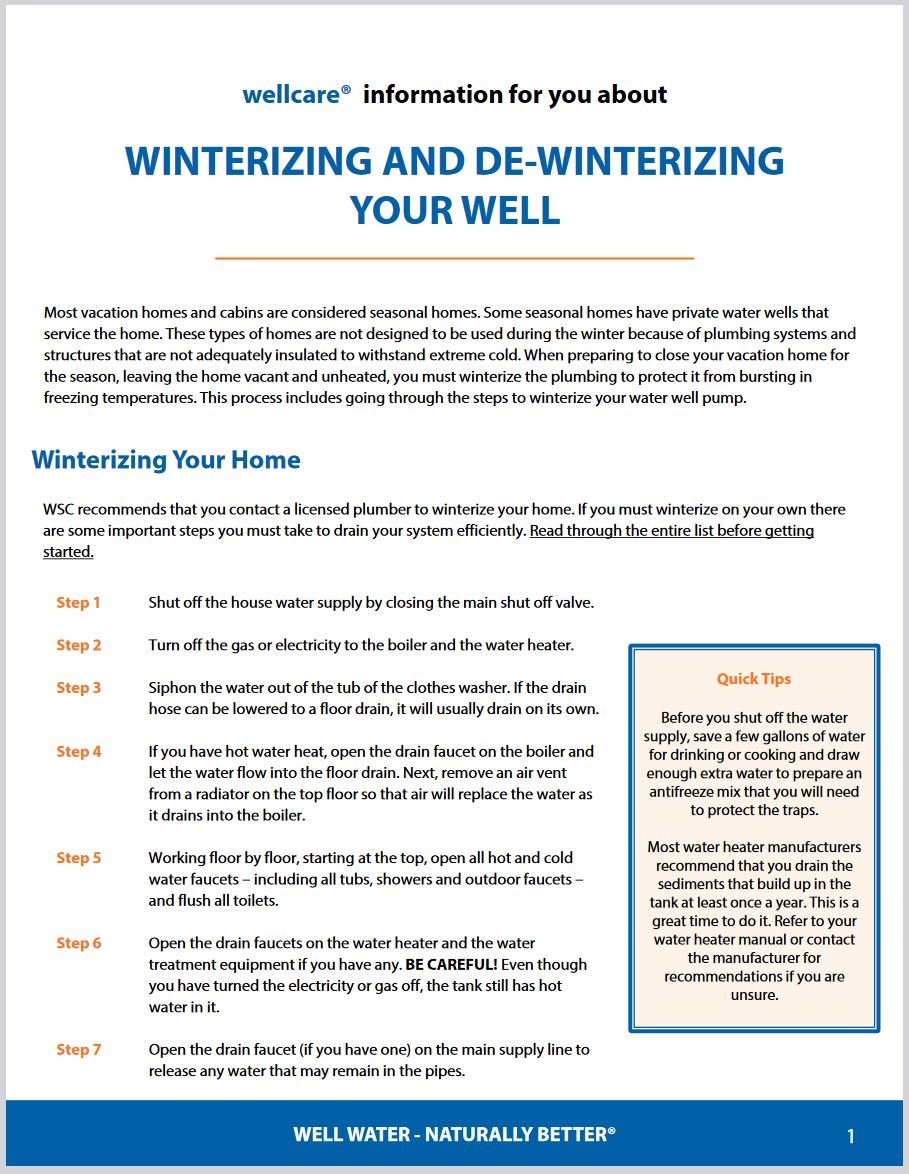
This document, from the Water Systems Council, explains how to winterize and de-winterize your well at vacation homes, cabins, and other seasonal properties where the well is not designed to be used in winter temperatures. Winterizing the plumbing prevents it from bursting during a freeze.
View the document.
|
|
|
|
|
Featured Video:
Water Well Freeze Preparations
|
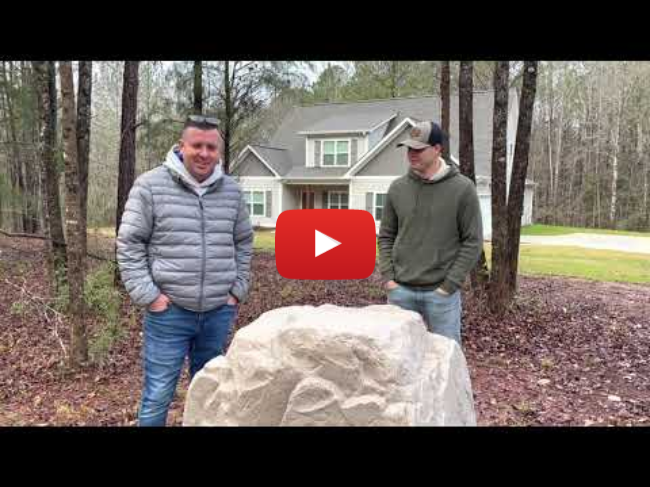 |
This video, brought to you by Middle Georgia Water Systems, offers simple information and guidelines to assist private well owners in preventing their well systems from freezing — particularly those in the southern United States, where residents are often unused to freezing cold temperatures and well systems are not often built to withstand this weather. As weather patterns continue to change, preparations are necessary wherever you are!
Watch the video.
|
|
|
|
|
|
|
PrivateWellClass.org is a free, grant-funded service to support private well owners and the professionals that work with these wells. The program seeks to raise awareness of private well issues and help well owners understand their responsibilities to be a good steward of their well and water source. The Private Well Class, developed at the Illinois State Water Survey at the University of Illinois Urbana-Champaign, is a collaboration with the Rural Community Assistance Partnership with funding from the U. S. Environmental Protection Agency. Call us at 1-866-945-0699 for assistance.
|
|
|
|
|
Visit our other websites:
|
|
|
|
|
|
|
Click here to unsubscribe | Sent to: _t.e.s.t_@example.com
Illinois State Water Survey, 2204 Griffith Drive, Champaign, IL 61820, United States
|
|
|