|
Newsletter #440 - August 18, 2026 |
|
|
|
|
 |
Water Watch Center Launched to Strengthen Cybersecurity for Rural Utilities |
|
In response to growing cyber threats targeting U.S. water infrastructure, the National Rural Water Association (NRWA) and DEF CON Franklin have launched the Water Watch Center (WWC), a new initiative designed to help small water and wastewater utilities defend against cyberattacks. The announcement was made at the DEF CON cybersecurity conference in Las Vegas on August 7.
The Water Watch Center will provide direct cybersecurity support to utilities serving fewer than 10,000 people, which represent approximately 91% of the nation's community water systems. The program aims to strengthen cyber defenses, improve threat detection, and help utilities respond to security incidents before they impact operations and public health.
Five cybersecurity firms have joined the effort, including Defendify, Legato Security, L1 Secure, Rapid7, and Sentinel Technologies. These partners will collaborate by sharing threat intelligence, security updates, and best practices through a centralized network coordinated by NRWA.
The initiative builds on a two-year project led by DEF CON Franklin that connected nearly 450 volunteer cybersecurity professionals with water and wastewater systems in several states. Lessons learned from those efforts highlighted the need for a scalable cybersecurity support model tailored to small and rural utilities.
In addition to the Water Watch Center, NRWA continues to provide cybersecurity resources, training, advisories, and technical assistance through its National Rural Water Cybersecurity Center. The association is also advocating for a federal Cybersecurity Circuit Rider Program to bring on-the-ground cybersecurity expertise directly to rural utilities.
As cyberattacks against critical infrastructure become more frequent and sophisticated, the Water Watch Center offers rural water systems access to specialized expertise and coordinated support to help protect essential water and wastewater services.
Further Reading...
|
|
|
|
|
|
|
 |
Register for our free webinar! |
|
GIS Resources for POTW Asset Management
September 1, 2026 | 10:00 AM - 11:30 AM CDT
WaterOperator.org
This free webinar reviews publicly available GIS resources and tools that support asset management for publicly owned treatment works (POTWs), with a focus on mapping infrastructure assets. The session also includes a demonstration of our free search tools at WaterOperator.org to find additional free resources and training events.
This webinar series from WaterOperator.org covers topics relevant to wastewater operators, including funding, asset management, compliance, and water quality.
Certificates of attendance will be delivered upon request. Check with your certification body for acceptance criteria. |
| Register Today |
|
|
|
|
Featured Video |
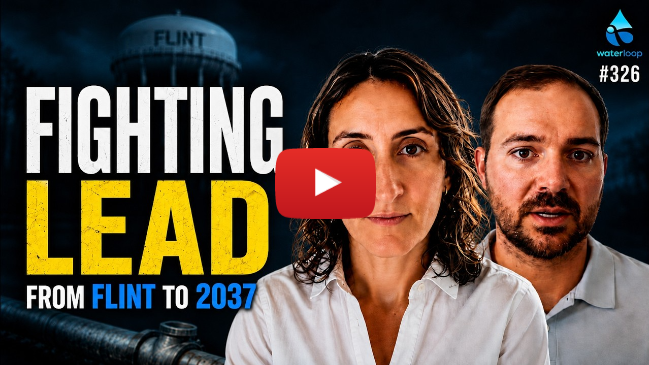 |
Can the U.S. Win The Fight Against Lead Pipes by 2037?
waterloop
"A dozen years after the Flint water crisis galvanized national action on lead pipes, the United States has moved from scattered voluntary replacement efforts to a federal mandate to remove nearly all lead service lines by 2037.
Roya Alkafaji of the Environmental Defense Fund and Mason Hines of RESOLVE are members of the Lead Service Line Replacement Collaborative, a coalition of 28 national organizations formed in 2016 to accelerate replacement and share lessons from communities doing the work.
The landscape has changed dramatically since then: federal rules required utilities to inventory their service lines, the Bipartisan Infrastructure Law dedicated $15 billion specifically to lead service line replacement, and the Lead and Copper Rule Improvements established the 2037 replacement deadline for most communities.
The number of publicly tracked replacement programs has also grown from 33 in 2017 to at least 270 today, while at least 20 communities have completed their programs.
The Collaborative recently recognized 16 programs and individuals for work ranging from community engagement and funding innovation to technical efficiency, including efforts in Milwaukee, Denver, Newark, Memphis, Greeley, St. Paul, Washington, D.C., and other communities.
Those examples matter because replacing the estimated four million lead service lines still in the ground will require different approaches in communities with vastly different resources, housing patterns, political environments, and infrastructure.
Alkafaji says reaching the 2037 deadline will depend heavily on three things: sustained community engagement, full replacements at no direct cost to property owners, and a local workforce large and skilled enough to do the work.
Hines points to another challenge looming as programs advance—the difficult final stretch of finding and replacing lines connected to absentee landlords, properties with uncertain records, and other hard-to-reach locations.
After a decade of building funding, regulations, inventories, and replacement programs, the next phase is increasingly about execution: applying what successful communities have learned while finding ways to reach the last lead pipes that are likely to be the hardest to remove." |
|
|
|
|
AWWA Scholarship Applications Open Through November 6, 2026 |
|
The Water Equation Scholarships program supports students and operators at the beginning of their work in water. Scholarships are available through AWWA, corporate partners, and the Water Operator Continuing Education Fund.
The Water Operator Continuing Education Fund supports non-traditional education programs, including trade schools, certification programs, and community college coursework for water operators.
-
Applications are accepted on a monthly basis throughout the year.
-
All applications are reviewed by a committee of water sector professionals.
-
Awards are made on a rolling basis throughout the year.
-
Award amount varies by program and course.
-
To finalize your application, you will need to enter the code WOE.
The Water Operator Continuing Education Fund does not fund scholarships for undergraduate, graduate, or PhD programs. To apply for academic scholarships, visit the Water Equation Scholarships webpage. Water Equation offers 23 merit-based science, technology, engineering, and match academic scholarships for higher degrees.
For questions about specific program eligibility, contact Margo Hatton (mhatton@awwa.org), CFRE – Senior Manager Development and Donor Relations.
Learn about more continuing education opportunities and section specific scholarships available through your local AWWA section.
|
| Learn More |
|
|
|
|
 |
Tap Talk |
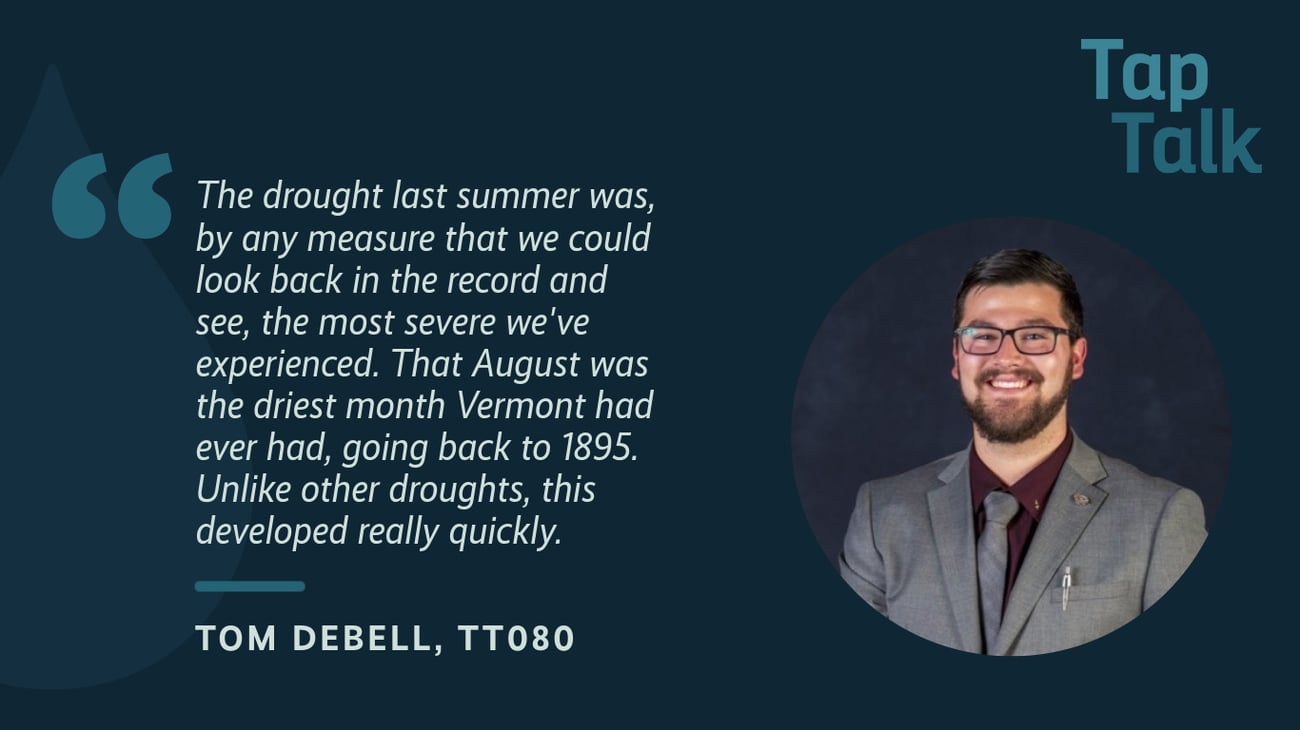
What We Can Learn from Vermont’s Flash Drought
For the 80th episode of Tap Talk, we are pleased to talk with Tom DeBell, an environmental health engineer at the Vermont Department of Health. Tom tells Steve and Jennifer about the intense flash drought that Vermont (and other northeastern states) experienced in the summer of 2025, particularly how the drought impacted private well users in the state. They also discuss the steps that the health department took to help well owners maintain their wells and educate the public on obtaining adequate water supplies during the water crisis.
|
|
|
|
|
|
|
Featured Video |
 |
Utah's Water Systems Targeted: Inside the Cyberattack
"A cyberattack targeting Utah's water systems has raised urgent questions about the security of the state's critical infrastructure. Why was Utah among the states targeted, and what do these attacks actually look like? Maria Shilaos speaks with Brandon Amacher, Director of the Emerging Tech Policy Lab at Utah Valley University, for an inside look at the growing cybersecurity threats facing essential public services."
Further Reading: Report: Utah among 12 states whose water infrastructure was targeted by Iran | KSL News |
|
|
|
|
|
|
|
8 Basics of Sanitary Surveys
August 25, 2026 | 1:00 PM ET
Rural Community Assistance Partnership
Operators and governing bodies of drinking water systems are held to a high standard to provide their customers with safe drinking water. One of the regular inspections Drinking Water Systems undergo is a Sanitary Survey. Sanitary Surveys provide an opportunity for the primacy agency to visit the water system, educate the operator(s) about requirements, and provide TA.
This free webinar is designed to review the EPA's 8 areas of a sanitary survey. Each element will have tips on how to prepare these areas before your Sanitary Survey and routine maintenance, keeping their water systems healthy, safe, and sustainable. Keeping a routine and being mindful of all the elements of a sanitary survey will benefit water system operators and purveyors in protecting public health. |
|
|
|
Targeted Cyber Mitigations for Rapid Response
August 25, 2026 | 11:00 AM MT
American Water Works Association
This free webinar will be focused on risk management actions utilities can implement to immediately lower risk exposure to targeted attacks impacting water systems. Experienced practitioners will address how to identify if the system is exposed, provide plain English steps to remove devices from the internet and provide secure access, manage default passwords on devices, and implement multifactor authentication. This session is being provided to share practical, low-cost solutions that can be implemented directly to mitigate known vulnerabilities that have impacted water systems of all types and sizes.
|
|
|
|
Water Cybersecurity Assessment Tool Training
August 26, 2026 | 1:00 PM ET
U.S. Environmental Protection Agency
In this free webinar, EPA will demonstrate how to use the Water Cybersecurity Assessment Tool (WCAT) to conduct cybersecurity assessments at water and wastewater systems.
Credits: 1.5 CEU credits
Accepted in: Alabama, Alaska, Arizona, Arkansas, California, Colorado, Connecticut, Delaware, Florida, Hawaii, Idaho, Illinois, Indiana, Iowa, Kansas, Kentucky, Louisiana, Maine, Massachusetts, Michigan, Minnesota, Mississippi, Missouri, Montana, Nebraska, New Hampshire, New Jersey, New Mexico, New York, North Carolina, North Dakota, Oklahoma, Oregon, Pennsylvania, Rhode Island, South Carolina, South Dakota, Tennessee, Texas, Utah, Virginia, Washington, West Virginia, Wisconsin, Wyoming |
|
|
|
Cybersecurity Procurement Checklist Tool Training
August 27, 2026 | 1:00 PM ET
U.S. Environmental Protection Agency
In this free webinar, EPA will demonstrate how to use the Cybersecurity Procurement Evaluation Checklist for Drinking Water and Wastewater Systems to assess and compare cybersecurity vendors.
Credits: 1.5 CEU credits
Accepted in: Alabama, Alaska, Arizona, Arkansas, California, Colorado, Connecticut, Delaware, Florida, Idaho, Illinois, Indiana, Iowa, Kansas, Kentucky, Louisiana, Maine, Massachusetts, Michigan, Minnesota, Mississippi, Missouri, Montana, Nebraska, New Hampshire, New Jersey, New Mexico, New York, North Carolina, North Dakota, Oklahoma, Oregon, Pennsylvania, Rhode Island, South Carolina, South Dakota, Tennessee, Texas, Utah, Vermont, Virginia, Washington, West Virginia, Wisconsin, Wyoming |
|
|
|
Asset Management for Sustainable Wastewater Systems
August 27, 2026 | 1:00 PM PT
Environmental Finance Center Network
In this free asset management workshop, you will learn about how asset management can benefit your system.
Not sure where to begin? EFCN will provide you with the tools you need to get started and will walk you through the process. With limited revenues, aging infrastructure, and regulatory obligations to meet, a comprehensive approach to managing your system is vital. You may have problems related to unknown meter, valve, or hydrant locations. You may not be sure of which asset(s) to replace given limited funds. Asset Management can help you solve these problems, and more. |
|
|
|
|
|
|
|
|
|
|
Recent Blog Posts at WaterOperator.org |
|
|
 |
|
Lagoon Wastewater Systems Practical Tools and Resources for Compliance
Read Here » |
|
|
 |
|
Energy Optimization and Cost‑Saving Strategies for Wastewater Utilities
Read Here »
|
|
|
|
|
|
Groundwater & Well Care for Public Water Systems is a free online course from WaterOperator.org. Certificates are provided and the course is currently pre-approved for 2 hours continuing education credit in a number of states.
Click here to learn more. |
|
|
|
|
|
|
|
|
|
WaterOperator.org is a free service, grant-funded to support small community water and wastewater operators with comprehensive resources and information in one easy-to-use place. We also serve the 800+ training, primacy, and technical service organizations, by helping operators get to their information. We aren't selling or advertising anything. Call us at 1-866-522-2681 for assistance. |
|
|
|
|
|
Visit our other websites: |
|
|
|
|
|
|
|
Click here to unsubscribe | Sent to: _t.e.s.t_@example.com
Illinois State Water Survey, 2204 Griffith Drive, Champaign, IL 61820, United States |
|
|
|
|
|
|