|
Newsletter #126 for March 2026 |
|
|
|
|
|
|
|
|
|
EPA has launched the Real Water Technical Assistance (RealWaterTA) initiative, a technical assistance program designed to support water and wastewater utilities using best-practice strategies that will most effectively address local needs while partnering with states and tribes. The program builds upon the Water Technical Assistance (WaterTA) program, which was launched in 2023, shifting to a 'back-to-basics' focus on eight key priorities:
- Support returning to and maintaining compliance
- Focus on traditional and innovative water infrastructure
- Define the scope of technical assistance
- Strengthen technical, managerial, and financial management
- Empower the water workforce
- Improve financial readiness and access to financial assistance
- Reduce inefficient costs
- Drive real-world results
This new initiative ensures taxpayer dollars directly impact public health protection and water quality improvements, especially in rural and small communities where systems face significant challenges. RealWaterTA is open to drinking water, wastewater, and stormwater utilities, as well as local governments and tribes, with non-profit organizations and public and private non-profit universities and colleges serving as TA providers.
Utilities can request no-cost, direct assistance by completing an online form and submitting a request through the EPA’s RealWaterTA webpage. After submission, EPA or its partners will follow up with utilities to identify their needs and connect them with support.
Please contact RealWaterTA@epa.gov if you have any questions regarding your organization's eligibility.
|
|
|
|
|
Current, a Chicago‑based nonprofit water innovation hub, has secured up to $45 million in new funding from the U.S. National Science Foundation to scale Great Lakes RENEW, a regional innovation engine focused on advancing a circular water economy across the Great Lakes region. The funding will support expanded research, piloting, and commercialization of water technologies; development of career pathways into the water economy; and deployment of new solutions that recover critical minerals and remove harmful contaminants from wastewater. Through partnerships with utilities, universities, national laboratories, and industry partners, Great Lakes RENEW will fund applied R&D projects, pilot real‑world technologies, and accelerate solutions that reduce treatment costs, improve regulatory compliance, and enhance system resilience. |
|
|
|
|
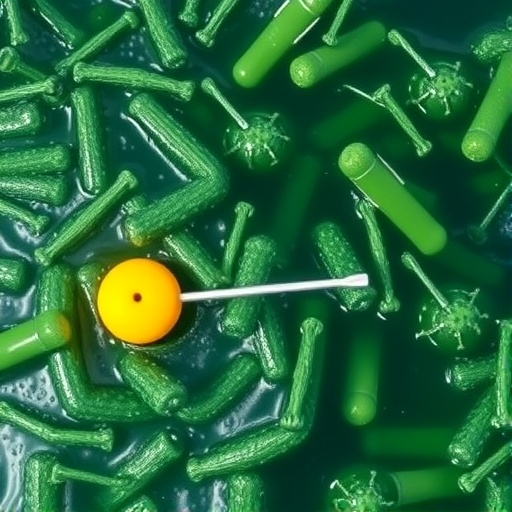
Researchers at the University of Toledo, Ohio have innovated a novel, self-sustaining buoy system designed to provide sustained, low‑maintenance control of harmful algal blooms caused by cyanobacteria outbreaks in aquatic environments. The system utilizes buoy‑mounted devices that slowly release a hydrogen peroxide–based algaecide through hydrogel diffusers, allowing targeted treatment over weeks or months without the need for frequent reapplication.
Small-sized units loaded with the hydrogen peroxide solution were tested in controlled settings using cyanobacteria-spiked water samples from Lake Erie. Field and laboratory tests showed the system eliminated nearly all cyanobacteria while leaving other aquatic microbes largely unaffected. Researchers estimate that their buoys maintain effective algaecide release through at least four distinct release cycles, each spanning approximately 35 days.
For water and wastewater utilities, this innovative system could offer a practical solution for managing algal blooms in source waters, reservoirs, lagoons, and effluent‑impacted receiving waters, potentially reducing taste‑and‑odor issues, cyanobacteria risks, and treatment costs. |
 |
|
Source |
|
|
|
|
|
|
EPA is seeking public input on its Clean Water Act Financial Capability Assessment (FCA) Guidance, which is a non-regulatory tool that helps wastewater utilities and regulators evaluate a community’s ability to afford needed infrastructure investments in collection systems, pump stations, and treatment systems, while keeping customer bills manageable. EPA is inviting utilities and other stakeholders to provide real‑world input and data to ensure the guide better reflect ratepayers’ current ability to support infrastructure upgrades, including potential impacts on rural and small communities.
EPA is accepting comments through May 26, 2026, through Regulations.gov under Docket ID EPA‑HQ‑OW‑2026‑1090. EPA also plans to hold two virtual meetings to discuss the guidance before the public comment period closes.
|
|
|
|
|
The Water Research Foundation has announced four new funding opportunities for utility and water industry professionals. Two Requests for Proposals, with one on “Alternative Approaches to Water Shutoffs for Non-Payment of Bills” (RFP 5360), and another on “Evaluating Scalability, Reproducibility & Impact of GenAI & Agentic AI in the Water and Wastewater Sector” (RFP 5394). These RFPs are currently open for submission, and are due by May 20, 2026.
In addition, WRF is seeking qualified partners for two projects, one on "Expanding the Future of Water Reuse: Incentive Alignment and Governance Strategies in Geographic Regions with Stable Water Supplies” (RFQ 5390), and another on “Collaborative Water and Wastewater Utility Forum on Data Centers” (RFQ 5391) to share their experience, capabilities, and expertise on project topics. Proposals for these RFQs are due April 15, 2026. |
|
Upcoming Events
A listing of webinars, symposia, and conferences relevant to this work. |
|
|
|
|
|
|
Making Sense of Microplastics
April 14, 2026 / Virtual 12:30 - 13:30 Central Time Zone
eurofins
This free webinar introduces microplastics as an emerging environmental and public health concern and highlights how evolving analytical methods and regulatory frameworks may impact environmental professionals. |
|
|
|
A New Key to Tank Longevity
May 14, 2026 / Virtual 11:00 - 12:00 Mountain Time Zone
Water Environment Federation
This free webinar will highlight polysiloxane coating technology as a next‑generation solution for potable water storage, focusing on its long‑term cost, operational, and maintenance benefits for water utilities. |
|
|
|
|
|
|
|
|
|
|
Drinking Water | Open Access
Applying machine learning and AI for nanofiltration membranes water applications: a review
Abuhabib, A., Albahnasavi, A., Isawi, H., Ng, L. Y., Mohammad, A. W., & Hamzah, S. (2026). Applying machine learning and AI for nanofiltration membranes water applications: a review. Water Science & Technology, 93(6), 817–848. https://doi.org/10.2166/wst.2026.234.
Why it's interesting: This review explores how machine learning (ML) and artificial intelligence (AI) are increasingly being used to support nanofiltration (NF) membrane operation, performance prediction, fouling monitoring, and membrane design in water treatment, wastewater reuse, and desalination applications. Through the analysis of more than 100 NF related ML studies published over the past decade, the authors show that data driven models, such as artificial neural networks (ANNs), random forest, gradient boosting, and deep learning models (LSTM, CNN), can more accurately predict operational factors such as permeate flux, solute rejection, salt selectivity, and flux decline due to fouling. The paper highlights practical uses for water utilities, including early fouling detection, improved cleaning schedule planning, and performance forecasting under changing pressure, pH, temperature, and water chemistry. The review also positions ML as an effective decision‑support tool that can help improve the operation of NF systems, though not a replacement for engineering judgment. |
|
|
Wastewater | Not Open Access
A novel approach for achieving high enrichment of anammox and nitrogen removal rate in municipal wastewater treatment: A pure biofilm process
Liu, X., Li, C., Zhao, Y., Li, X., Zhang, Q., Zhang, L., & Peng, Y. (2026). A novel approach for achieving high enrichment of anammox and nitrogen removal rate in municipal wastewater treatment: A pure biofilm process. Water Research, 298, 125838. https://doi.org/10.1016/j.watres.2026.125838.
Why it's interesting: This study presents a novel pure biofilm nitrogen removal process for municipal wastewater that achieves high anammox enrichment and very high total nitrogen removal without relying on suspended floc sludge. By eliminating sludge recirculation and allowing nitrogen removal to occur primarily on biofilm carriers, the system creates a stable process condition that strongly favors anaerobic ammonium‑oxidizing bacteria (AnAOB).
This novel pure biofilm process was operated and tested for more than 200 days of continuous operation treating low C/N municipal wastewater, achieving average ammonia removal efficiencies of ~98% and total nitrogen removal efficiencies of ~94%, with anammox contributing more than 80% of total nitrogen removal. Testing confirmed that anammox bacteria made up a significant portion of the biofilm (about 9%) and were evenly distributed throughout the biofilm media, allowing the partial denitrification–anammox process to stay stable and consistently achieve strong nitrogen removal. Compared to floc‑based and hybrid processes, this pure biofilm configuration proved more resilient, maintaining efficient nitrogen removal and active anammox performance even under higher organic loading conditions that often disrupt suspended‑sludge systems. |
|
|
Wastewater | Open Access
Performance analysis of an air-source heat pump for low-temperature sludge drying in a water treatment plant
Liu, W., Shi, Y., Kai, K., Li, Y., Wang, Y., & Cheng, S. (2026). Performance analysis of an air‑source heat pump for low‑temperature sludge drying in a water treatment plant. Cleaner Waste Systems, 14, 100504. https://doi.org/10.1016/j.clwas.2026.100504.
Why it's interesting: This study evaluates a full‑scale air‑source heat pump (ASHP) low‑temperature sludge drying system operating at a municipal wastewater treatment plant and demonstrates that it can reliably reduce sludge moisture while using significantly less energy than conventional thermal drying methods. Using 118 days of continuous operating data, the system consistently raised drying air temperatures to 118.4–131°F, reducing sludge moisture content from approximately 57–66% down to 20–40%, meeting typical transport and disposal requirements. The system achieved an average specific energy consumption of approximately 0.18 kWh per lb of water removed and a specific moisture extraction rate of about 5.5 lb of water per kWh, significantly outperforming traditional hot‑air and electric drying methods. These results highlight ASHP drying as a low‑carbon, energy‑efficient option for sludge volume reduction. |
|
|
|
|
|
|
|
|
|
|
|
|
|
|
|
|
|
|
|
WaterOperator.org is a free service, grant-funded to support small community water and wastewater operators with comprehensive resources and information in one easy-to-use place. We also serve the 800+ training, primacy, and technical service organizations, by helping operators get to their information. We aren't selling or advertising anything. Call us at 1-866-522-2681 for assistance. |
|
|
|
|
|
Visit our other websites: |
|
|
|
|
|
|
|
Click here to unsubscribe | Sent to: _t.e.s.t_@example.com
Illinois State Water Survey, 2204 Griffith Drive, Champaign, IL 61820, United States |
|
|
|
|


