Newsletter #117 for September 2025
|
|
|
|
|
Protect Your Groundwater Day Is September 3! |
|
|
|
Tomorrow is a very important annual reminder for well owners: That they need to regularly test, tend, and treat their private wells in order to protect the environment
and their own health!
Each year on Protect Your Groundwater Day, well owners are encouraged to ACT — That is, to acknowledge, consider, and take action to prevent groundwater contamination.
This video from the National Ground Water Association instructs well owners on how to test their water, tend to their well systems, and treat the water if necessary; and is a great promotional tool for Protect Your Groundwater Day:
|
 |
Head to Wellowner.org for more information on Protect Your Groundwater Day, further instructions on how to ACT, and shareable graphics for social media. Use the hashtag #PYGWD for any posts you make!
|
| Learn More At Wellowner.org »
|
|
|
Don't Forget to Be SepticSmart This Month
|
|
|
|
SepticSmart Week is nearly here! We can't wait to work with our sister site DecentralizedWastewater.org to join communities, national & local groups, and governments in bringing attention to the importance of caring for and maintaining septic systems.
As we count down the days to SepticSmart Week 2025, check out these resources on septic systems created by The Private Well Class and DecentralizedWastewater.org for ideas on participating in SepticSmart Week, septic owner outreach and education, and the services we provide to both well and septic owners.
|
|
|
|
|
|
|
Illinois State Fair and Farm Progress Show Outreach Recap
|
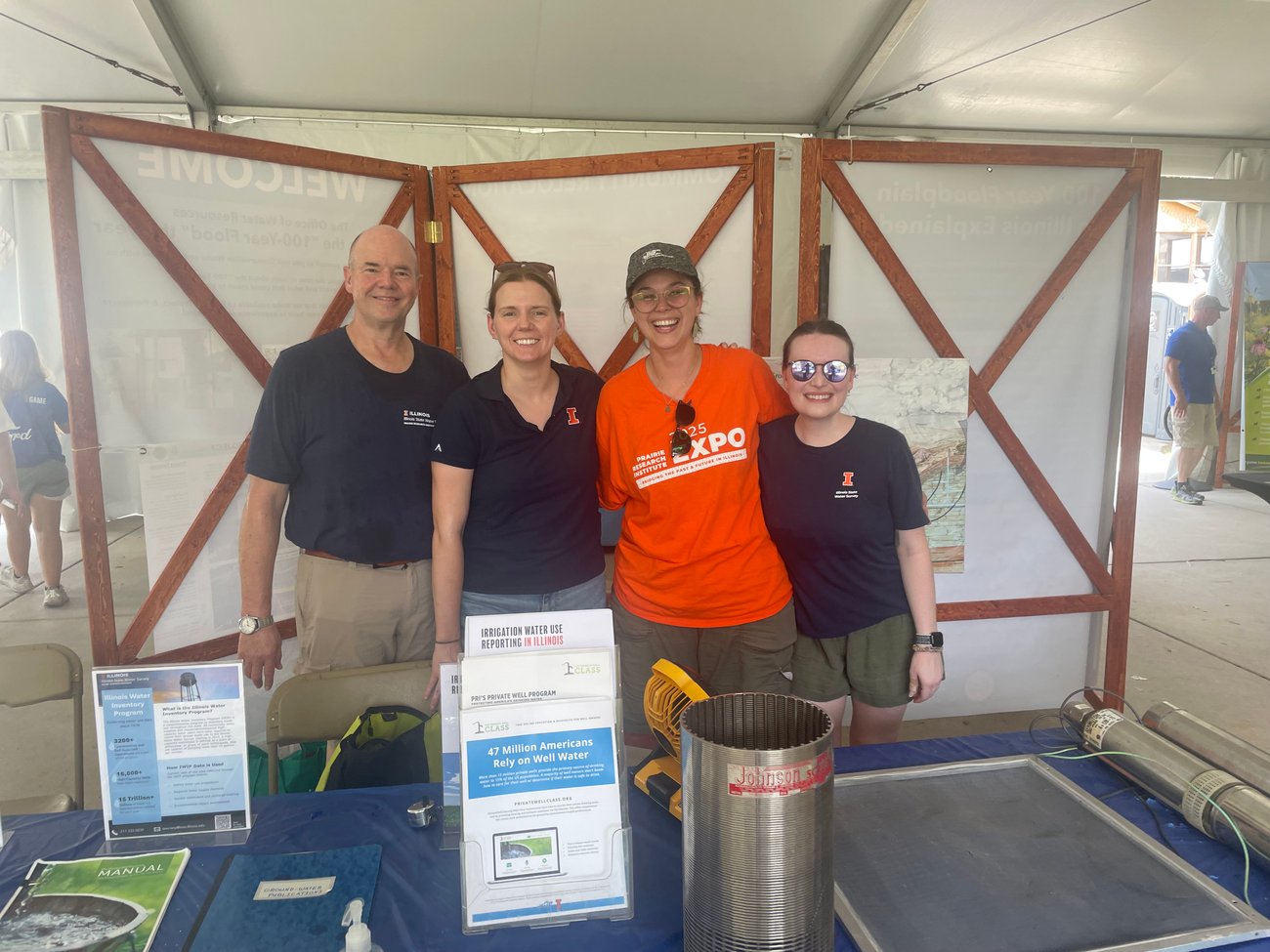 |
Private Well Class Program Director Steve Wilson, Illinois State Water Survey Director Jenna Shelton, and Private Well Class staff Erin Huggett & Katelyn McLaughlin at the 2025 Illinois State Fair in Springfield, Illinois.
|
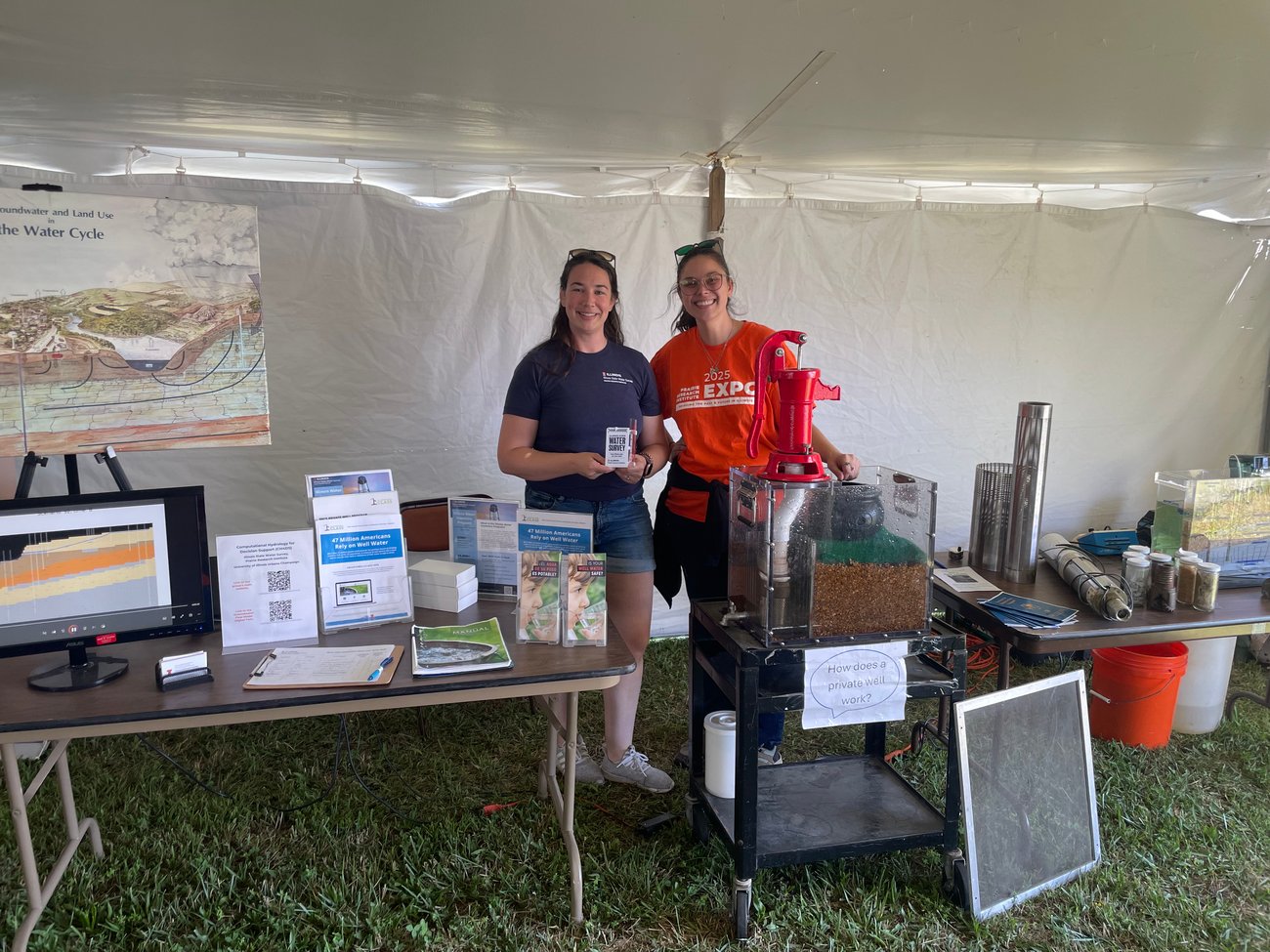 |
Private Well Class Outreach Specialist Katie Buckley and staff member Erin Huggett at the 2025
Farm Progress Show in Decatur, Illinois.
|
Our team had a wonderful time at our outreach events in August, wrapping up our 2025 outreach season!
At the Illinois State Fair in Springfield and the Farm Progress Show in Decatur, we demonstrated our groundwater and well pump models to kids, talked to homeowners about their private wells, and for the first time displayed a digital twin model of our groundwater flow model! This model was built by our Illinois State Water Survey colleagues working on the Computation Hydrology for Decision Support research group, and these models are available to view here.
At both events, we were able to speak with over 1,600 private well owners and water users from both Illinois and far beyond our state as well. We’re already looking forward to coming back to the fair next year and the Decatur Farm Progress Show in 2027.
Finally, special thanks to our outreach specialist, Katie Buckley, for organizing more successful outings for our team!
|
|
|
|
|
From the Tap Talk Archives:
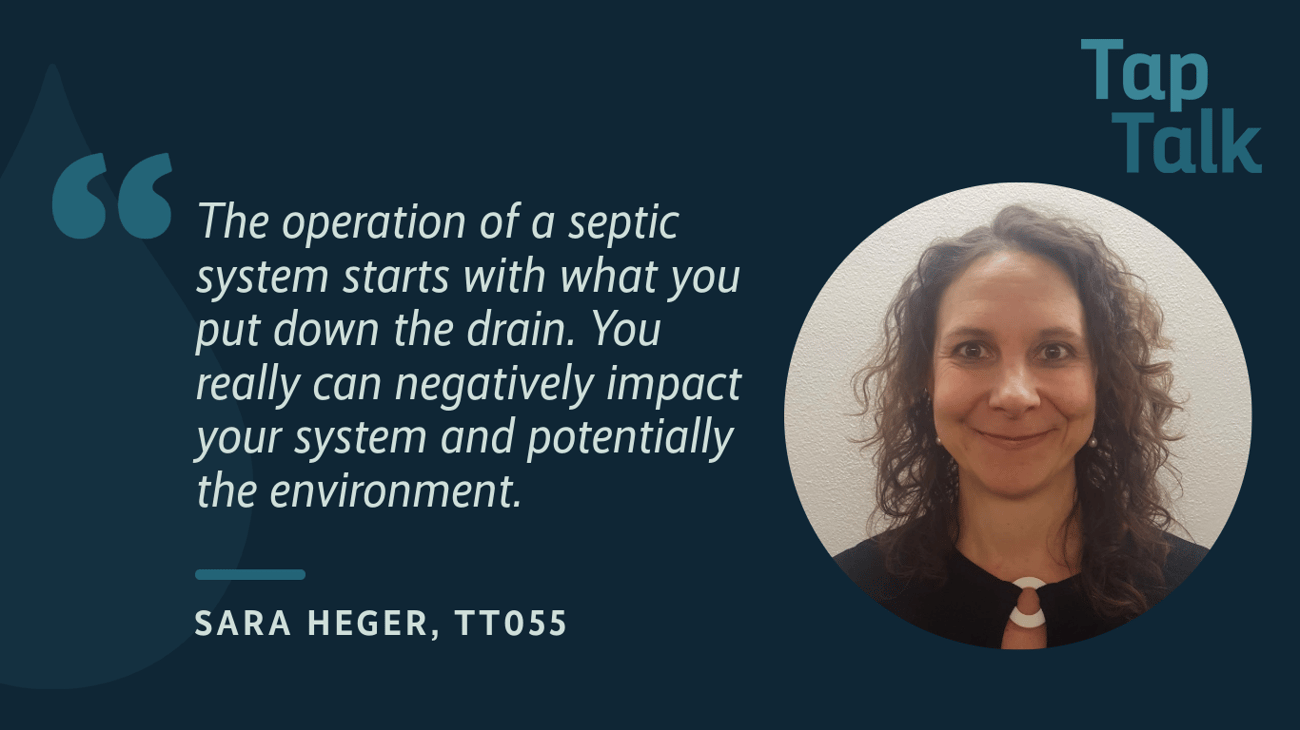
TT055 – A Look at Progress and Needs
in the Decentralized Wastewater Industry
|
|
Earlier this year, our team's Tap Talk podcast marked an exciting occasion: We had our first episode centered entirely around decentralized wastewater and septic tanks! Steve and Jennifer welcomed Sara Heger of the University of Minnesota Water Resources Center — who is a prolific researcher, expert, and trainer in the industry — to talk about recent progress and continued needs for the advancement of decentralized wastewater. With SepticSmart Week just around
the corner (as well as Tap Talk Season 6...), now is a great time to revisit this episode!
|
| 🎧 Listen here 🎧
|
|
|
From the Help Center |
|
|
Septic Systems Article Collection
Remember that we also have articles available on septic systems in our Private Well Help Center! You can read about how water wells are affected by septic systems and how to best care for septic systems in order to keep well safe at our Septic Systems collection on the Help Center.
For additional articles and resources for private well owners, explore our Private Well Help Center.
|
|
|
|
|
Upcoming Webinars & Recent Recordings |
|
|
What Real Estate Professionals
Need to Know about Homes with Well Water
September 3, 2025 | 1 PM CT
Hosted by PrivateWellClass.org
In this free webinar training, learn about what real estate agents should know when selling homes with private wells, including well water quality, how wells work, and other basic well information.
Register »
We would love your support in distributing this information. Please feel free to share this link.
|
|
|
4-Hour Workshop: Private Well
Assessment and Outreach for Environmental Health Professionals
September 24, 2025 | 12 PM CT
Hosted by PrivateWellClass.org
This 4-hour online workshop covers the use of our assessment tool for the evaluation of private well vulnerability to contamination and best practices for well owner outreach. Participants will learn private well fundamentals, how to assess a private well using the assessment tool, how to effectively engage private well owners, how to develop a program for outreach to well owners, and best practices for managing a well owner program.
Register »
|
|
|
What Environmental Health
Professionals Need to Know about Private Wells
October 29, 2025 | 1 PM CT
Hosted by PrivateWellClass.org
This free webinar will provide an introduction to groundwater, well construction, water quality, and well care best practices for environmental health professionals and others who serve well owners. Information on how to find local experts and sources of additional free training will be included.
Register »
We would love your support in distributing this information. Please feel free to share this link.
|
|
|
Is My Water Safe to Drink? -
Common Questions about Private Wells
Recorded on August 5, 2025
This webinar addressed common well questions such as how to get well water tested, how to take care of a well, how to know if a well is susceptible to contamination, and many more.
Watch Recording »
|
|
|
Septic Systems 101
Recorded on July 9, 2025
This webinar instructed on septic system management as part of a larger strategy to protect water in private wells. Using best practices to maintain septic systems keep them in proper working order and prolong their operational life.
Watch Recording »
|
|
|
|
|
Her Dogs Kept Dying, and She Got Cancer.
Then They Tested Her Water.
The Washington Post
The abundance of stories covering forever chemical contamination in well water continues: In this Washington Post investigation, the prolific pollution by W.L. Gore & Associates in eastern Maryland is explored through the experiences of well owner Debbie Blankenship. Blankenship has suffered numerous health problems, including an infection that caused the amputation of her right leg, and lost numerous dogs to premature illness. When Gore wanted to test the local well water for PFOA, Blankenship connected to the dots to her own health and her lost pets.
The following link will remain free for all to read until September 16, 2025.
|
| Read here »
|
|
|
In Search of Source for Crook County Well Pollution,
Oregon Presses Mining Company to Investigate Itself
Oregon Public Broadcasting
In Crook County, Oregon, mining company Knife River is facing demands to better monitor itself following issues with well water local residents have experienced since 2022. These well owners have documents water "choked with black sludge," which as turned up in toilets, broken pipes and appliances, and seemingly caused strange health problems. Well tests have consistently shown elevated amounts of heavy metals and ther pollutants.
|
| Read here »
|
|
|
|
|
Partner Events & Workshops
|
|
|
Private Wells: Professionals,
Stakeholders, and Well Owners
September 3 | 10 am ET | Online
Hosted by RCAP Solutions
46% of New Hampshire residents rely on private water wells for their drinking water, and well maintenance and water quality is the responsibility of homeowners. RCAP Solutions helps well owners, professionals, and stakeholders find the resources and information needed to ensure the availability of clean drinking water. Join this webinar for complimentary information on well construction, common problems with wells, extreme weather impacts, and available resources for private well owners and professionals.
Register here.
|
|
|
Homeowner Workshop: Maintaining
Onsite Wastewater Basics
September 6 | Billings (10 am) or Reed Spring (1:30 pm), Missouri
Hosted by the Midwest Assistance Partnership
The purpose of these training sessions is to assist homeowners by providing basic skills and knowledge required to ensure the sustainability & longevity of their onsite wastewater (septic) systems.
|
|
|
Virginia 2025 Drinking Water
Clinics
September 10, 17 & 24 | Various locations
Hosted by the Virginia Household Water Quality Program & Virginia Cooperative Extension
The yearly Virginia Household Water Quality Program drinking water clinics began for 2025 on July 9, and will continue to be held in numerous cities and counties through November 19. These clinics provide homeowners a chance to have their well water testing at a reduced rate.
Find the full list of dates, locations, and registration information here.
|
|
|
Multi-County Private Well & Water
Quality Workshop
September 16 | 10 am ET | Chipley, Florida or Online
Hosted UF/IFAS Extension
Join this workshop to learn about how private wells and septic systems work, maintenance, and about drinking water quality. UF/IFAS Extension will also offer facilitated water screening for total coliform bacteria, E. coli, and lead; and a more comprehensive test will be available to purchase.
Register here.
|
|
|
Private Water Well
Screenings
September 15-16 | 8:30 am CT | Tom Green, Sterlings, Irion, and Runnels Counties, Texas
September 17-18 | 8:30 am CT | Childress, Motley, Cottle, Hardeman, Foard, King, Donley, Collingsworth, and Hall Counties, Texas
Hosted by Texas Water Well Network
These well water screenings allow all residents of the listed counties to drop off samples of their well water for testing and to return for a follow-up meeting explaining the testing results. The September 15-16 tests will be available for free, while the September 17-18 tests will cost $15.
|
|
|
Septic System Basics
September 16 | 12:00 pm ET | Online
Hosted by Penn State Extension
Celebrate SepticSmart Week by joining Penn State Extension for Septic System Basics, a free webinar kicking off a septic series. Designed for homeowners, property managers, and anyone new to septic systems—or those in need of a refresher—the session will cover the essential components of septic system function, care, and maintenance.
Register here.
|
|
|
Being Septic Smart
September 16 | 6:30 pm CT | Online
Hosted by University of Minnesota Onsite Sewage Treatment Program
This webinar, held annually during SepticSmart Week, teaches property owners the basics about how their septic systems work, including how to care for and maintain a septic system so it can function during or beyond its design lifetime.
Register here.
|
|
|
Climate Resiliency and Emergency
Preparedness for Private Wells
September 18 | 3:00 pm ET | Online
Hosted by RCAP Solutions
This free webinar is intended for private well owners, water professionals, public health officials, and other stakeholders interested in protecting private water systems. The session will cover the effects of climate-related hazards such as flooding and drought, strategies to improve well resiliency, and how to prepare for water-related emergencies. Attendees will gain practical tips on well maintenance, risk reduction, and emergency planning, along with resources to support long-term water security.
Register here.
|
|
|
Septic System Series: Alternative
Septic Systems
September 30 | 12:00 pm ET | Online
Hosted by Penn State Extension
Alternative septic systems are used when conventional systems are not feasible due to site conditions or regulatory requirements. Participants will examine the types of alternative systems available, how they differ from standard systems, and the unique maintenance considerations they require. The session will also highlight key factors to evaluate before installation, helping homeowners and professionals make informed decisions.
Register here.
|
|
|
Private Well & Septic System
Workshop
September 30 | 5:30 pm ET | East Palatka, Florida
Hosted by UF/IFAS Extension
Join UF/IFAS Extension for an informative workshop designed for homeowners who rely on private wells and septic systems. Learn how to keep well water safe and systems working properly while protecting investments and human health.
Register here.
|
|
|
|
|
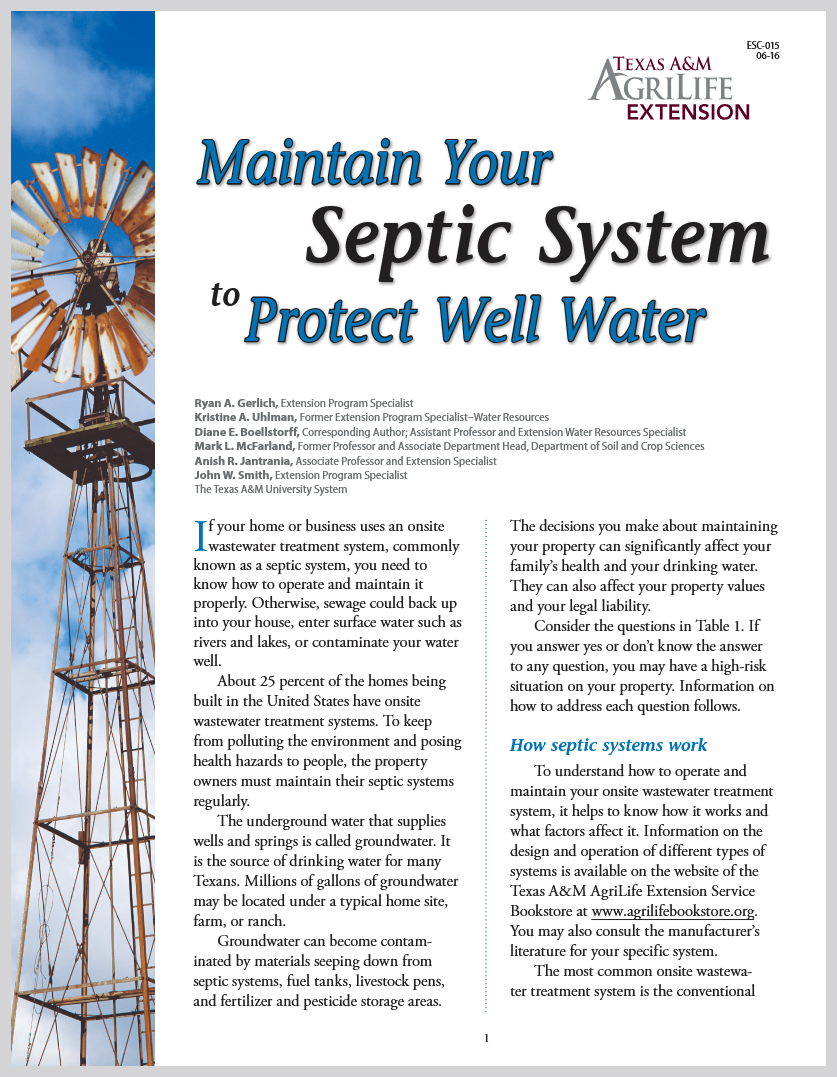
Maintain Your Septic System to Protect Well Water
Texas A&M AgriLife Extension
This guide from Texas A&M Extension reviews how septic systems work, provides details on potential issues with systems, and how they can affect the water quality of water wells. To protect well water, septic systems must be designed, installed, and maintained properly; and have a minimum separation distance from buildings, water wells, and surface water.
|
| View the guide »
|
|
|
|
|
Featured Video:
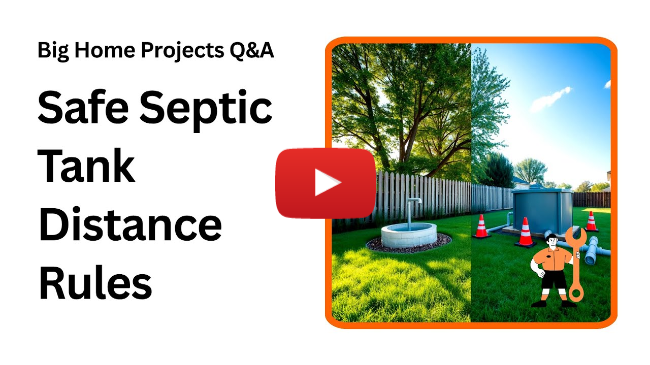
How Far Should Your Septic Tank Be From Your Well
|
|
|
|
This video, brought to you by Big Home Projects Q&A, gives a brief overview of how to ensure that septic tanks are placed at a safe distance from water wells in order to protect the safety of a home's groundwater supply. Typically, the minimum setback distance between septic tanks and wells is 50 feet, but may be different depending on your local municipality's rules.
|
| Watch the video »
|
|
|
|
|
PrivateWellClass.org is a free, grant-funded service to support private well owners and the professionals that work with these wells. The program seeks to raise awareness of private well issues and help well owners understand their responsibilities to be a good steward of their well and water source. The Private Well Class, developed at the Illinois State Water Survey at the University of Illinois Urbana-Champaign, is a collaboration with the Rural Community Assistance Partnership with funding from the U. S. Environmental Protection Agency. Call us at 1-866-945-0699 for assistance.
|
|
|
|
|
Visit our other websites:
|
|
|
|
|
|
|
Click here to unsubscribe | Sent to: _t.e.s.t_@example.com
Illinois State Water Survey, 2204 Griffith Drive, Champaign, IL 61820, United States
|
|
|