Newsletter #123 for March 2026
|
|
|
|
|
This Month: Happy National Groundwater Awareness Week and Pledge to Test Campaign! |
|
|
|
In conjunction with the National Ground Water Association's 2026 National Groundwater Awareness Week, the Private Well Class is hosting our next annual Pledge to Test
Campaign!
Groundwater Awareness Week (GWAW) is March 8-14. The event was created in 1999 to promote the responsible development, management, and use of groundwater. It is also an excellent yearly reminder for well owners to test and treat their systems.
Read more about GWAW at NGWA's website »
|
|
This will be our eleventh annual Pledge to Test Campaign during GWAW.
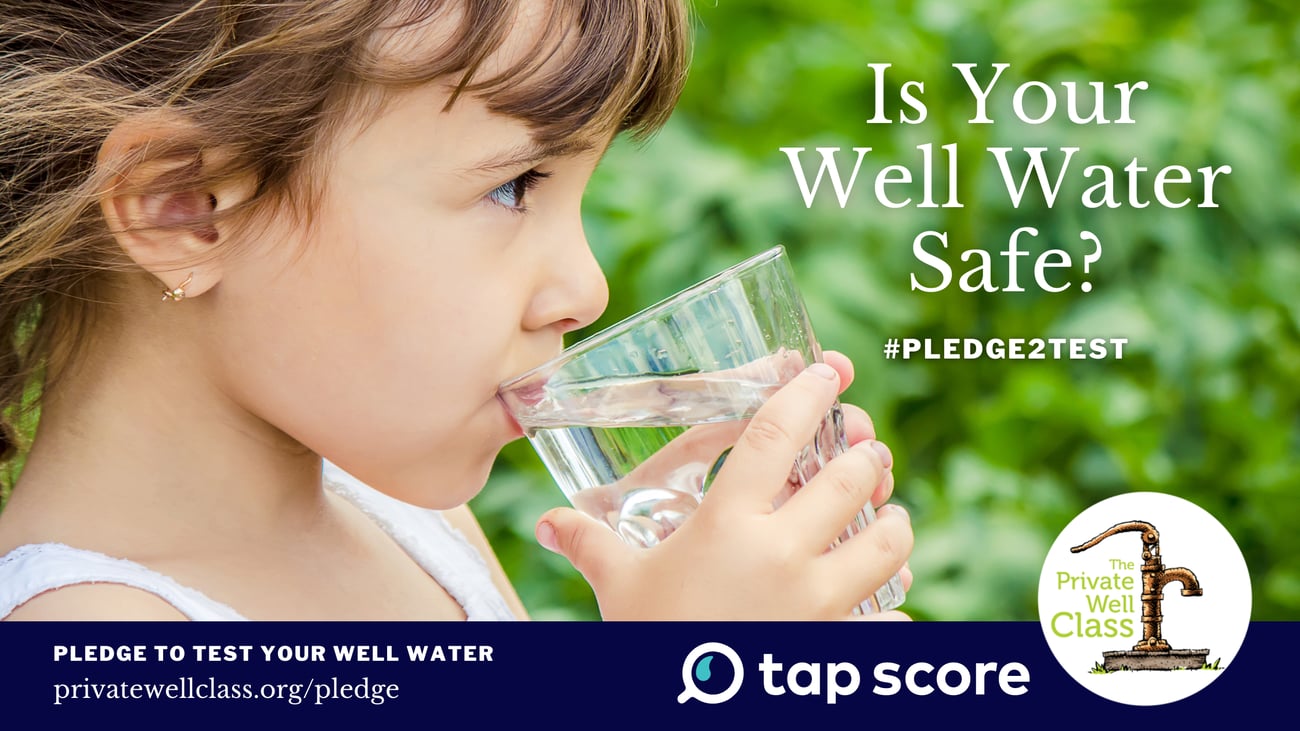
We are once again partnering with TAP SCORE to offer a free Essential Well Water Test for one well owner who pledges to test their wells through our campaign. Additionally, everyone who pledges to test their well water this year will receive 10% off any well water test kit from TAP SCORE using the code PLEDGE2026.
To participate, fill out our pledge form and share your pledge with family, friends, and neighbors. You can also download pledge badges at our website (like the one above) to share on social media. We encourage you to use the hashtags #Pledge2Test and #GWAW on any social platforms that you use.
We will announce the winner of the free test kit on March 16. If you don't win, the discount code for Tap Score's testing kit will be good until April 15, 2026!
See more at our Pledge to Test campaign page »
|
|
|
March 12: Water Quality Investigations Hosting Training Day for Well Drillers & Pump Installers
|
|
|
|
On Thursday, March 12, the Wisconsin-based water quality experts at Water Quality Investigations (WQI) will host a free technical training for well drillers and pump installers at their Mount Horeb headquarters! The training is intended to help drillers and installers recognize the signs of biofilm in water systems. Covered topics will include causes & solutions to aesthetic issues, well rehabilitation strategies, methods for field diagnosis of water quality issues,
and basic lab testing protocols.
Continuing education credits have been approved by the Wisconsin DNR for pump installers, water well drillers, water well rig operators, heat exchange drillers, and heat exchange rig operators.
Lunch will be provided. Please register by March 5, 2026, to ensure WQI will have enough space and food for all attendees.
|
|
|
|
|
|
|
Don't Forget to Register for the Private Well Conference 2026
|
 |
We hope you are planning to join us in Missoula this May for our sixth Private Well Conference! Registration will remain open until April 20, 2026, but we do encourage you to get your registration in ASAP! Here's the quick rundown on event details:
- Who: The conference is intended for private well professionals, including health department staff, lab personnel, cooperative extension educators, well drillers, environmental health professionals, researchers, technical assistance providers, and other private well stakeholders. Continuing education credit for EHPs through the National Environmental Health Association and the Illinois LEHP program will be available for attendees.
- What: The Private Well Conference is a 2.5-day in-person, single track workshop with over 25 half-hour presentations, a driller panel discussion, lightning talks, and most importantly — an opportunity to network with like-minded professionals!
- When: Tuesday, May 19, to Thursday, May 21, 2026.
- Where: Missoula, Montana, at the Holiday Inn Missoula Downtown by IHG. There is a room block at the federal rate, which will close on April 20, 2026.
- How: Registration is free, but required.
Please contact us at help@privatewellclass.org or 866-945-0699 with any questions.
|
| More info »
|
|
|
| Register now »
|
|
|
| Reserve your hotel room »
|
|
|
|
|
Tap Talk — How the Be Well Informed Tool Educates Well Owners
|
|
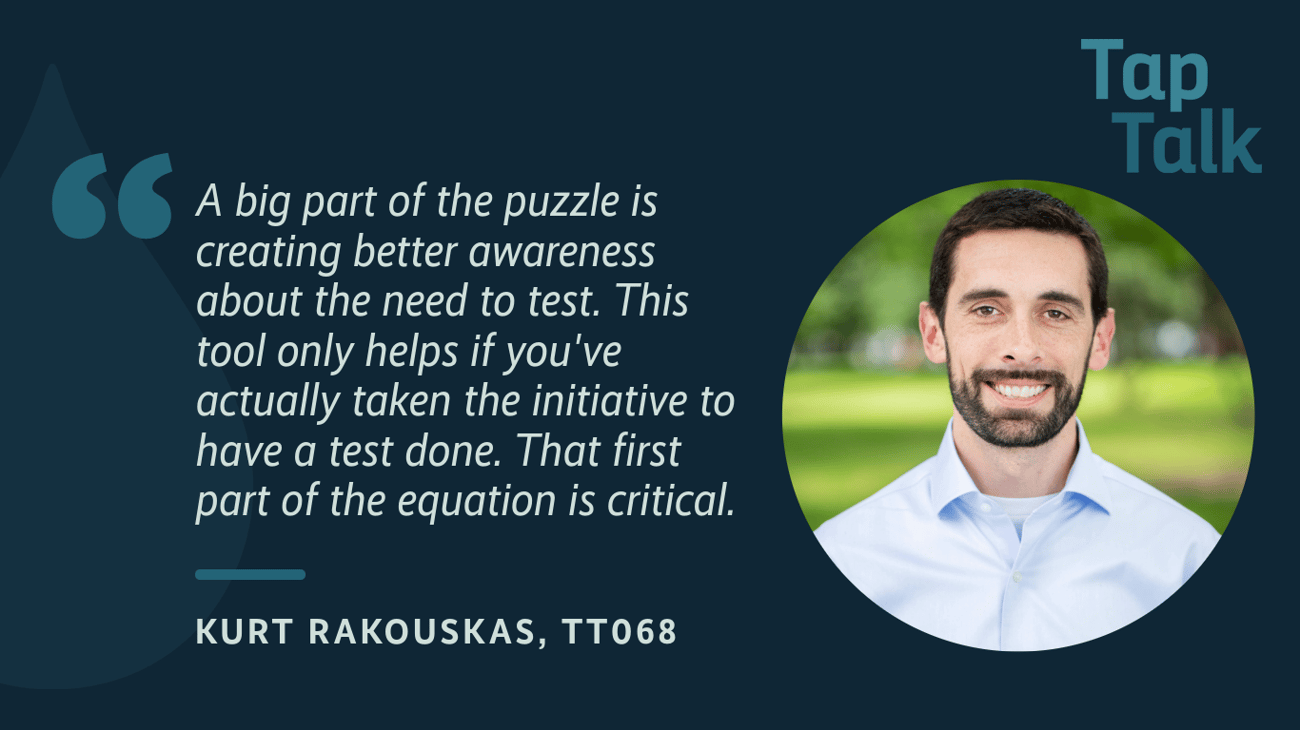
In Tap Talk’s 68th episode, Steve and Jennifer chatted with Kurt Rakouskas — a project manager at the Environmental Council of the States — about the organization’s cross-disciplinary work and its stewardship of the Be Well Informed tool. This free tool
helps well users understand the results of water tests performed on their wells by translating the scientific and technical notation into plain language. This helps make clear if there is a problem indicated by the results, what the risks of any present contaminants are, and what the next steps should be for the well owner.
|
| 🎧 Listen here 🎧
|
|
|
From the Help Center |
|
|
Water Sampling and Testing Collection
We have 10 different articles covering every aspect of the well sampling and testing process at our Help Center; including how often, what to sample for, and common questions. Highlights for well owners participating in our Pledge to Test Campaign may be:
For additional articles and resources for private well owners, explore our Private Well Help Center.
|
|
|
|
|
Upcoming Webinars & Recent Recordings |
|
|
Outreach Strategies for Working
with Private Well Owners
March 4, 2026 | 1 PM CT
Hosted by PrivateWellClass.org
This free webinar will answer questions such as how to effectively engage private well owners, how to develop an outreach program to well owners, and best practices for managing a well owner program.
Register »
We would love your support in distributing this information. Please feel free to share this link.
|
|
|
What Environmental Health
Professionals Need to Know about Wells
April 15, 2026 | 1 PM CT
Hosted by PrivateWellClass.org
This free webinar will provide an introduction to groundwater, well construction, water quality, and well care best practices for environmental health professionals and others who serve well owners.
Register »
We would love your support in distributing this information. Please feel free to share this link.
|
|
|
Is My Water Safe to Drink? –
Common Questions about Private Wells
Recorded on February 18, 2026
This webinar covered the answers to common well questions such as how to get well water tested, what to do to take care of a well, and if a well is susceptible to contamination.
Watch Recording »
|
|
|
Well Care 101 –
What You Need to Know to Protect Your Family
Recorded on January 14, 2026
This webinar covered the basics of well care, including how to determine if well water is safe for drinking, best practices for well maintenance, and solutions to the most common well problems.
Watch Recording »
|
|
|
|
|
Private well owners more vulnerable to nitrate risks as Iowa contamination rises
KCRG-TV
Well owners in the state of Iowa are particularly vulnerable to nitrates in their drinking water, according to water quality experts, due to the prevalence of farming fertilizers in the state. Only a small percentage of Iowa well owners test regularly for nitrates, even though testing is available to Iowans for free through the Iowa Private Well Grants program.
|
| Read here »
|
|
|
A crisis emerges across the US as ‘forever chemicals’ quietly contaminate drinking water wells
The Associated Press
The extent of PFAS contamination in American drinking water is continuing to be explored. This investigation from the AP shows that while around half of American households (on both municipal water and wells) have some level of PFAS present in their water, those with wells are generally at greater risk. Public utilities have had limits imposed for PFAS, while wells remain unregulated — and there is an abundance of rural communities across the country in the shadows of industrial sites and military bases where PFAS was used in great quantities.
|
| Read here »
|
|
|
|
|
Partner Events & Workshops
|
|
|
Virginia 2026 Drinking Water
Clinics
March 4, 18, & 25 | Various locations
Hosted by the Virginia Household Water Quality Program & Virginia Cooperative Extension
The Virginia Household Water Quality Program drinking water clinics typically run from February to November each year. Covering about 70 counties, these clinics provide homeowners a chance to have their well water testing at a reduce rate.
Find the full list of dates, locations, and registration information here.
|
|
|
Texas Well Water
Screenings
March 4-5: Hays County
March 23-24: Callahan & Shackelford counties
Hosted by Texas Well Owner Network
TWON has two upcoming water well screening events for residents of Hays County (Sample drop-off March 4; results meeting March 5) and Callahan & Shackelford counties (Sample drop-off March 23; results meeting March 24).
Find further information on times, locations, and sampling instructions at the event listings below:
Hays || Callahan/Shackelford
|
|
|
Solutions for Addressing
Difficult Sites for Septic System Professionals
March 17-19 | 8 am ET | Griffin, GA
Hosted by RCAP/SERCAP/NOWRA
SERCAP & NOWRA will host an in-person training course with a train-the-trainer session for septic professionals to expand their skills in managing complex wastewater system designs and site constraints with confidence.
Register here.
|
|
|
Best Practices and Tips for
Private Well and Spring Owners
March 15 | 5 pm ET | Caldwell, OH
Hosted by Great Lakes Community Action Partnership
This training is designed for homeowners on private wells or springs, which present unique challenges compared to public water systems. Attendees will learn how to properly evaluate a private water system and prevent or identify concerns. The two‑hour session will cover well types, well log information, testing basics, proper maintenance, and financial assistance options for eligible households.
Register here.
|
|
|
Private Well & Water Quality
Workshop
March 25 | 10 am ET | Dunellon, FL
Hosted by UF/IFAS Extension
This free educational workshop will focus on residential private wells and water quality for homeowners. Attendees will learn how private wells work, maintenance, and drinking water quality. An optional bacterial water screening will also be available at an additional cost.
Register here.
|
|
|
Iowa Private Well Stewardship
Program
March 26-April 9 | Various locations
Hosted by Iowa State University Extension
Iowa's Private Well Stewardship Program is an educational program in which private well owners learn about the responsibilities and risks of being a private well owner, and are connected to resources to manage their well. Attendees will be connected to both local experts and funding to safeguard their well, review the common contaminants found in Iowa wells, and discuss factors that affect well water quality.
Register here.
|
|
|
|
|
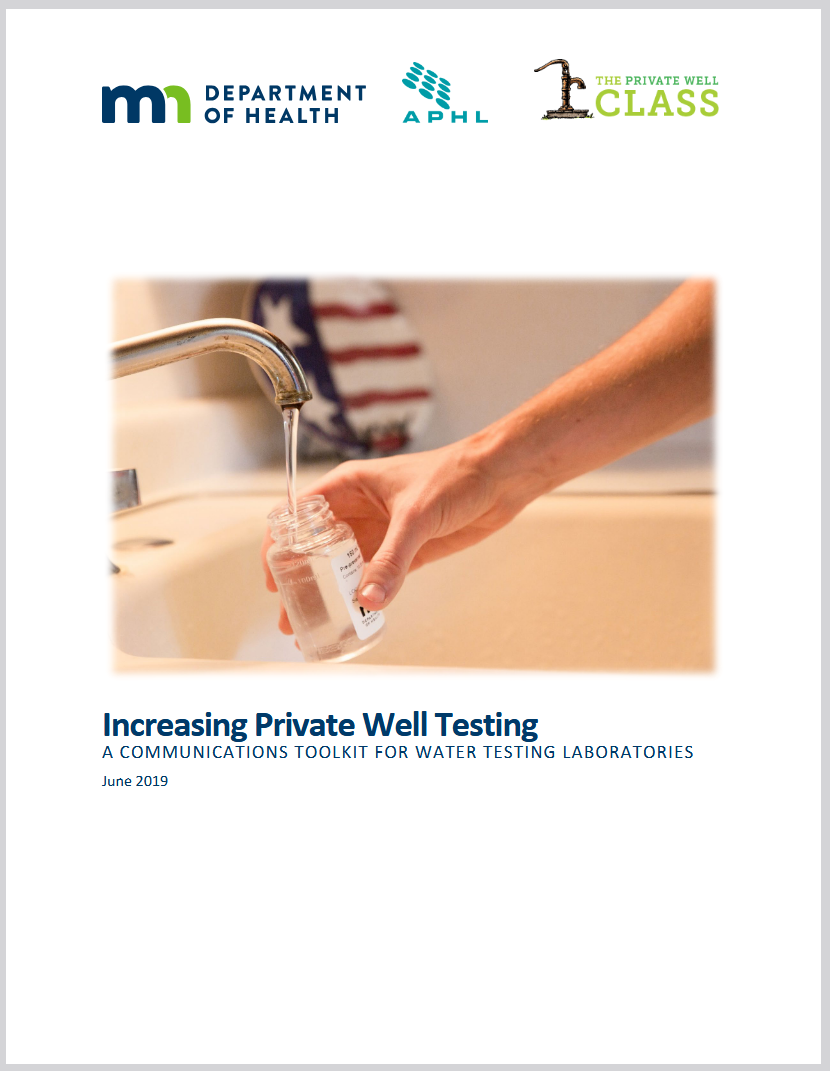
Increasing Private Well Testing
Minnesota Department of Health + Association of Public Health Laboratories + PrivateWellClass.org
This toolkit is a resource for water testing laboratories that work with private well users, to help expand communication about the information private well users need in order to care for their wells. The document illustrates how clean communication can effectively provide well users with information to protect their health, build customer trust, and increase laboratory business.
Even if you don't work at a laboratory, we hope this document can help get you thinking about how you can improve communication with well owners in your field of work!
|
| View the Document »
|
|
|
|
|
Featured Video: Test, Tend, Treat |
|
|
|
This video, brought to you by the National Ground Water Association and WellOwner.org, explains to well owners why routine inspections of a water well systems help ensure they are operating properly, prolong their useful lives, and protect well owners' investments. It also explains how inspections protect human health by discovering issues that could result in water quality problems. Test, Tend, Treat is a particularly important message to share during Groundwater Awareness Week!
|
| Watch the Video »
|
|
|
|
|
PrivateWellClass.org is a free, grant-funded service to support private well owners and the professionals that work with these wells. The program seeks to raise awareness of private well issues and help well owners understand their responsibilities to be a good steward of their well and water source. The Private Well Class, developed at the Illinois State Water Survey at the University of Illinois Urbana-Champaign, is a collaboration with the Rural Community Assistance Partnership with funding from the U. S. Environmental Protection Agency. Call us at 1-866-945-0699 for assistance.
|
|
|
|
|
Visit our other websites:
|
|
|
|
|
|
|
Click here to unsubscribe | Sent to: _t.e.s.t_@example.com
Illinois State Water Survey, 2204 Griffith Drive, Champaign, IL 61820, United States
|
|
|