|
Newsletter #432 - May 5, 2026 |
|
|
|
|
 |
EPA to Invest $90 Million to Strengthen Water Infrastructure for Tribes and Rural Communities |
|
The U.S. Environmental Protection Agency (EPA) has announced a $90 million investment to strengthen drinking water and wastewater infrastructure in tribal nations and rural communities across the country. The funding will accelerate critical upgrades that protect public health, improve environmental quality, and enhance economic opportunities by ensuring reliable access to clean and safe water systems. EPA leaders emphasized that strong water infrastructure is foundational to thriving communities and long-term environmental stewardship.
Of the total investment, $30 million will be provided in partnership with the Indian Health Service to advance drinking water and wastewater projects in tribal communities. These projects include expanding access to centralized water systems, repairing aging infrastructure, reducing drinking water contaminants, and replacing failing sewage collection and treatment systems. EPA noted that this long-standing partnership helps accelerate practical, on-the-ground solutions that address urgent infrastructure needs in tribal areas.
The remaining $60 million will be directed toward existing EPA programs that support small, rural, and tribal communities, including the RealWaterTA initiative. This program focuses on proven, “back-to-basics” technical assistance such as engineering support, workforce development, operational guidance, and financial management to help systems meet Safe Drinking Water Act and Clean Water Act requirements. This round of funding builds on EPA’s broader commitment, following nearly $300 million announced in 2025 to improve water infrastructure and reduce risks, like lead exposure, in tribal and rural communities.
|
|
|
|
|
 |
Tap Talk |
Behind the Scenes of Water and Environment Reporting
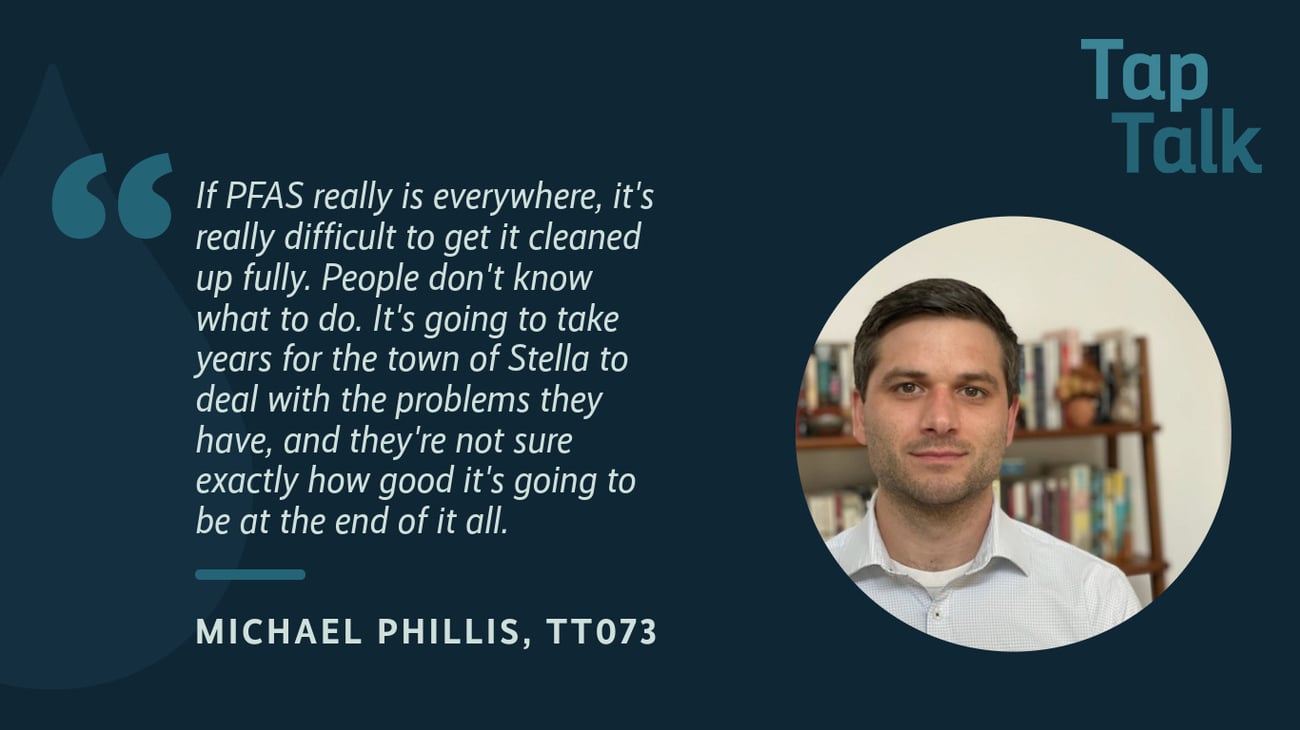
Tap Talk Season 7 is in full swing! In this podcast recording, we bring you a conversation with Michael Phillis, a water & environment reporter for the Associated Press.
Michael tells Jennifer and Steve about how he got into environmental reporting, the importance and range of stories about water, and the experience of reporting the recent long-form investigation piece “A crisis emerges across the US as ‘forever chemicals’ quietly contaminate drinking water wells” with his colleague Helen Wieffering.
This story centers the well contamination crisis in Stella, Wisconsin, a town of ~600 people in northern Wisconsin, where some well water tests have found PFAS concentration levels of 375 times the federal limit for drinking water connected to a nearby paper mill.
|
|
|
|
|
|
|
EPA Seeks Comment on Update to PFAS Destruction and Disposal Guidance
|
|
EPA is seeking public input on its Interim Guidance on the Destruction and Disposal of PFAS and Materials Containing PFAS, which presents currently available information on the destruction and disposal of PFAS and PFAS-containing materials that are not consumer products. The updated guidance includes:
- Recommendations for managers of PFAS-containing materials to protect human health and the environment.
- A new technology evaluation framework to help analyze the safety and effectiveness of new destruction and disposal technologies.
- Scientific information on current understanding of PFAS and the three widely used and commercially available destruction and disposal technologies: Underground injection, landfills, and thermal treatment (ex. incineration).
EPA is accepting comments through June 29, 2026, through Regulations.gov under Docket ID EPA-HQ-OLEM-2020-0527. |
|
|
|
|
Featured Video |
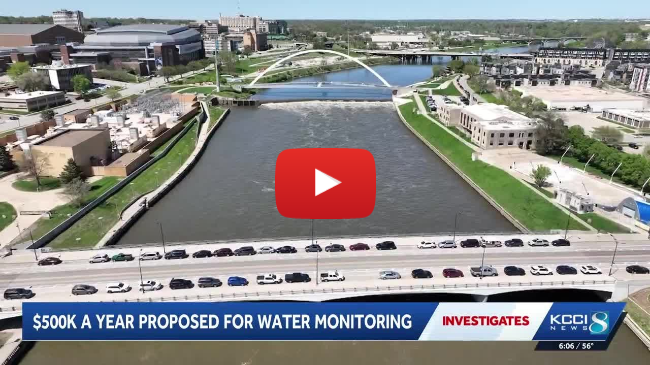 |
Iowa water quality: Central Iowa Water Works gets $25 million to double nitrate removal operations
KCCI
"Central Iowa Water Works will get $25 million for infrastructure improvements to deal with high nitrate levels in the Des Moines and Raccoon rivers.
It's part of a nearly $320 million investment in water quality announced in a news conference Friday, which included comments from Iowa Gov. Kim Reynolds, Ag Secretary Mike Naig, Central Iowa Water Works executive director Tami Madsen and Michael Castellano, a professor at Iowa State University's agronomy department.
'Together, we're all part of the solution because water quality isn't a farm issue, it isn't a city issue, and it isn't a political issue, but it absolutely is non-negotiable,' Reynolds said. 'Everyone here has the same goal and that's to improve water quality.'"
You can learn more about these infrastructure improvements on KCCI's website. The full article breaks down the ways that the funding will be split and also includes a Q&A about how nitrates impact Iowa's water quality. |
|
|
|
|
 |
Missed out on our last webinar? Watch the recording! |
|
This webinar, recorded in April 2026, provides an overview of common lagoon system challenges and best practices for improving compliance. It includes a review of publicly available resources for improving lagoon operations and demonstration of our search tools at WaterOperator.org to find additional free resources and training events.
This webinar is part of a series that covers topics relevant to wastewater operators, including funding, asset management, compliance, and water quality.
For informational purposes only. We are unable to offer certificates for watching a video recording.
Recordings of our previous webinars:
|
|
|
|
|
Featured Video |
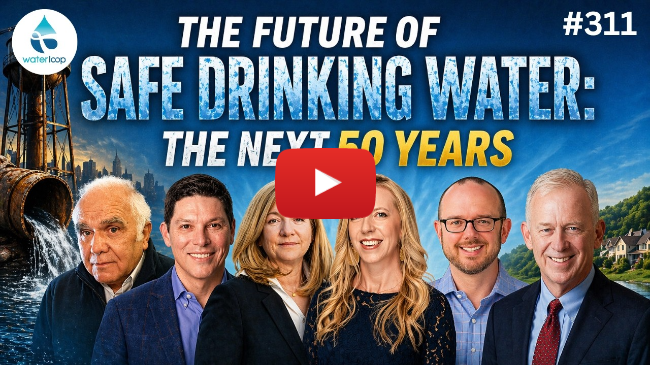 |
Experts Say Next 50 Years of Safe Drinking Water Should Be Totally Different
waterloop
"A group of top water experts is challenging one of the core assumptions behind U.S. drinking water policy—that chasing ever-smaller traces of contaminants is the best way to protect public health—and instead calling for a fundamental shift toward fixing pipes, strengthening systems, and prioritizing the risks that actually matter most.
In this episode, members of the Water Health Advisory Council lay out a bold path forward through their new book Safe Drinking Water Act: The Next Fifty Years.
The group—bringing decades of experience across policy, science, and utility leadership—argues the next era must shift from a “regulatory treadmill” to prioritizing real-world risks like failing pipes, workforce gaps, and system resilience. Their Madison Declaration calls for science-based risk prioritization, stronger governance, and treating safe water as a human right, with equity at the center of decision-making.
The conversation highlights how public trust is eroding—not because water is less safe, but because communication tools like consumer confidence reports often confuse rather than inform.
It also makes the case for major structural changes, including utility consolidation to improve performance, smarter investment in infrastructure over ever-lower contaminant thresholds, and aligning funding with actual public health outcomes.
At its core, the message is clear: the next 50 years of drinking water policy won’t be solved by chemistry alone—it will require rethinking how systems are governed, funded, and trusted by the public." |
|
|
|
|
 |
ACE is Next Month! Register Today! |
|
Don't forget to register for the American Water Works Association's (AWWA's) Annual Conference and Exposition (ACE)! ACE 2026 will take place from June 21-24, 2026 at the Walter E. Washington Convention Center in Washington, D.C.
ACE is one of the largest gatherings of water community professionals worldwide. It features four days of educational programs, an exhibit hall, annual competitions, networking events, and much more. Attendees will discover the latest strategies, technologies, and tools to address prominent challenges water systems face everywhere.
For more information and to register, make hotel room reservations, and request travel support, visit the ACE 2026 Registration Page.
For general registration questions, contact AWWA (Mon-Fri 8 AM - 5 PM MST):
|
|
|
|
|
|
|
|
Water Cybersecurity Assessment Tool Training
May 13, 2026 | 1:00 PM ET
U.S. Environmental Protection Agency
This free webinar will demonstrate how to use EPA’s Water Cybersecurity Assessment Tool (WCAT) to conduct cybersecurity assessments at water and wastewater systems. |
|
|
|
Risk and Resilience Assessments and Emergency Response Plans
May 14, 2026 | 1:00 PM ET
Rural Community Assistance Partnership
This free webinar will walk utility personnel through the process of conducting a Risk and Resilience Assessment and using the findings to develop an Emergency Response Plan. The training includes an overview of these topics, as well as resources for completing these items and deadlines for compliance. |
|
|
|
How Water Sector Utilities are Building Resilience to Natural Hazards: Utilities Recount their Engagement with EPA SWIFT Technical Assistance
May 20, 2026 | 1:00 PM ET
U.S. Environmental Protection Agency
In this free webinar, learn how water sector utilities are benefitting from SWIFT technical assistance. Hear directly from utility representatives across the country that have engaged in the process to build system resilience to various natural hazards. SWIFT technical assistance is tailored to meet the needs of each utility request, from improving the understanding of natural hazard impacts to their system to quantifying the potential reductions in risk that specific projects can deliver. |
|
|
|
|
|
|
|
|
|
|
Recent Blog Posts at WaterOperator.org |
|
|
 |
|
Essential Safety Resources for Wastewater Operators
Read Here » |
|
|
 |
|
Preparing for LCRI Compliance: Key Insights from NRWA
Read Here » |
|
 |
|
Community Engagement Resources for Wastewater Utilities
Read Here » |
|
|
|
|
|
Groundwater & Well Care for Public Water Systems is a free online course from WaterOperator.org. Certificates are provided and the course is currently pre-approved for 2 hours continuing education credit in a number of states.
Click here to learn more. |
|
|
|
|
|
|
|
|
|
WaterOperator.org is a free service, grant-funded to support small community water and wastewater operators with comprehensive resources and information in one easy-to-use place. We also serve the 800+ training, primacy, and technical service organizations, by helping operators get to their information. We aren't selling or advertising anything. Call us at 1-866-522-2681 for assistance. |
|
|
|
|
|
Visit our other websites: |
|
|
|
|
|
|
|
Click here to unsubscribe | Sent to: _t.e.s.t_@example.com
Illinois State Water Survey, 2204 Griffith Drive, Champaign, IL 61820, United States |
|
|
|
|


