|
Newsletter #431 - April 22, 2026 |
|
|
|
|
 |
Federal Advisory Flags Threat to Water Sector OT Devices |
|
A joint advisory from the Federal Bureau of Investigation (FBI), Cybersecurity and Infrastructure Security Agency (CISA), National Security Agency (NSA), Environmental Protection Agency (EPA), Department of Energy (DOE), and United States Cyber Command – Cyber National Mission Force (CNMF) warns that U.S. water and wastewater utilities are facing active cyberattacks targeting internet‑connected operational technology (OT), specifically Rockwell Automation/Allen‑Bradley programmable logic controllers (PLCs).
The advisory urges utilities to act immediately by removing PLCs from public internet access, setting devices to run mode to prevent unauthorized changes, and replacing default passwords with strong, unique credentials. The threat is especially critical for rural water systems with limited cybersecurity resources, and operators are encouraged to use EPA’s Cybersecurity Technical Assistance Program and report suspicious activity to federal incident reporting systems. |
|
|
|
|
 |
Register for AWWA's ACE 2026 Conference |
|
Don't forget to register for the American Water Works Association's (AWWA's) Annual Conference and Exposition (ACE)! ACE 2026 will take place from June 21-24, 2026 at the Walter E. Washington Convention Center in Washington, D.C.
ACE is one of the largest gatherings of water community professionals worldwide. It features four days of educational programs, an exhibit hall, annual competitions, networking events, and much more. Attendees will discover the latest strategies, technologies, and tools to address prominent challenges water systems face everywhere.
For more information and to register, make hotel room reservations, and request travel support, visit the ACE 2026 Registration Page. Early bird prices end April 24.
For general registration questions, contact AWWA (Mon-Fri 8 AM - 5 PM MST):
|
|
|
|
|
Featured Video |
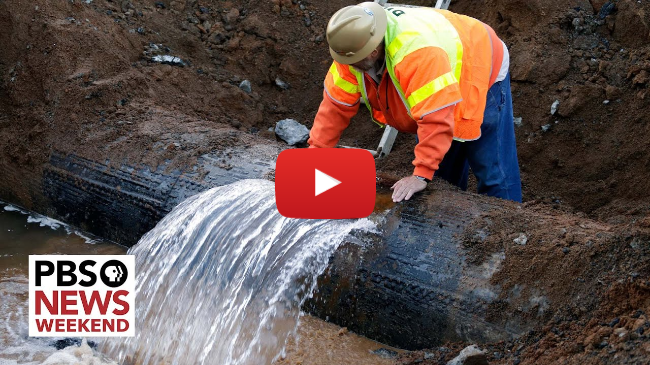 |
What frequent water main breaks say about America’s aging infrastructure
PBS NewsHour
"U.S. drinking water is among the world’s safest and most reliable, but aging infrastructure across the country is posing challenges. The American Society of Civil Engineers estimates that there's a water main break every two minutes. Shannon Marquez, professor of environmental health sciences at Columbia University, joins John Yang to discuss why these problems are so common."
|
|
|
|
|
 |
Register for our upcoming webinar! |
|
Lagoon Wastewater Systems: Practical Tools and Resources for Compliance
April 28, 2026 | 10:00 AM CDT
This webinar will provide an overview of common lagoon system challenges and best practices for improving compliance. It will include a review of publicly available resources for improving lagoon operations and demonstration of our search tools at WaterOperator.org to find additional free resources and training events.
This webinar series covers topics relevant to wastewater operators, including funding, asset management, compliance, and water quality.
Certificates of attendance will be delivered upon request. Check with your certification body for acceptance criteria.
Recordings of our previous webinars:
|
|
|
|
|
Featured Video |
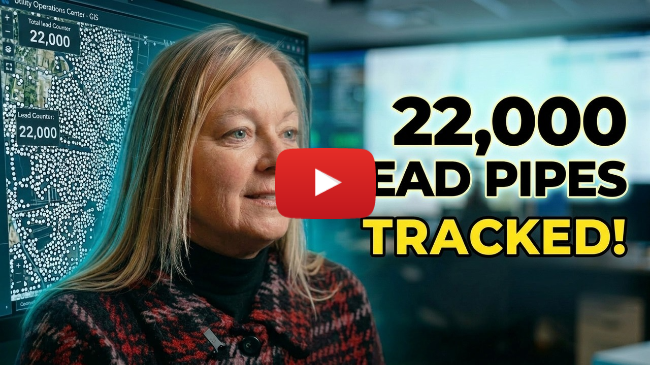 |
22,000 Lead Pipes: How This Utility Knows Them All
waterloop
"For utilities replacing lead pipes, the work starts with knowing exactly what’s in the ground. In this segment, Yolanda McCollom of Ridgewood Water explains how a smaller system is tackling that challenge by building something essential: a single, reliable source of truth. Ridgewood serves about 20,000–22,000 service lines, with roughly 10% identified as lead or galvanized — a scale that is manageable, but still complex.
The key has been investing in a strong GIS system that tracks every address, every project, and every update in real time. From routine maintenance to capital improvement projects, all data flows into one centralized platform. Crews, contractors, and engineers all contribute to the same system, ensuring records stay accurate and up to date.
The result: any address in the system can be quickly checked to determine what material is in the ground and what work has been completed.
Content in collaboration with New Jersey Future and Jersey Water Works." |
|
|
|
|
EPA Launches PFAS OUT Initiative |
|
The U.S. Environmental Protection Agency (EPA) announced the launch of the PFAS OUTreach (PFAS OUT) Initiative on April 14, 2026, aimed at proactively reducing exposure to the PFAS chemicals PFOA and PFOS in drinking water well before federal compliance deadlines. Led by EPA’s Office of Water, the initiative represents a shift toward early, hands-on engagement with water systems, states, and local partners to address contamination using science‑based solutions. EPA leadership emphasized that the health impacts of these chemicals are well understood, and PFAS OUT is intended to help communities act now rather than waiting for regulatory enforcement.
PFAS OUT focuses on providing targeted outreach, funding guidance, and technical assistance, especially for small, rural, and disadvantaged water systems that often lack resources to manage complex contamination issues. EPA plans to directly engage roughly 3,000 drinking water systems nationwide with known PFOA and PFOS challenges and will make webinars, location‑specific tools, and technical support broadly available through programs like RealWaterTA.
The initiative aligns with broader EPA efforts announced earlier this month to address emerging drinking water contaminants including PFAS, microplastics, pharmaceuticals, and disinfection byproducts which reinforces the agency’s goal of ensuring safe and reliable drinking water for all communities. |
|
|
|
|
|
|
|
PFAS? Are they present in my WATER SYSTEM?
April 23, 2026 | 9:00 AM ET
RCAP Solutions, Inc.
This free online training provides an overview of perfluoroalkyl and polyfluoroalkyl substances (PFAS), including their origins, common sources, and potential health impacts. The training will include experts’ guidance on mitigating PFAS effects, recent scientific developments related to their control, and discussing the EPA Strategic Plan for addressing PFAS, as well as regulatory requirements for Community Public Water Systems (CPWS).
|
|
|
|
Wastewater Treatment Primary Sedimentation and Solids Removal
April 23, 2026 | 1:00 PM ET
Environmental Finance Center Network
Join EFCN for a free comprehensive overview of primary treatment, the essential solids separation stage in wastewater treatment. This free one-hour webinar is designed to help attendees understand how primary sedimentation reduces organic loading and protects downstream biological processes.
EFCN will cover the fundamental principles of gravity settling, typical primary clarifier configurations and equipment, key operational parameters and performance monitoring, and routine maintenance practices. You’ll learn how effective primary treatment improves overall plant efficiency and contributes to regulatory compliance. Whether you’re new to wastewater operations, managing day-to-day operations or overseeing infrastructure investments, you’ll gain practical insights into this crucial treatment stage. |
|
|
|
Cybersecurity Procurement Checklist Tool Training
April 29, 2026 | 1:00 PM ET
U.S. Environmental Protection Agency
This free webinar will demonstrate how to use EPA’s Cybersecurity Procurement Evaluation Checklist for Drinking Water and Wastewater Systems to assess and compare cybersecurity-related vendors.
|
|
|
|
Building Cyber Resilience Using EPA’s Water and Wastewater Cybersecurity Incident Response Plan Template
April 30, 2026 | 1:00 PM ET
U.S. Environmental Protection Agency
This free webinar will provide an overview of EPA's new Drinking Water and Wastewater Systems Cybersecurity Incident Response Plan Template. This fully customizable template is designed to help all utilities prepare for, respond to, and recover from cybersecurity incidents affecting both information technology (IT) and operational technology (OT) systems.
This webinar will introduce EPA’s Incident Response Plan Template and accompanying instructions including how utility personnel can access, tailor, and operationalize the plan to meet system-specific needs. |
|
|
|
|
|
|
|
|
|
|
Recent Blog Posts at WaterOperator.org |
|
|
 |
|
Essential Safety Resources for Wastewater Operators
Read Here » |
|
|
 |
|
Preparing for LCRI Compliance: Key Insights from NRWA
Read Here » |
|
 |
|
Community Engagement Resources for Wastewater Utilities
Read Here » |
|
|
|
|
|
Groundwater & Well Care for Public Water Systems is a free online course from WaterOperator.org. Certificates are provided and the course is currently pre-approved for 2 hours continuing education credit in a number of states.
Click here to learn more. |
|
|
|
|
|
|
|
|
|
WaterOperator.org is a free service, grant-funded to support small community water and wastewater operators with comprehensive resources and information in one easy-to-use place. We also serve the 800+ training, primacy, and technical service organizations, by helping operators get to their information. We aren't selling or advertising anything. Call us at 1-866-522-2681 for assistance. |
|
|
|
|
|
Visit our other websites: |
|
|
|
|
|
|
|
Click here to unsubscribe | Sent to: _t.e.s.t_@example.com
Illinois State Water Survey, 2204 Griffith Drive, Champaign, IL 61820, United States |
|
|
|
|


