|
Newsletter #430 - April 7, 2026 |
|
|
|
|
 |
Announcement of the Draft CCL 6 |
|
The U.S. Environmental Protection Agency (EPA) released the draft Sixth Contaminant Candidate List (CCL 6) on April 2, 2026. The CCL identifies drinking water contaminants that are not currently regulated at the federal level but are known or expected to occur in public water systems and may warrant future regulation under the Safe Drinking Water Act (SDWA). The list is designed to guide future research, monitoring, and potential regulatory actions to protect public health.
The draft CCL 6 includes:
According to EPA's press release: "Publication of the draft CCL 6 in the Federal Register will open a 60-day public comment period. EPA will also consult with its independent Science Advisory Board before finalizing the list, which is expected to be signed in November.
The SDWA requires EPA to publish a list of contaminants every five years that are not subject to any proposed or promulgated national primary drinking water regulation, that are known or anticipated to occur in public water systems, and that may require regulation. The CCL is the first step in the SDWA regulatory process. The human health benchmarks for pharmaceuticals are not regulations and are not enforceable on their own, but they are a vital resource, empowering local decision-makers to evaluate risks and protect their communities when pharmaceutical contamination is detected at concerning levels."
EPA is seeking public comment on both the draft list and the process used to select contaminants, with comments due June 5, 2026.
Submit comments to docket number EPA-HQ-OW-2022-0946 at regulations.gov. |
|
|
|
|
 |
2026 National Capacity Development and Operator Certification Workshop |
|
Join ASDWA for the 8th National Capacity Development and Operator Certification Workshop co-hosted by the U.S. Environmental Protection Agency (EPA) and the Association of State Drinking Water Administrators (ASDWA).
The workshop is being held on August 5-7, 2026, at the Old Town Hilton in Alexandria, Virginia. State and territorial primacy agencies, tribes, EPA Headquarters and Regions, and technical assistance providers are encouraged to attend.
The agenda will include sessions on operator certification, capacity development, asset management, technical assistance, and funding, as well as a Technical Assistance Exposition (TA Expo). Registration for this event is free and ASDWA is providing a limited amount of travel support on a first-come, first-served basis, based on the availability of funds.
For more information and to register, make hotel room reservations, and request travel support, visit the ASDWA event page. |
|
|
|
|
Featured Video |
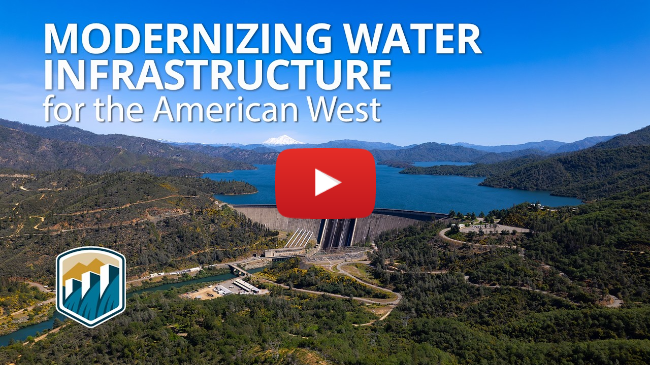 |
Modernizing Water Infrastructure for the American West
Bureau of Reclamation
"Water has always shaped the American West—and today, a historic federal investment is helping secure its future. Through the One Big Beautiful Bill, the Bureau of Reclamation is investing nearly $900 million to modernize water infrastructure, expand storage, and strengthen reliability across the region. Paired with Donald J. Trump’s Executive Order 14181 prioritizing water supply and drought resilience, these efforts have already delivered results—more than 200,000 acre-feet of additional water has been made available to the Central Valley Project by streamlining operations and capturing storm flows that historically went unused.
In California’s Central Valley, one of the most productive agricultural regions in the world, major canal upgrades are improving performance and restoring capacity along the Delta-Mendota, Friant-Kern, Tehama-Colusa, and San Luis canals. The legislation also supports raising Shasta Dam—adding enough water supply for approximately 2.5 million Americans each year. Across the West, targeted investments are strengthening critical systems, including $30 million for Idaho’s Lewiston Orchards Irrigation District, $108 million for North Dakota’s water infrastructure through the Eastern North Dakota Alternate Water Supply Project and Garrison Diversion Unit repairs, $11 million for South Dakota’s Belle Fourche Siphon, $100 million to modernize Utah’s Highline Canal, and $100 million to repair Wyoming’s Fort Laramie Tunnels."
|
|
|
|
|
Featured Video |
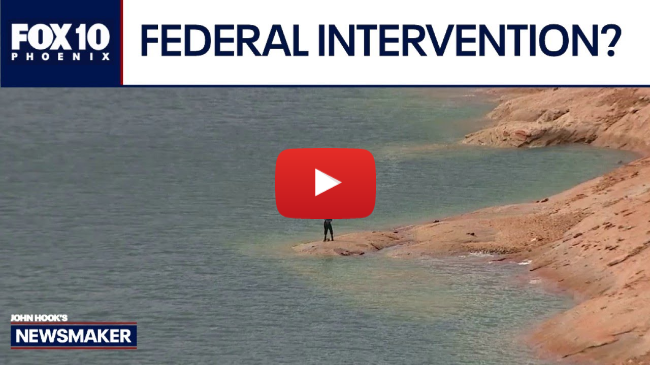 |
Colorado river: Arizona faces budget, water supply uncertainty
FOX 10 Phoenix
"In this episode of Newsmaker, an expert discusses Arizona's critical challenges, primarily focusing on the Colorado River crisis. Sarah Porter of the Kyl Center for Water Policy highlights the "huge uncertainty" surrounding river supplies as the seven basin states remain at an impasse over mandatory water cuts. While Arizona has historically been a leader in conservation—using less water today than it did 60 years ago—the looming 'deadpool' status of Lake Powell and the potential for federal intervention threaten the state's access to affordable water." |
|
|
|
|
Featured Video |
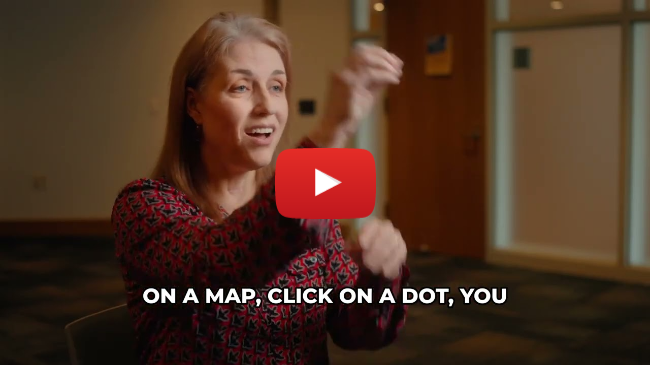 |
You Can't Fight Toxic Lead Without This SECRET Weapon
waterloop
"Behind every lead pipe replacement is something you can’t see: data.
In this segment, Kristin Epstein of CDM Smith reframes how to think about lead service line replacement. Despite the engineering involved, she makes it clear — these projects are fundamentally about logistics, data management, and customer coordination.
Each service line is more than a pipe. It’s tied to a home, a resident, permits, materials, and multiple stages of work. Multiply that by thousands of properties, and the challenge becomes managing information at scale.
That’s why strong data systems are essential from the very beginning.
Kristin highlights the importance of GIS-based platforms that allow utilities to map service lines, integrate historical records, and track progress in real time. From installation records to right-of-entry approvals, every piece of information needs to be organized, accessible, and built for long-term use.
Because when the data is structured well, the work moves faster — and smarter." |
|
|
|
|
In case you missed it: U.S. EPA seeks public feedback on tool |
|
The U.S. Environmental Protection Agency (EPA) is asking for public input on its Clean Water Act Financial Capability Assessment (FCA) guidance. This an important resource that helps water bills remain affordable during infrastructure upgrades within wastewater systems. EPA will use the public feedback to update this guidance to reflect the ability of rate payers to financially support these upgrades while also considering the potential impacts for rural communities.
EPA plans to hold two virtual meetings to discuss the guidance before the public comment period closes.
EPA will accept comments through May 26, 2026, via the Federal eRulemaking portal, referencing Docket ID No. EPA-HQ-OW-2026-1090. |
|
|
|
|
|
|
|
Improving Wastewater Compliance by Properly Funding Infrastructure Replacement
April 9, 2026 | 1:00 PM ET
Rural Community Assistance Partnership
This free webinar will discuss the importance of properly funding infrastructure replacement. It will describe how to determine the amount of money needed to replace failing infrastructure, building off of asset management. It will identify the federal funding sources for infrastructure loans and grants, as well as discuss strategies utilities can use to access these funds. Finally, the webinar will explore the potential cost to the utility of delaying necessary infrastructure replacement projects. |
|
|
|
Interpreting Financial Statements: Understanding Your System’s Financial Position
April 14, 2026 | 1:00 PM ET
Rural Community Assistance Partnership
This free webinar walks participants through how to read and understand key financial statements and what they say about a wastewater system’s overall financial position. It breaks the numbers down in plain language and shows how to connect financial data to day-to-day operations. Participants will learn how to quickly determine whether their wastewater system is financially healthy and identify potential problems. |
|
|
|
Cybersecurity Refresher Training for Water Systems
April 15, 2026 | 12:00 PM CT
U.S. Environmental Protection Agency
This free webinar from EPA's Office of Water Emergency Response and Cybersecurity (OWERC) will provide refresher training to water and wastewater utilities to reinforce their foundational understanding of cybersecurity and how it applies to the water sector. |
|
|
|
|
|
|
|
|
|
|
Recent Blog Posts at WaterOperator.org |
|
|
 |
|
Essential Safety Resources for Wastewater Operators
Read Here » |
|
|
 |
|
Preparing for LCRI Compliance: Key Insights from NRWA
Read Here » |
|
 |
|
Community Engagement Resources for Wastewater Utilities
Read Here » |
|
|
|
|
|
Groundwater & Well Care for Public Water Systems is a free online course from WaterOperator.org. Certificates are provided and the course is currently pre-approved for 2 hours continuing education credit in a number of states.
Click here to learn more. |
|
|
|
|
|
|
|
|
|
WaterOperator.org is a free service, grant-funded to support small community water and wastewater operators with comprehensive resources and information in one easy-to-use place. We also serve the 800+ training, primacy, and technical service organizations, by helping operators get to their information. We aren't selling or advertising anything. Call us at 1-866-522-2681 for assistance. |
|
|
|
|
|
Visit our other websites: |
|
|
|
|
|
|
|
Click here to unsubscribe | Sent to: _t.e.s.t_@example.com
Illinois State Water Survey, 2204 Griffith Drive, Champaign, IL 61820, United States |
|
|
|
|


