Newsletter #419 for November 19, 2025
|
|
|
|
|

|
New lawsuit challenges ‘exempt wells law’ in Montana |
Montana is grappling with a worsening water shortage as drought persists and temperatures remain unusually high. A new lawsuit challenges the state’s “exempt wells law,” which allows rural subdivisions to drill wells without standard water appropriation permits.
This practice is depleting groundwater and impacting rivers, lakes, wetlands, and existing water rights. In a rare alliance, environmental groups and agricultural organizations have joined forces to argue that unchecked well drilling threatens Montana’s finite water resources. With climate conditions growing hotter and drier, the case has the potential to reshape water policy to prioritize existing residents over new developments.
"Well, it’s a very, very, very rare case when you see environmental and conservation organizations such as the Montana Environmental Information Center, the Clark Fork Coalition, and Trout Unlimited on the same side of a water rights lawsuit as the Montana Farm Bureau Federation, the Montana League of Cities and Towns and the Association of Gallatin Agricultural Irrigators.
But that’s what just happened this week when they were all co-Plaintiffs in the lawsuit filed against the State of Montana and the Montana Department of Natural Resources and Conservation."
|
| Read the Full Story
|
|
|
|
|
|
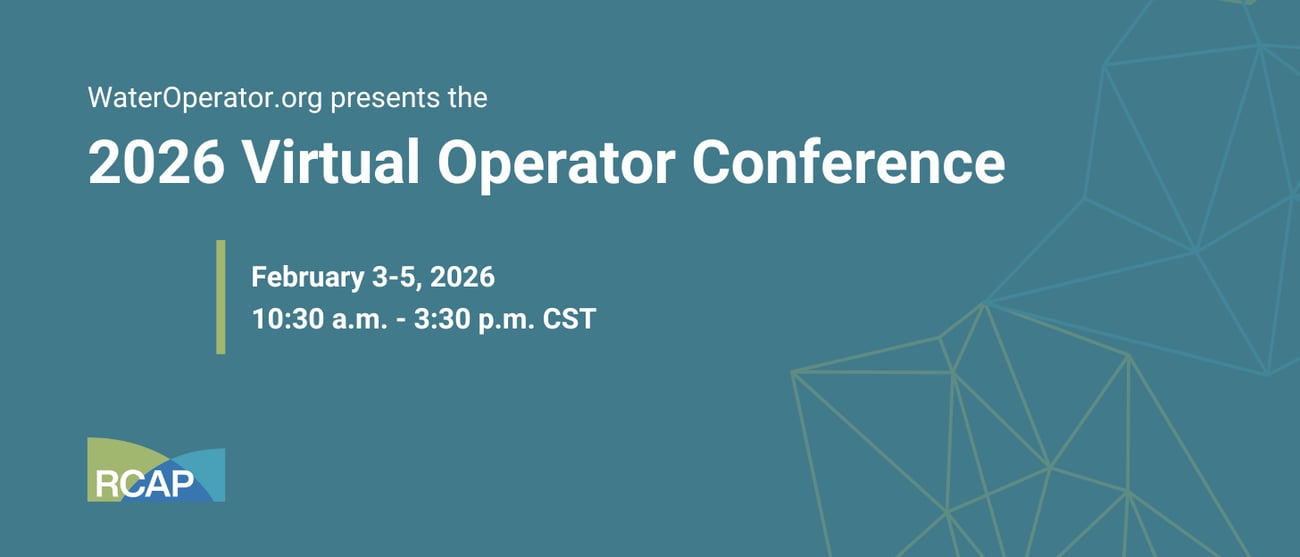
Register for VirCon 2026 Today! |
Our team at WaterOperator.org is excited to announce the Virtual Operator Conference will return in 2026. Free registration is now open!
Over three days (February 3-5, 2026) participants can earn up to 12 continuing education hours applicable to their drinking water operator license renewal.
We are seeking approval in all relevant operator certification jurisdictions and will provide updates on the event registration page and in this newsletter!
Topics include asset management, distribution systems, GIS, and drones. Each session is delivered by a technical assistance professional from the RCAP network. Register now to save your spot!
|
|
|
|
|
|
|
|
Tap Talk |
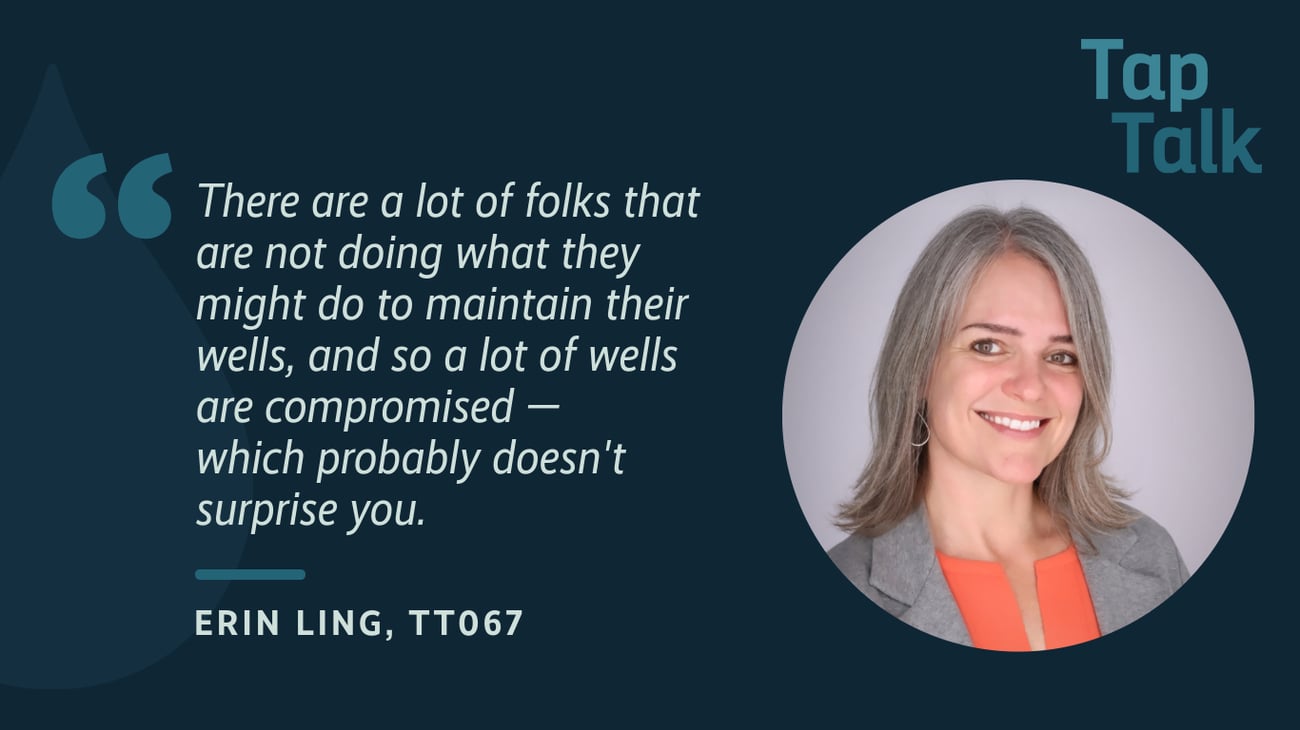
The Value of Well Data in Serving Well Owners
This week on Tap Talk we are pleased to welcome guest Erin Ling, a senior extension specialist at Virginia Tech University who coordinates the Virginia Household Water Quality Program (VAHWQP). The unique program provides a wealth of services to well owners in Virginia, including affordable testing, educational programming & workshops, water quality data collection & publication, and youth outreach for high school students. In particular, Erin emphasizes the value of the program’s data on Virginia’s private wells, and discusses with Steve and Jennifer how other
states might learn from Virginia’s model.
|
|
|
|
|
|
|
U.S. EPA Proposes Changes to PFAS Reporting Rules |
U.S. Environmental Protection Agency (EPA) released a proposal to alter the scope of its perfluoroalkyl and polyfluoroalkyl substances (PFAS) reporting regulations under the Toxic Substances Control Act (TSCA.) The exemptions and modifications that EPA is proposing would maintain important reporting requirements on PFAS while exempting reporting on activities that manufacturers are least likely to know or reasonably determine.
The proposed exemptions are:
PFAS manufactured (including imported) in mixtures or products at concentrations 0.1% or lower
Imported articles
Certain byproducts
Impurities
Research and development chemicals
Non-isolated intermediates
EPA is also proposing technical corrections to clarify what must be reported in certain data fields and to adjust the data submission period.
|
|
|
|
|
Featured Video |
 |
Why Washington Must Do More For Clean Water
waterloop
"Clean water’s future depends on sustainable funding, bipartisan policy, and stronger public communication. In this conversation from the Reservoir Center in Washington, D.C., Adam Krantz of the National Association of Clean Water Agencies (NACWA) explains how federal investments and advocacy are shaping the next chapter for America’s water infrastructure.
He outlines the historic impact of the Bipartisan Infrastructure Law and why permanent, predictable federal funding is essential to maintain momentum. Krantz highlights the urgent need for a national Low-Income Household Water Assistance Program so that access to water is treated as essential as food and energy. He details efforts to get resources and technical help to smaller, under-resourced utilities—often left behind in traditional grant and loan programs—and how partnerships with larger systems can close that gap.
The discussion also explores the role of programs like WIFIA and SRF in leveraging billions for critical projects nationwide. Looking ahead, Krantz calls for a united communications effort to position water alongside energy and transportation as the nation’s most vital infrastructure, ensuring long-term investment, trust, and resilience."
|
|
|
|
|
Lead Service Line Replacement Cost Calculator |
Replacing lead service lines is critical for safe drinking water, but costs could potentially exceed $100 billion nationwide. To help communities plan effectively, the Lead Service Line Replacement Cost Calculator offers a free, online tool that helps estimate project costs.
Key Features:
Free and accessible (no downloads or logins required)
Customizable inputs for material, labor, excavation, and contingency costs
Instant calculations for total and per-line costs
Mobile-friendly and multilingual (English & Spanish)
Supports compliance with EPA’s Lead and Copper Rule Improvements (LCRI)
This calculator helps to empower municipalities, utilities, tribal governments, and planners to optimize budgets, prevent overruns, and accelerate lead service line replacement while building infrastructure that withstands climate challenges.
|
|
|
|
|
Featured Video |
 |
Data centers, water & secrets: Companies using NDAs to hide water usageWSB-TV
"Massive data centers proposed for metro Atlanta expect to use millions of gallons of water per day. Some of those data centers are planning to use more water than entire Georgia towns. Channel 2 consumer investigator Justin Gray has been looking into what that means for the communities around these data centers."
|
|
|
|
|
|
|
Engineered for Endurance: Building Resilience
November 20, 2025 | 11:00 AM MST
American Water Works Association
At this free webinar, presented by DIPRA, join top engineers and utility leaders in the drinking water industry as they explore how long-term infrastructure performance is shaped by engineering decisions, material selection, installation practices, and maintenance strategies.
The session will highlight utility case studies where systems have withstood decades of service, even under challenging conditions such as seismic events, corrosive soils, and wildfires. Attendees will learn how real-world challenges have shaped best practices in designing durable, low-maintenance water systems.
|
|
|
Finding a Unicorn! Small Wastewater System Funding Series: The Current Funding Landscape
December 2, 2025 | 1:00 PM EST
Environmental Finance Center Network
While funding options continue to shift, well-established federal infrastructure funding such as the EPA State Revolving Fund (SRF) and USDA Rural Development programs will continue to be primary sources for many small systems.
This free webinar will provide an overview of the current funding landscape and help participants get organized to identify options suitable for the needs of their local system.
|
|
|
|
|
|
|
|
|
|
|
Recent Blog Posts at WaterOperator.org |
|
|
|
Get Ready for the 13th Annual SepticSmart Week!
Read Here »
|
|
|
|
From Waste to Resource: Biosolids Management References for POTWs
Read Here »
|
|
|
Unlocking Rural Prosperity: The Rural Funding Guide is Here
Read Here »
|
|
|
|
|
Groundwater & Well Care for Public Water Systems is a free online course from WaterOperator.org. Certificates are provided and the course is currently pre-approved for 2 hours continuing education
credit in a number of states.
Click here to learn more.
|
|
|
|
|
|
|
|
|
WaterOperator.org is a free service, grant-funded to support small community water and wastewater operators with comprehensive resources and information in one easy-to-use place. We also serve the 800+ training, primacy, and technical service organizations, by
helping operators get to their information. We aren't selling or advertising anything. Call us at 1-866-522-2681 for assistance.
|
|
|
|
|
Visit our other websites:
|
|
|
|
|
|
|
Click here to unsubscribe | Sent to: _t.e.s.t_@example.com
Illinois State Water Survey, 2204 Griffith Drive, Champaign, IL 61820, United States
|
|
|
|
|