|
Newsletter #120 for December 2025 |
|
|
|
|
Don't Miss This Week's "Private Well Assessment and Outreach for Environmental Health Professionals" Workshop |
 |
|
|
|
Our second 4-Hour Workshop: Private Well Assessment and Outreach for Environmental Health Professionals of this year will be held on Wednesday of this week, December 3! Now is the time to register if you haven't yet. Due to the interactive nature of this workshop, we cap the registration for this workshop at 200 registrants, so register ASAP!
This 4-hour online workshop covers the use of our assessment tool for the evaluation of private well vulnerability to contamination and best practices for well owner outreach. Participants will learn private well fundamentals, how to assess a private well using the assessment tool, how to effectively engage private well owners, how to develop a program for outreach to well owners, and best practices for managing a well owner program.
4-Hour Workshop: Private Well Assessment and Outreach for Environmental Health Professionals
December 3, 2025 | 12 PM CT |
| Register » |
|
|
|
Save the Date for the 2026 Private Well Conference:
May 19-21, 2026 |
|
|
 |
|
Additionally, we are about ready to announce the location of our 2026 Private Well Conference. Our team is in the process of finalizing our venue now, and you can expect an additional email later this month with the official announcement — so keep a close eye on your inboxes and please be sure none of our messages our going to spam!
We had such a wonderful time hosting our first in-person Private Well Conference since 2019 this past spring, and can't wait to do it again in 2026. We hope to see many of the same faces and friends from 2025, and to welcome many new ones as well!
For more on the purpose of the Private Well Conference, and to check out the recorded sessions from our past conferences, please visit the conference page at our website, linked below. |
|
|
|
|
|
|
|
Tap Talk — Understanding PFAS and Private Wells (Part 1) |
![Graphic for episode #65 of the Tap Talk podcast, featuring photos of guests Dr. Jackie MacDonald Gibson and Jenny Hoponick Redmon and the quote "One of the reasons [PFAS] are so slow to break down is exactly the reason they're so useful. They have a chain of carbons attached to fluorine, one of the strongest chemical bonds that exist.".](https://content.app-us1.com/cdn-cgi/image/format=auto,onerror=redirect,width=650,dpr=2,fit=scale-down/lmplq/2025/11/05/10229462-a6d2-4a5e-880b-8a60d6e032cb.png "Graphic for episode #65 of the Tap Talk podcast, featuring photos of guests Dr. Jackie MacDonald Gibson and Jenny Hoponick Redmon and the quote \"One of the reasons [PFAS] are so slow to break down is exactly the reason they're so useful. They have a chain of carbons attached to fluorine, one of the strongest chemical bonds that exist.\".") |
|
In TT065, we kicked off a two-part series exploring PFAS — also known as “forever chemicals” — and their impact on private well users. Jennifer and Steve were joined by Dr. Jacqueline MacDonald Gibson and Jennifer Hoponick Redmon, two leading experts in environmental health and water quality. Together, they break down the science behind PFAS, discuss how these chemicals enter our water supplies, and share new research on exposure risks for private well users. The conversation explores the challenges, health implications, and ongoing efforts to protect drinking water in rural communities. |
| 🎧 Listen here 🎧 |
|
|
From the Help Center |
|
|
|
What are maximum contaminant levels (MCLs), and what do they have to do with well water?
Understand how regulated amounts of contaminants for public water systems can help ensure that your well water is safe to drink in this article at our Help Center.
For additional articles and resources for private well owners, explore our Private Well Help Center. |
|
|
|
|
Upcoming Webinars & Recent Recordings |
|
|
|
Groundwater and Well Construction 101
December 17, 2025 | 1 PM CT
Hosted by PrivateWellClass.org
This free webinar will cover types of wells, well construction, the basic components of well systems, and water treatment options.
Register »
We would love your support in distributing this information. Please feel free to share this link. |
|
|
|
How to Find Local Information and Help
Recorded on November 19, 2025
This webinar explained how to find local resources for well information and assistance, and addressed topics such as methods for finding well logs, records, and information about your well; finding well drillers, contractors, and financial help programs; and when to sample, what to sample for, and best practices to protect well systems.
Watch Recording »
|
|
|
|
What Environmental Health Professionals Need to Know about Private Wells
Recorded on October 29, 2025
This webinar provided an introduction to groundwater, well construction, water quality, and well care best practices for environmental health professionals and others who serve well owners.
Watch Recording » |
|
|
|
|
|
Facing the facts on water:
New lawsuit challenges ‘exempt wells law’
Daily Montanan
Groundwater is being overdrawn in Montana, not to mention the state experiencing significant drought just like so many other states this year. This commentary by Montana's longest-running news columnist explains how the state's 'exempt well law' — which allows wells drilled for new developments to be exempt from the standard water appropriation process — is worsening the water supply crisis in Montana.
|
| Read here » |
|
|
|
FEMA says NM fire victims will have to prove ‘causation’ to get payment for well contamination
Source New Mexico
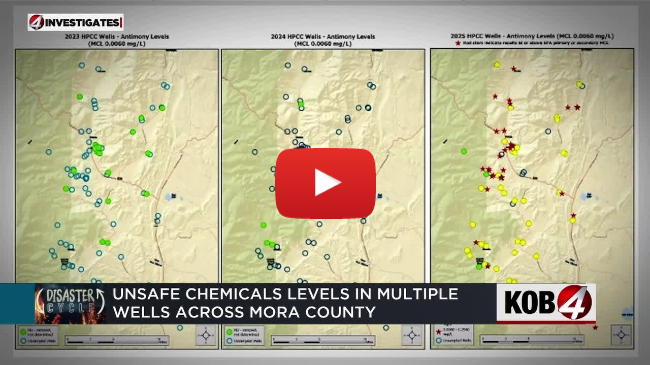
The New Mexico Department of Health has alerted residents of Mora County that their private wells may be contaminated by dangerous metals such as antimony, arsenic, and uranium. These metals were found in fire suppressant materials that were used to fight the nearby Hermits Peak-Calf Canyon wildfire that burned much of Mora County in 2022. While residents and state officials have called for federal assistance in funding well tests and water filters, FEMA has recently pronounced that residents will need to prove that the fire suppressants caused their wells to become contaminated in order to receive funding.
|
| Read here » |
|
You can read more from Source New Mexico on New Mexico groundwater contamination in the following articles:
|
|
|
|
|
|
¡Parranda! Celebremos a los guardianes de nuestras aguas: EFCN to Hold Septic Workshop and Celebration of
Clean Water in Puerto Rico |
 |
|
On December 12, the Environmental Finance Center Network will be hosting a unique educational opportunity and celebration in Cayey, Puerto Rico. Read the official event description in both Spanish and English below:
¡Parranda! Celebremos a los guardianes de nuestras aguas | 12 de diciembre de 2025 | 8:30 AM - 3:30 PM AST | Salón de Actividades El Quijote, Cayey, Puerto Rico
Durante esta actividad, aprenderemos a manejar correctamente los sistemas sépticos para proteger nuestras fuentes de agua y fortalecer la resiliencia de nuestros acueductos comunitarios. Ven preparado para compartir las historias de éxito de tu comunidad, disfrutar de buena música, rica comida y espíritu de celebración, mientras reconocemos el esfuerzo colectivo por un ambiente más saludable.
También habrá un área de exhibición con mesas y puestos que compartirán información de instituciones locales, tanto públicas como privadas.
Reserva tu espacio a través del forumulario en este formulario de registro o envia un mensaje por WhatsApp al 787-371-5182.
•
Let's Celebrate the Guardians of Our Waters! | December 12, 2025 | 8:30 AM - 3:30 PM AST | Salón de Actividades El Quijote, Cayey, Puerto Rico
During this workshop, we will learn how to properly manage septic systems to protect our water sources and strengthen the resilience of our community aqueducts. There will also be an exhibition area with tables and booths sharing information from local institutions, both public and private. Come prepared to share your community’s success stories, enjoy good music, delicious food, and a festive spirit as we celebrate our collective efforts for a healthier environment.
Reserve your spot through this registration form (Spanish language) or send a WhatsApp message to 787-371-5182. Don't miss this educational celebration!
|
| Ver más información / See more info » |
|
|
|
|
Partner Events & Workshops |
|
|
|
Operation, Maintenance and Inspection of Onsite Wastewater Systems
December 9 | 1 pm ET | Online
Hosted by the Environmental Finance Center Network
This one-hour webinar introduces the key components of operating, maintaining, and inspecting onsite wastewater systems. Attendees will learn how septic tanks are designed to function, essential inspection tasks, how to identify common problems, and info about soils and household usage.
Register here. |
|
|
|
Private Wells and Septic Systems: Vital Parts of Rural Living
December 9 | 12 pm CT | Online
Hosted by the Rural Community Assistance Partnership
This webinar will provide the attendee with information on the types of wells and aquifers found in the United States. Information on private septic systems will also be presented, along with how the private wells can be impacted by septic systems.
Register here. |
|
|
|
Homeowner’s Guide to PFAS
December 10 | 3 pm CT | Online
Hosted by Great Lakes Community Action Partnership
This is a training geared to Illinois homeowners on private wells regarding PFAS and new EPA guidance on the subject.
Register here. |
|
|
|
Salinization of Our Waters – What Can We Do
December 17 | 12 pm ET | Online
Hosted by University of Maryland Extension
The use of deicing salts and rising sea level is increasingly making surface and ground water more saline. This issue has major implications on aquatic ecosystems and the numerous species that depend on them. In addition, increasing salinity can increase corrosion with subsequent infrastructure damage and release toxic metals in drinking water. This webinar will discuss the impact of this issue, ways to reduce impacts, and protect drinking water quality.
Register here. |
|
|
|
|
|
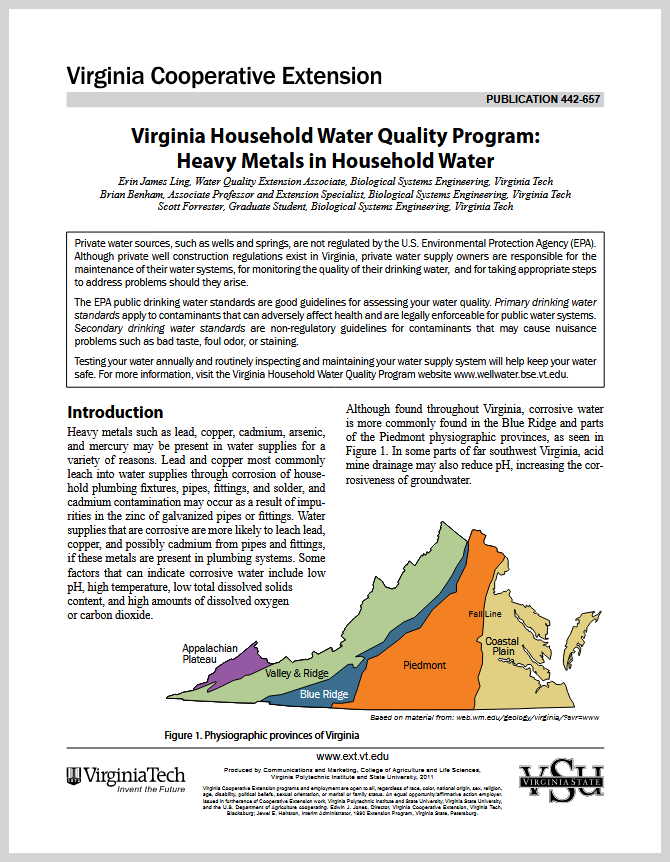
Heavy Metals in Household Water
Virginia Household Water Quality Program /
Virginia Cooperative Extension
This document from the Virginia Household Water Quality Program covers how heavy metals can come to be present in household water systems, the problems associated when heavy metals are in drinking water, how to test for heavy metals in wells, how to prevent heavy contamination, and more.
|
| View the Document » |
|
|
|
|
Featured Video: Private Wells in Mora County Declared Unsafe |
|
|
 |
|
This video, brought to you by KOB 4 News, investigates this crisis of heavy metals and chemicals from firefighting retardants having been detected at unsafe levels in multiple private wells in Mora County, New Mexico. |
| Watch the Video » |
|
|
|
|
|
PrivateWellClass.org is a free, grant-funded service to support private well owners and the professionals that work with these wells. The program seeks to raise awareness of private well issues and help well owners understand their responsibilities to be a good steward of their well and water source. The Private Well Class, developed at the Illinois State Water Survey at the University of Illinois Urbana-Champaign, is a collaboration with the Rural Community Assistance Partnership with funding from the U. S. Environmental Protection Agency. Call us at 1-866-945-0699 for assistance. |
|
|
|
|
|
Visit our other websites: |
|
|
|
|
|
|
|
Click here to unsubscribe | Sent to: _t.e.s.t_@example.com
Illinois State Water Survey, 2204 Griffith Drive, Champaign, IL 61820, United States |
|
|