|
Newsletter #131 for August 2026 |
|
|
|
|
|
|
|
|
|
EPA has released two new guidance documents to help drinking water utilities comply with the 2024 Lead and Copper Rule Improvements (LCRI) and protect their communities from lead exposure in drinking water.
The first document, LCRI Service Line Inventories – Tips, outlines cost-effective strategies for completing service line inventories, through the use of historical records, staff knowledge, statistical methods, and predictive modeling, including AI-based approaches, to identify unknown service line materials while minimizing excavations and customer disruption.
The second document, LCRI Service Line Replacement Access – Tips, details how utilities should determine whether they have access to replace lead or galvanized requiring replacement (GRR) service lines and outlines how to document barriers such as property owner consent, funding limitations, local ordinances, and safety concerns.
Both documents include example scenarios and offer practical guidance for meeting inventory and replacement requirements, helping understand compliance requirements, and improving lead service line replacement programs efficiently and cost effectively. |
|
|
|
|
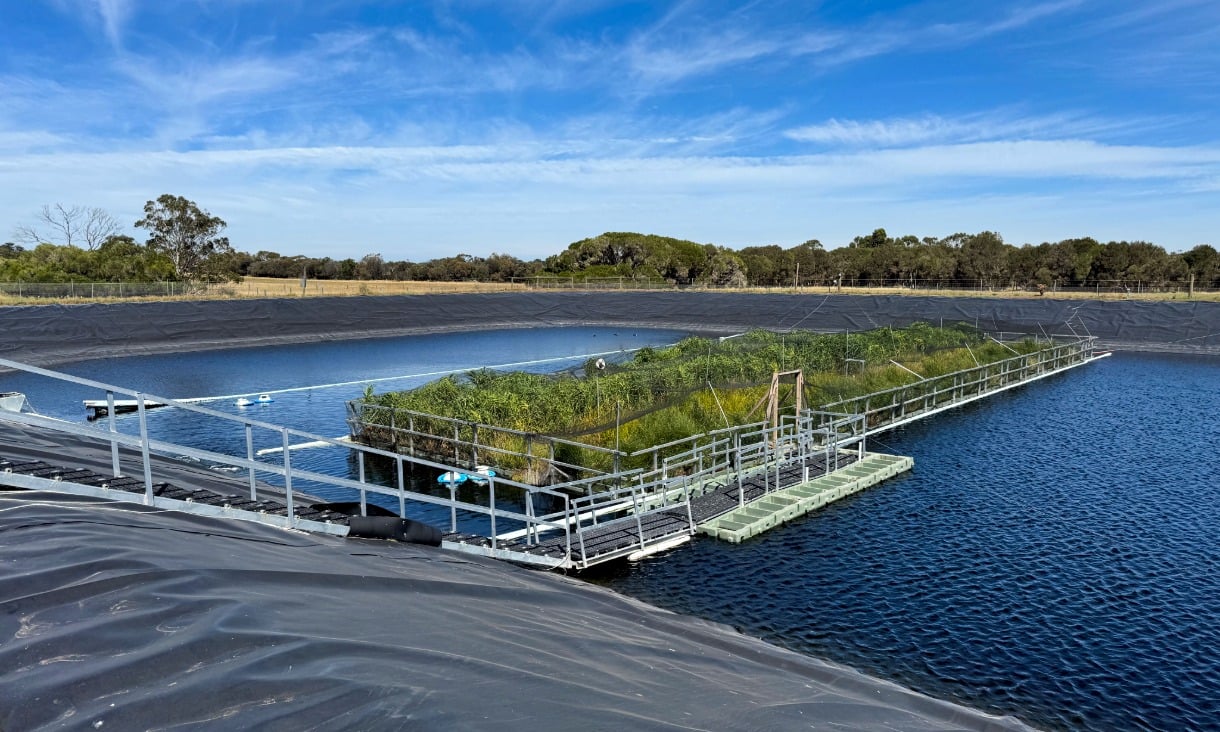
A two-year study led by RMIT University, Westernport Water, and Australia’s national science agency CSIRO found that floating wetlands installed in wastewater lagoons can significantly reduce greenhouse gas emissions while also improving water quality. During the full-scale trial at the Westernport Water wastewater treatment plant on Phillip Island, floating platforms planted with native wetland vegetation were able to reduce carbon dioxide emissions by up to 36%, methane emissions by up to 66%, and nitrogen emissions by 18% compared to a similar lagoon without the floating wetland system.
Researchers believe the extensive root systems create a habitat for beneficial microbes that consume nutrients, pollutants, and potentially greenhouse gases. Because floating wetlands can be retrofitted into existing lagoon systems without major infrastructure upgrades, they may offer wastewater lagoon systems a practical, nature-based solution for reducing emissions and supporting sustainability goals. Following this success, RMIT researchers are now testing this system in farm dams across the country, potentially serving as a solution to improve the health and productivity of Australia’s 1.8 million farm dams. |
 |
|
Source |
|
|
|
|
|
|
The Water Research Foundation (WRF) is accepting proposals for eight additional research projects aimed at addressing critical challenges and opportunities across the water sector. Funded through WRF’s Research Priority Program, the projects focus on topics including adaptive capital improvement planning, best-in-class maintenance strategies for utility assets, optimizing PFAS treatment systems for multi-contaminant removal, identification and mitigation of non-point PFAS sources in sewersheds, innovative approaches to improve the lifetime and minimize the O&M requirements of nature-based treatment systems, climate risk metrics for water supply planning, nutrient transformations in wastewater resource recovery facilities, and opportunities to recover value from carbon flows in water utilities. |
|
|
|
|
Around 98% of US water utilities disinfect drinking water with chlorine and its compound to inactivate microbes and bacteria that can cause serious illness. However these disinfectants can also react with naturally occurring materials in water to form disinfection byproducts, which have been linked to health concerns such as bladder cancer and reproductive damage. Virginia Tech researchers are evaluating chlorocyanurates, an alternative chlorine-based disinfectant that is more stable and easier to store and transport than conventional chlorine, making it particularly attractive for small water systems and emergency applications.
Their research found that while chlorocyanurates reduced the formation of several well-known DBPs, they also increased the formation of other, less-studied compounds that may present alternative health concerns. The findings suggest that there is no single "best" disinfectant solution and that treatment decisions should consider the specific chemistry of the source water.
|
|
|
|
|
A growing body of research suggests that transparent exopolymer particles (TEP) may be a major but often overlooked contributor to biofouling in municipal and industrial water systems. TEP are microscopic, gel like particles produced by algae, bacteria, and other microorganisms that act as a highly adhesive biological glue, trapping organic matter, microorganisms, and suspended solids. Researchers believe that TEP-microbe complexes form concentrated microbial microenvironments, or "protobiofilms," allowing microbial communities to develop while suspended in the water column before attaching to pipes, membranes, storage tanks, and other treatment infrastructure.
For water utilities, TEP are gaining attention because they can pass through conventional treatment processes, contribute to membrane fouling, promote biofilm formation, increase cleaning frequency, reduce membrane performance, and shorten equipment life. The article suggests that monitoring and controlling TEP concentrations may help utilities better manage biofouling challenges that are not fully explained by traditional water quality indicators or microbial counts alone. |
|
Upcoming Events
A listing of webinars, symposia, and conferences relevant to this work. |
|
|
|
|
WEFTEC 2026
September 26-30, 2026 / New Orleans, LA
Water Environment Federation
This annual conference brings together water and wastewater professionals from across the globe to showcase the latest innovations, share operational best practices, and explore solutions that advance reliable, efficient, and sustainable water and wastewater management. |
|
|
|
WaterSmart Innovations
October 21-23, 2026 / Portland, OR
American Water Works Association
This conference explores practical strategies for managing water resources, equipping water professionals with the tools to improve water-use efficiency, enhance long-term resource sustainability, and build community resilience. |
|
|
|
|
|
|
|
|
|
|
|
|
Wastewater | Open Access
Comparative evaluation of microalgae-activated sludge cocultivation for municipal wastewater treatment using four microalgal species under nonaerated batch conditions
Maulana, A., Mori, K., & Toyama, T. (2026). Comparative evaluation of microalgae-activated sludge cocultivation for municipal wastewater treatment using four microalgal species under nonaerated batch conditions. Water Science & Technology, 94(3), 338-350. https://doi.org/10.2166/wst.2026.317.
Why it's interesting: This study evaluated whether different microalgal species can be successfully paired with activated sludge to treat municipal wastewater without the need for mechanical aeration, reducing overall energy usage at wastewater treatment plants. Researchers compared four freshwater microalgae species (Chlorella vulgaris, Chlorella sorokiniana, Chlamydomonas reinhardtii, and Euglena gracilis), and found that they were able to supply oxygen through photosynthesis in wastewater, allowing dissolved oxygen concentrations to increase without mechanical aeration, while maintaining approximately 90% dissolved organic carbon removal. The microalgae and activated sludge microorganisms were also able to achieve enhanced nutrient removal, with ammonium rapidly removed and total nitrogen and phosphorus removal rates significantly higher than activated sludge alone. Because all four microalgal species demonstrated similar treatment performance, the findings suggest that algae-bacteria systems may offer a flexible, low-carbon approach for reducing aeration energy requirements while maintaining effective organic matter and nutrient removal. |
|
|
Drinking Water | Not Open Access
Fate and distribution of microplastics in a small-scale drinking water treatment plant: Evidence from a year-long monitoring campaign
Shahariar, M.N.K., Holsen, T.M., & Baki, A.B.M. (2026). Fate and distribution of microplastics in a small-scale drinking water treatment plant: Evidence from a year-long monitoring campaign. Journal of Water Process Engineering, 87, 109993. https://doi.org/10.1016/j.jwpe.2026.109993.
Why it's interesting: This study monitored microplastic levels at multiple treatment stages for nearly a year at a small conventional drinking water treatment plant in northern New York to evaluate how microplastics move through and are removed by the treatment process. Researchers found that while microplastic concentrations decreased from an average of 50 particles/L in source water to 25 particles/L in finished water, overall removal was highly variable and averaged only 17%. The study found that the treatment plant not only removed microplastics from the water but, at times, also introduced new microplastics into the treatment process. Filtration systems containing HDPE components were identified as a likely source of new microplastics released through normal operation and backwashing. Fibers were the dominant microplastic type observed throughout the treatment process, while smaller particles were more likely to pass through treatment barriers. The researchers also observed that switching from alum to polyaluminum chloride (PAC) resulted in more consistent microplastic removal. The findings highlight the importance of evaluating treatment materials as a potential source of microplastic contamination and considering coagulant selection and treatment system components as part of a broader microplastic management strategy. |
|
|
Wastewater | Open Access
Light-responsive systems enable efficient resources recovery in wastewater treatment
Duraisathiamoorthy, K., Tsai, M.L., & Lai, Y.T. (2026). Light-responsive systems enable efficient resources recovery in wastewater treatment. Communications Sustainability, 1, 129. https://doi.org/10.1038/s44458-026-00137-4.
Why it's interesting: This article examines how light-responsive materials and processes could improve resource recovery in wastewater treatment systems. Rather than using conventional chemical or thermal regeneration methods, these technologies use light to selectively capture, release, or convert valuable resources from wastewater while reducing energy requirements. The authors highlight several emerging approaches, including light-controlled materials for phosphate and metal recovery, photothermal membranes that can separate ions while generating energy, photocatalytic systems that convert nitrate into ammonia or degrade pollutants while producing hydrogen, and photosynthesis-based systems that use algae to remove nutrients while generating biomass. |
|
|
|
|
Industry News |
|
Why hackers are targeting America’s water systems and what ASU is doing about it
This article provides an overview of cybersecurity risks facing water utilities and answers common questions about system vulnerabilities, recent attacks, potential operational impacts, and strategies for improving resilience against cyber threats.
Rezai studying superabsorbent polymers for pathogen binding
Researchers at George Mason University are developing synthetic materials that can selectively detect and capture harmful bacteria, viruses, and other biological contaminants in water more reliably and cost-effectively.
Magnetic nanoparticles remove forever chemicals from water
Researchers at Friedrich-Alexander University in Germany, have developed functionalized magnetic nanoparticles that can efficiently remove a broad range of PFAS compounds, as well as fluorinated microplastics, from contaminated water using magnetic separation.
UTHealth Houston joins NASA initiative to protect border drinking water
Researchers are partnering with NASA to develop AI-powered tools that combine satellite imagery, hydrologic models, and water utility data to help border-region utilities anticipate water quality challenges, improve source water management, and strengthen drinking water resilience.
What wastewater says about what we eat and who we are
Researchers at Duke University and the University of North Carolina have developed a wastewater-based DNA sequencing approach that can monitor and identify community-level dietary patterns from sewage, providing a new tool for tracking nutrition trends, food access, and public health needs. |
|
|
|
|
|
|
|
|
|
|
|
|
|
|
|
WaterOperator.org is a free service, grant-funded to support small community water and wastewater operators with comprehensive resources and information in one easy-to-use place. We also serve the 800+ training, primacy, and technical service organizations, by helping operators get to their information. We aren't selling or advertising anything. Call us at 1-866-522-2681 for assistance. |
|
|
|
|
|
Visit our other websites: |
|
|
|
|
|
|
|
Click here to unsubscribe | Sent to: _t.e.s.t_@example.com
Illinois State Water Survey, 2204 Griffith Drive, Champaign, IL 61820, United States |
|
|
|
|