|
Newsletter #132 for September 2026 |
|
|
|
|
|
|
|
|
|
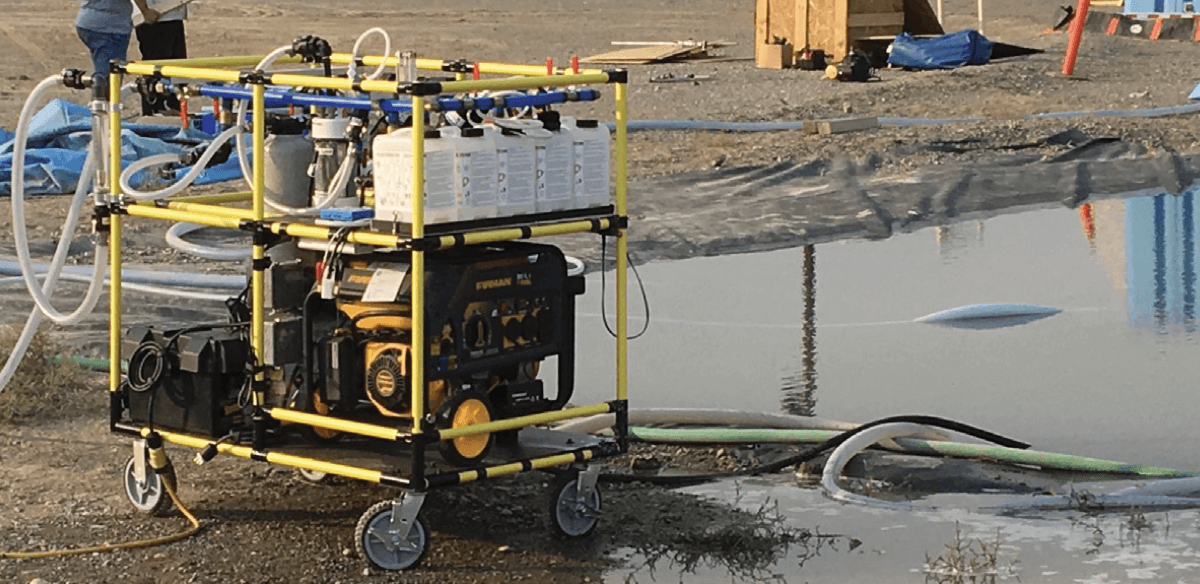
As part of National Preparedness Month, EPA Region 7 recently demonstrated its Water-on-Wheels Mobile Emergency Water Treatment System (WOW Cart) during an emergency response event in Kansas, highlighting a technology designed to provide safe drinking water when disasters disrupt normal water service. Roughly the size of a shopping cart, the portable treatment system can produce up to 10,000 gallons of treated water per day and is intended to supplement or replace bottled water during emergencies such as floods, hurricanes, and tornadoes. Developed through a partnership between EPA and the nonprofit WaterStep, the WOW Cart can be deployed to support drinking, cooking, cleaning, and medical needs when communities lose access to safe water. The demonstration also showcased how utilities, emergency responders, and public health agencies can strengthen preparedness and community resilience by incorporating portable treatment technologies into their emergency response planning.
|
 |
|
Source |
|
|
|
|
Utilities today are increasingly facing extreme heat, extreme cold, flooding, power disruptions, sea level rise, and heavier rainfall that strain their infrastructure. To help, the Water Utility Climate Alliance (WUCA), in partnership with Brown and Caldwell, has released a new guide for drinking water, wastewater, and stormwater utilities on building climate resilience into capital projects, facility upgrades, and asset replacements. The guide offers practical strategies to help keep systems running under these changing conditions while still meeting today's operational needs.
Organized around eight common project types, each focused on a specific asset and the climate threat it faces, the guide outlines the climate risks, adaptation strategies, implementation considerations, and operational impacts to help utilities better plan and prioritize resilience improvements. The project types range from maintaining power during outages and protecting electrical, instrumentation, and mechanical equipment from flooding and temperature extremes, to adapting wet wells and outfalls to flooding and sea level rise, preparing wastewater infrastructure for higher wet-weather flows from more frequent and intense storms, and protecting chemical storage facilities from extreme heat.
Each project type includes charts summarizing key actions during planning, design, and operations, a decision flowchart for selecting the right strategies, and checklists and case studies from other utilities. Strategies are also rated by their added construction cost and the extra maintenance workload they create, from tasks existing staff can take on to those needing additional staff or training, helping operators plan ahead before designs are finalized. The report also includes an appendix that helps utilities understand the range of future climate conditions they may face and factor those conditions into design and planning decisions.
Water and wastewater utilities are encouraged to use this guidance document and begin implementing the recommended adaptation strategies as the risk of extreme weather events grows.
|
|
|
|
|
|
|
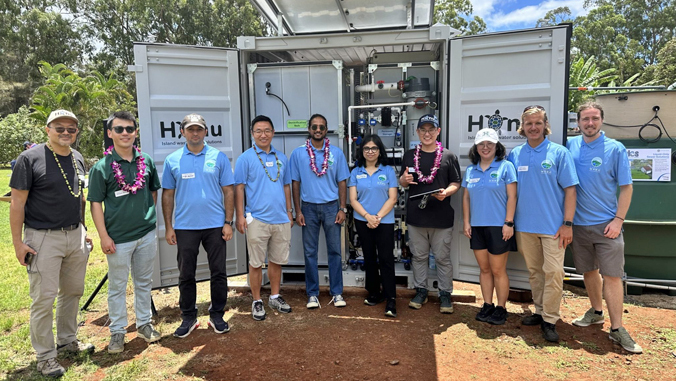
Researchers from the University of Hawaiʻi at Mānoa Water Resources Research Center (WRRC) recently showcased the Honu Hub, an innovative decentralized wastewater treatment system designed to provide a more affordable alternative for properties that cannot connect to centralized sewer systems. Unveiled during the Wastewater Innovation Tech Showcase at the Wahiawā Wastewater Treatment Plant, the above-ground, solar-powered system is roughly the size of a garden shed and is designed to reduce the cost and complexity associated with conventional cesspool replacement. As part of the newly launched Hawaiʻi Onsite Wastewater Technology Evaluation Program (HOWTEP), the technology will undergo independent testing to support certification and broader deployment. Researchers believe that the system could help address Hawaiʻi's need to replace nearly 88,000 cesspools by 2050 while offering reliable wastewater treatment for rural, remote, or difficult-to-serve locations.
|
 |
|
Source |
|
|
|
|
EPA recently announced a $251 million Water Infrastructure Finance and Innovation Act (WIFIA) loan to the Las Virgenes-Triunfo Public Financing Authority in California to support upgrades to several drinking water treatment facilities and advance water reuse through the region's Pure Water Project. The project will construct an advanced water purification facility capable of treating recycled water from western Los Angeles and eastern Ventura Counties, creating the first local water supply for the Las Virgenes-Conejo region. These improvements will help address the region’s aging infrastructure, increase system capacity, strengthen resilience to droughts and wildfires, improve reliability during emergencies and water supply disruptions, and provide a more affordable local water source.
|
|
|
|
|
The Water Research Foundation (WRF) is accepting proposals for seven additional research projects aimed at addressing critical challenges and opportunities across the water sector. Funded through WRF's Research Priority Program, the projects focus on topics including workforce retention and recruitment strategies for public-sector utilities, improving biological nutrient removal performance at wastewater treatment plants, managing manganese in drinking water distribution systems and premise plumbing, using advanced metering infrastructure (AMI) to support water conservation and affordability goals, and incorporating operations and maintenance considerations earlier in the infrastructure design process.
|
|
|
|
|
A recent article examined the potential benefits and limitations of thermally reactivating granular activated carbon (GAC) used for PFAS treatment. While reactivation can provide significant cost savings compared to replacing and disposing of spent media, the article notes that factors such as media acceptance requirements, transportation distances, water quality characteristics, and regulatory considerations can affect whether reuse is a viable option.
A case study from an Arizona groundwater utility currently designing a 2 MGD PFAS treatment facility supplied by five wells with combined PFOS and PFOA concentrations of approximately 70 ppt found that roughly 80,000 pounds of spent GAC would require management annually. The article estimates that thermal reactivation could reduce media management costs to approximately $120,000 per replacement cycle, compared to about $240,000 for virgin-media-plus-disposal. However, it also highlights that spent GAC conditions (ex. total accumulated contaminants) and media acceptance requirements may limit reactivation opportunities, emphasizing the importance of evaluating GAC reuse feasibility and lifecycle costs early in the treatment planning and design process.
|
|
Upcoming Events
A listing of webinars, symposia, and conferences relevant to this work. |
|
|
|
|
Detecting Underground Water Leaks with 93% Accuracy
October 8, 2026 | Virtual 11:00 - 12:00 Mountain Time Zone
American Water Works Association
This free webinar explores how artificial intelligence and machine learning tools can help water utilities identify leak-prone areas within aging distribution systems, prioritize infrastructure investments, mitigate risk, and use limited utility resources more efficiently. |
|
|
|
Microplastics in Chesapeake Bay Oysters: Understanding Size-Dependent Accumulation
October 11, 2026 | Virtual 13:00 - 14:00 Eastern Time Zone
Environmental Finance Center Network
This free webinar explores how microplastic pollution is affecting aquatic ecosystems by examining how Eastern oysters accumulate microplastics from surrounding waters, highlighting research from Chesapeake Bay tributaries and what these findings may mean for future environmental monitoring efforts. |
|
|
|
Water Quality Technology Conference
November 15-19 | Memphis, TN
American Water Works Association
This conference brings together water professionals, researchers, regulators, and technology providers to share the latest research, emerging contaminants information, and innovative treatment technologies focused on improving water quality.
|
|
|
|
|
|
|
|
|
|
|
Wastewater | Open Access
PFA technology: Production, safety and wastewater deployment analysis
Mendez-Ruiz, J. I., Bell, K., Norton, J. W., Bott, C., Mohan, G. R., Muvhiiwa, R., Oza, S., Manoli, K., Garibi, A., Walton, J., & Santoro, D. (2026). PFA technology: Production, safety and wastewater deployment analysis. Water Research, 303, 126289. https://doi.org/10.1016/j.watres.2026.126289.
Why it's interesting: This review examines the current state of performic acid (PFA) technology as an emerging wastewater disinfectant for municipal wastewater effluents and combined sewer overflows (CSOs). Researchers evaluated five different PFA production and delivery approaches, including conventional on-site blending, distillation-based production, PAA/PFA co-delivery, microreactor generation, and electrochemical synthesis. The review found that PFA can provide rapid bacterial disinfection at relatively low doses and short contact times, making it favorable for applications where shorter hydraulic retention time can limit the effectiveness of other disinfection technologies. Full-scale studies cited in the review used PFA doses from about 0.8-4 mg/L in municipal effluent up to 8-24 mg/L in CSO settings, with contact times of roughly 10 to 36 minutes, although performance depended strongly on matrix demand and mixing. While generating PFA on-site from its precursor chemicals is currently the only method proven at full scale, microreactor-based systems were identified as the most promising emerging technology because they can produce high-strength PFA on demand while requiring only a small amount of reacting chemical at any time, though they have not yet been tested at full scale. The review concluded that PFA typically forms fewer halogenated byproducts than chlorine, but its effects on water chemistry and aquatic toxicity still need site-specific evaluation. Widespread adoption will require additional pilot-scale testing, improved residual monitoring, and further demonstration of long-term operational reliability. |
|
|
Drinking Water | Not Open Access
Safeguarding rural drinking water from microorganism and herbicide co-contamination: Is the electrochemically driven UV-LED/Cl2 process a viable solution?
Wan, Q., Zheng, Z., Han, Y., Cao, R., Wang, J., Huang, T., & Wen, G. (2026). Safeguarding rural drinking water from microorganism and herbicide co-contamination: Is the electrochemically driven UV-LED/Cl₂ process a viable solution? Separation and Purification Technology, 417, 140115. https://doi.org/10.1016/j.seppur.2026.140115.
Why it's interesting: This study evaluated an electrochemically driven UV-LED/chlorine treatment process designed to address a growing challenge in rural water supplies where microbial contamination and agricultural herbicides can occur simultaneously. Using E. coli along with the herbicides atrazine (ATZ) and 2,4-dichlorophenoxyacetic acid (2,4-D) as model contaminants, lab-scale tests showed that the treatment system could achieve more than 6-log E. coli reduction within about 4 minutes, and over 7-log reduction in actual groundwater. Herbicide removal required much longer treatment time, with 44–55% degradation when bacteria and herbicides were present together. Herbicides had little effect on bacterial inactivation, but the presence of E. coli reduced herbicide degradation by more than 20%, since bacteria compete for the same oxidants and block some UV light. For 2,4-D, the UV-LED/chlorine system used only about 10% of the energy required by UV-LEDs alone, although UV-LEDs alone were more energy-efficient for E. coli inactivation. Because chlorine is generated on site, the process avoids chemical storage and deliveries, making it attractive for remote systems. The authors note that disinfection byproduct formation and long-term continuous-flow performance still need to be evaluated before full-scale use. |
|
|
Wastewater | Open Access
Microalgae-based wastewater treatment: mechanisms of pollutant removal, key performance factors, and resource utilization of by-product proteins
Wang, X., Xie, Y., Zhou, Z., Ruan, R., Zhou, C., & Cheng, Y. (2026). Microalgae-based wastewater treatment: mechanisms of pollutant removal, key performance factors, and resource utilization of by-product proteins. Water Science & Technology, 94(5), 727-753. https://doi.org/10.2166/wst.2026.347.
Why it's interesting: This review examines how microalgae can remove pollutants from wastewater while producing biomass that can be recovered for various applications. The review outlines how microalgae can remove nitrogen, phosphorus, heavy metals, and pathogens, while also reviewing the environmental factors that influence treatment performance including light intensity, temperature, and photoperiod (the light/dark cycle). Lab-scale studies cited in the review reported total nitrogen (TN) removal rates ranging from 35% to 100% and total phosphorus (TP) removal up to 100%, depending on the algae species and wastewater type. Heavy metal removal rates varied widely by metal, reaching 100% for lead and zinc in some cases. E. coli and coliform reductions ranged from about 2 to over 7 log as well, demonstrating the treatment capability of algae-based wastewater treatment systems. The review also looks at using harvested algal biomass to make proteins, bioplastics, and nitrogen-doped carbon materials, noting that non-food uses are currently more practical due to wastewater-grown algae accumulating heavy metals. Overall, the authors conclude that microalgae-based systems offer a promising way to pair wastewater treatment with nutrient and carbon recovery, but wide-scale adoption will require addressing variable influent quality, the lack of standardized design and operating standards, long-term operational stability, cost, and biomass safety. |
|
|
|
|
Industry News |
|
Forever chemicals break apart into fluoride under UV treatment, revealing a cleanup roadmap
Researchers from the University of California, Riverside have identified the key chemical reactions and degradation pathways involved in breaking down PFAS with UV treatment, providing a roadmap for developing more effective treatment systems.
Is Wastewater-Derived Bioplastic Utility-Ready?
This article examines the potential for wastewater utilities to produce biodegradable polyhydroxyalkanoate (PHA) bioplastics from wastewater-derived carbon sources, highlighting recent pilot-scale advances while emphasizing the operational, economic, and market challenges that must be addressed before widespread utility adoption.
TXST project will launch floating wetlands in Lake Kyle to improve water quality
Researchers at Texas State University are launching a floating wetland project in Lake Kyle to evaluate how floating wetland systems can improve water quality by removing nutrients and other pollutants, while also screening for contaminants of emerging concern, including PFAS.
Zhang Receives NSF Award to Advance Cleaner Waste-to-Energy Technologies
Arkansas State University has received a NSF award to investigate a waste-to-energy system that uses heat and lime pretreatment to reduce sulfur-related compounds in sewage sludge, with the goal of increasing renewable methane production and improving the efficiency of anaerobic digestion.
Aged microplastics can reshape how pharmaceuticals break down during wastewater treatment
Researchers at Beijing University of Chemical Technology have found that aged microplastics can influence advanced wastewater treatment processes, helping break down pharmaceutical contaminants more quickly while also changing the types of byproducts formed, highlighting the need to consider MPs as chemically active components of treatment rather than inert contaminants.
|
|
|
|
|
|
|
|
|
|
|
|
|
|
|
|
WaterOperator.org is a free service, grant-funded to support small community water and wastewater operators with comprehensive resources and information in one easy-to-use place. We also serve the 800+ training, primacy, and technical service organizations, by helping operators get to their information. We aren't selling or advertising anything. Call us at 1-866-522-2681 for assistance. |
|
|
|
|
|
Visit our other websites: |
|
|
|
|
|
|
|
Click here to unsubscribe | Sent to: _t.e.s.t_@example.com
Illinois State Water Survey, 2204 Griffith Drive, Champaign, IL 61820, United States |
|
|
|
|