|
Newsletter #127 for July 2026
|
|
|
|
|
Our Septic Systems 101 Webinar Is Next Week!
|
 |
|
|
|
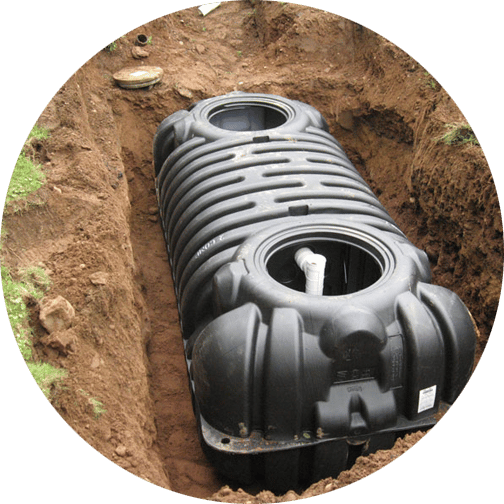
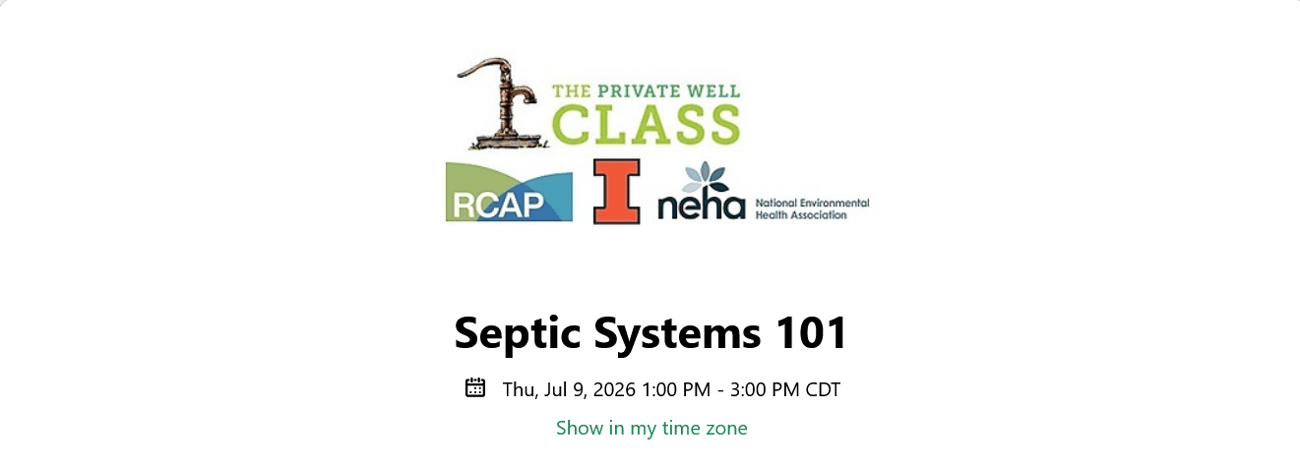
Our annual Septic Systems 101 webinar is coming up next week! Join us on July 9 at 1 pm Central Time to hear our environmental public health specialist Sallie Dolan discuss septic system management as part of a larger strategy to protect private wells. The session will address common questions, such as: what is safe to flush down drains, if septic tanks need additives, and how to prolong the life of a system.
The webinar session will also include a live Q&A session with the audience, so come prepared with additional questions, or submit them to us in advance. Jim Starbard, a technical assistance provider at RCAP Solutions, will serve as a guest presenter at the session and assist us in answering the questions we receive.
|
| Find more info & register to attend » |
|
|
|
Come See Us at NEHA's AEC! |
 |
|
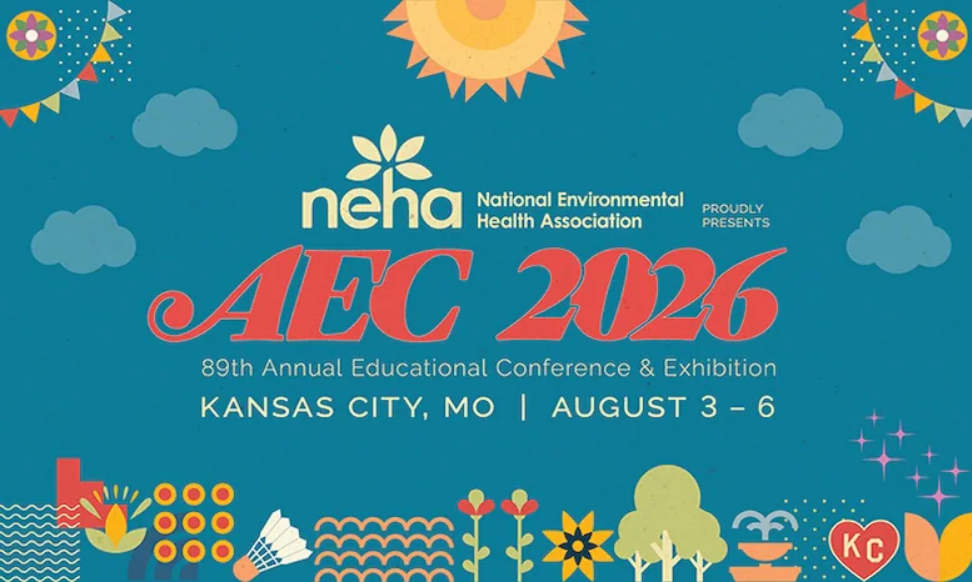
Registration is still open for this August's Annual Educational Conference & Exhibition (AEC) hosted by the National Environmental Health Association (NEHA)! This year's AEC will be held from August 3-6, 2026, in Kansas City, Missouri, at the Sheraton Kansas City Hotel at Crown Center.
This conference is an annual opportunity for the brightest minds in environmental health to connect and strengthen the professional field. The Private Well Class will be in attendance with a booth in the exhibit hall and the presentation "What's In Your Well Water: Determining What Contaminants to Test For" on Wednesday, August 5, at 9 am. Make sure to connect with us!
In-person and virtual registration options are available. Follow the link to NEHA’s website below to learn more about registration options and costs. |
| Find more info from NEHA & register to attend » |
|
|
|
TT080 – What We Can Learn from Vermont’s Flash Drought
|
|
|
 |
|
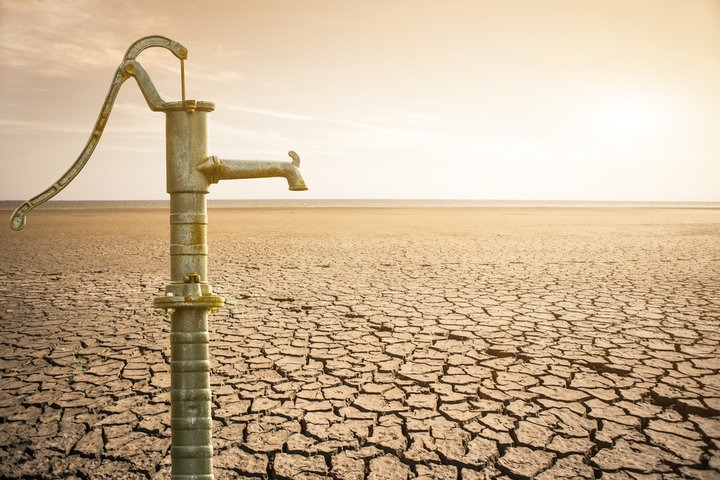
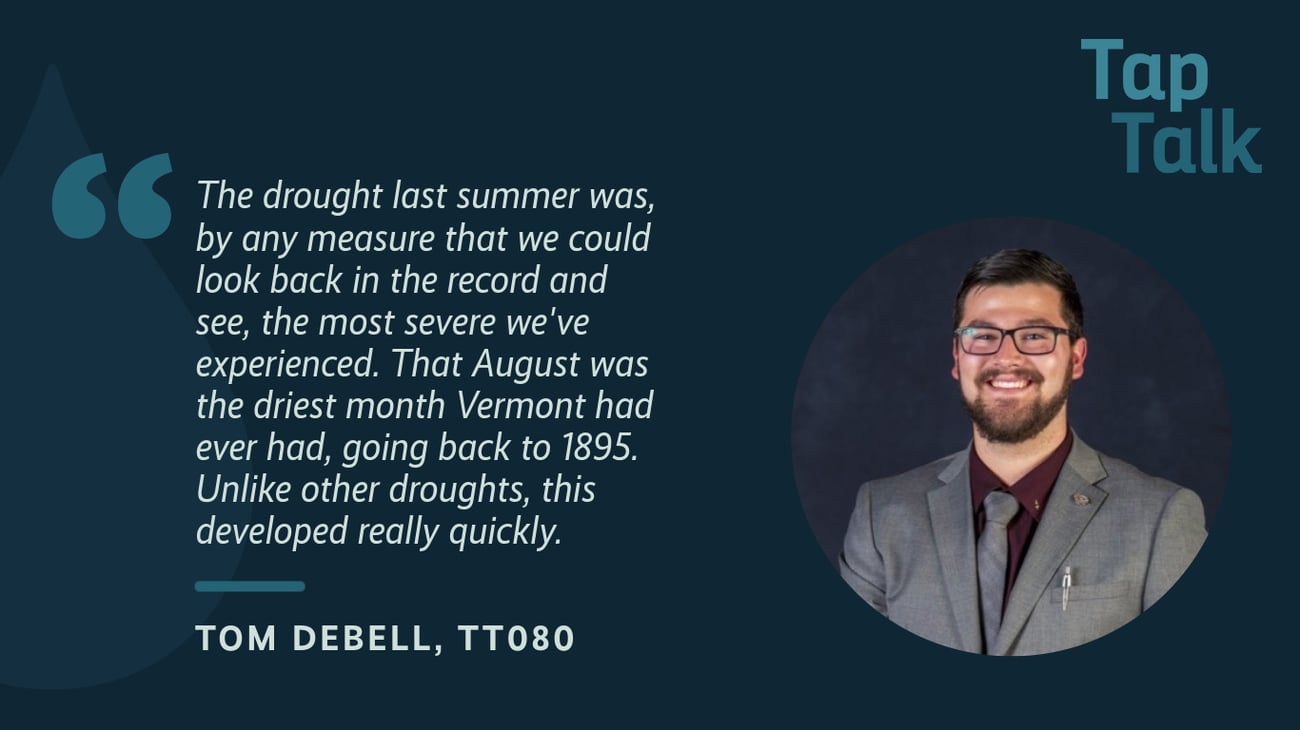
Don't miss the 80th episode of Tap Talk, where we talked with Tom DeBell, an environmental health engineer at the Vermont Department of Health. Tom discussed the intense flash drought that Vermont (and other northeastern states) experienced in the summer and fall of 2025, particularly how the drought impacted private well users in the state. Tom, Steve, and Jennifer also discuss the steps that the health department took to help well owners maintain their wells and educate the public on obtaining adequate water supplies during the water crisis.
If you're really into the drought talk, you might also went to check the episode's follow-up where we discussed how public water utilities in Vermont handled the drought with Sille Larsen of the Vermont Department of Environmental Conservation: "TT081 – The Other Side of Vermont’s Flash Drought: Stories from Public Water Systems."
|
|
|
|
|
|
How does a drought affect well water?
Head to this article at our help center to learn why when rainfall is limited, it is important for well owners to implement some best practices to reduce drought-caused problems.
For additional articles and resources for private well owners, explore our Private Well Help Center. |
|
|
|
|
Upcoming Webinars & Recent Recordings |
|
|
|
Septic Systems 101
July 9, 2026 | 1 PM CT
Hosted by PrivateWellClass.org
In this free webinar training, you'll learn about septic system management as part of a larger strategy to protect the water in your private well.
Register »
We would love your support in distributing this information. Please feel free to share this link.
|
|
|
|
Is My Water Safe to Drink? – Common Questions about Private Wells
August 12, 2026 | 1 PM CT
Hosted by PrivateWellClass.org
In this webinar you’ll learn the answers to common questions about private water wells, including how to get well water tested, what to do to take care of a well, and how to know if a well is susceptible to contamination.
Register »
We would love your support in distributing this information. Please feel free to share this link.
|
|
|
|
How to Find Local Information and Help
Recorded on June 10, 2026
This webinar explained how to find local resources for well information and assistance, and addressed topics including: methods for finding well logs, records, and information about your well; finding well drillers, contractors, and financial help programs; and when to sample, what to sample for, and best practices to protect your well system.
Watch Recording »
|
|
|
|
Groundwater and Well Construction 101
Recorded on May 13, 2026
This webinar answered questions about types of wells and well construction, the basic components of a well system, and water treatment options.
Watch Recording »
|
|
|
|
|
|
Drought poses unique challenges for mountain well users
Canyon Courier
In Colorado's mountain communities, drought can bring more challenges beyond the limited supply of drinking water to private well users. Drought also increases the risks from potential wildfire, and water quality can be threatened by heavy metals such as arsenic and uranium the further that water tables decline.
|
| Read here » |
|
|
|
|
Partner Events & Workshops |
|
|
|
Private Well: Disaster Preparedness and Recovery Webinar
July 7 | 6 pm MT | Online
Hosted by Midwest Assistance Program
The purpose of this webinar is to assist stakeholders and well owners by providing them with pre- and post-emergency and disaster recovery guidance.
Register here.
|
|
|
|
Well Water Screenings: South Texas
July 7 | Castro, Hale, and Lamb counties
August 4 | Caldwell and Hays counties
Hosted by Texas Well Owner Network (TWON)
TWON has two upcoming water well screening events for residents of various areas in Texas on July 7 and August 4. Find further information on times, locations, and sampling instructions at the TWON's website, linked below.
More information for July 7 » ||| More information for August 4 »
|
|
|
|
Virginia 2026 Drinking Water Clinics
July 15, 22, & 29 | Various locations
Hosted by the Virginia Household Water Quality Program & Virginia Cooperative Extension
The Virginia Household Water Quality Program drinking water clinics typically run from February to November each year. Covering about 70 counties, these clinics provide homeowners a chance to have their well water testing at a reduced rate.
Find the full list of dates, locations, and registration information here.
|
|
|
|
Water Explorations: Diagnosing Common Water Issues
July 22 | 1 pm ET | Online
Hosted by Penn State University Extension
Learn how to identify and address common drinking water problems in private water systems. This presentation explores the causes of issues such as discolored water, plumbing fixture stains, unpleasant tastes, and odors and discusses practical approaches to improving water quality. Participants will gain a better understanding of common water quality concerns and the steps that can be taken to diagnose and resolve them.
Register here. |
|
|
|
Septic System Basics for Homeowners
July 28 | 5:30 pm CT | Online
Hosted by Communities Unlimited
This homeowner-focused training is designed to give participants a simple, easy-to-understand overview of how septic systems operate and the importance of proper system care and maintenance. The session will explain the main parts of a septic system, how wastewater is treated, and common issues that can lead to expensive repairs, backups, or environmental concerns if systems are not properly maintained. In addition, the training will include information on available funding and financing resources that may help homeowners cover the cost of septic system repairs, upgrades, or replacements.
Register here. |
|
|
|
Septic System Basics for Homeowners, Community Leaders, Planners & Realtors
July 28 | 9 am PT | Online
Hosted by RCAC
This training will educate homeowners on proper operation and maintenance of septic systems, common troubleshooting, preventive maintenance and solutions. RCAC will also discuss the benefits of establishing long-term solutions such as onsite wastewater management programs.
Register here. |
|
|
|
Water Explorations: Agricultural Best Management Practices
July 29 | 1 pm ET | Online
Hosted by Penn State University Extension
This webinar will explore agricultural best management practices that help manage soil, reduce runoff, and prevent pollution while supporting agricultural production. Participants will learn about structural, agronomic, and behavioral approaches that promote soil health and safeguard local water resources, including on-farm and neighboring private water supplies. Gain practical insights into practices that can enhance environmental stewardship and support long-term farm resilience.
Register here. |
|
|
|
|
Use Drought.Gov to Monitor Drought Conditions
|
 |
|
|
|
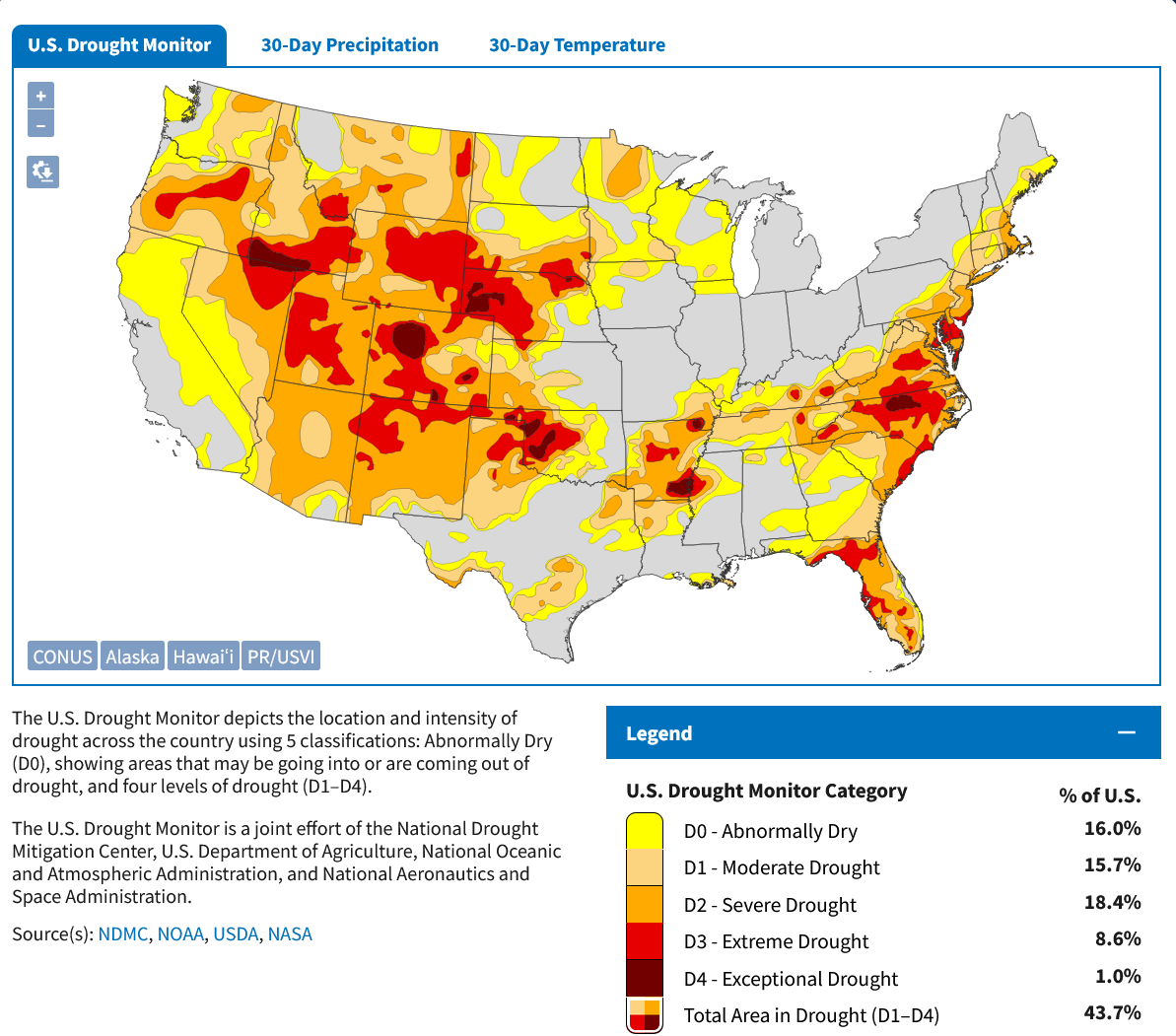
Staying informed of drought conditions is important for everybody as consumers of water; but is also particularly smart for water professionals who rely on a sufficient supply of water in order to do their jobs. While drought can happen in any season, summer weather conditions can exacerbate the risk.
The National Integrated Drought Information System (NIDIS), found at drought.gov, is a great place to go for the latest drought information, data, and outlook across the country. As of June 23, the NIDIS Drought Monitor map shows drought conditions in 43.7% of the country; including 18.4% in Severe Drought (level D2), 8.6% in Extreme Drought (D3), and 1.0% in Exceptional Drought (D4).
The NIDIS also has regional drought update notices, a schedule of upcoming webinars covering drought conditions in different regions of the country, an archive of past regional webinars, and sector-specific explanations of drought impacts.
|
| Visit the NIDIS website » |
|
|
|
|
|
Coping with Drought-Affected Private Water Supply Wells
Iowa State University Extension
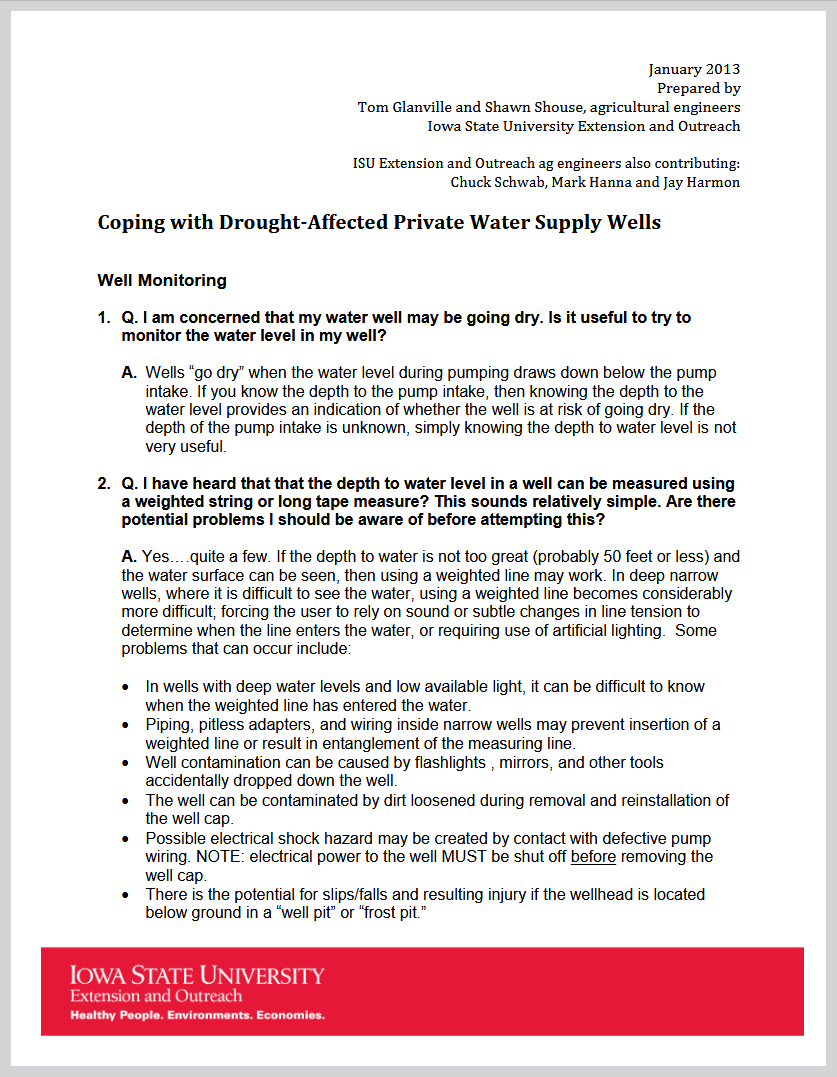
This FAQ document from Iowa Extension answers many questions that well owners dealing with drought may have. The questions concern well monitoring, water supply options, and emergency water hauling/storage. While some Iowa specific state rules are mentioned, the broad advice should still be applicable to well owners across the country.
|
| View the FAQ » |
|
|
|
|
Featured Video:
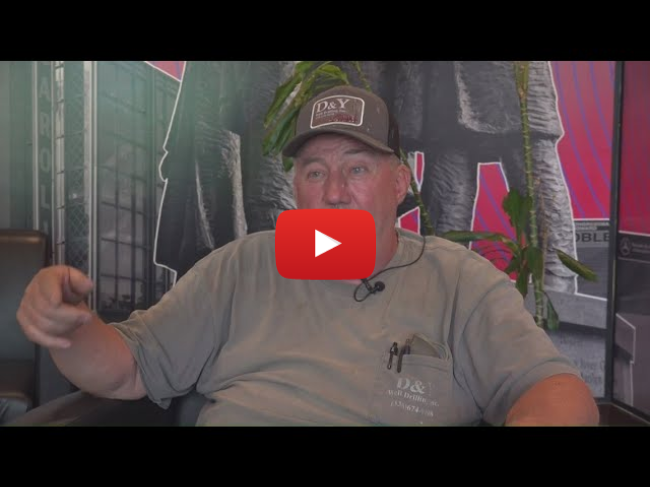
Wells Threaten to Dry Up During Severe Drought
|
|
|
 |
|
This video, brought to you by WFMY News 2 in central North Carolina (one of the areas currently experiencing "Exceptional Drought" per the US Drought Monitor), covers the local impacts this drought is having. A well driller also advises on how well owners can conserve water and slow the strain wells are undergoing during this dry period. |
| Watch the video » |
|
|
|
|
|
PrivateWellClass.org is a free, grant-funded service to support private well owners and the professionals that work with these wells. The program seeks to raise awareness of private well issues and help well owners understand their responsibilities to be a good steward of their well and water source. The Private Well Class, developed at the Illinois State Water Survey at the University of Illinois Urbana-Champaign, is a collaboration with the Rural Community Assistance Partnership with funding from the U. S. Environmental Protection Agency. Call us at 1-866-945-0699 for assistance. |
|
|
|
|
|
Visit our other websites: |
|
|
|
|
|
|
|
Click here to unsubscribe | Sent to: _t.e.s.t_@example.com
Illinois State Water Survey, 2204 Griffith Drive, Champaign, IL 61820, United States |
|
|