Newsletter #419 for December 3, 2025
|
|
|
|
|
|
EPA Announces $7 Billion in Newly Available WIFIA Funding and Five New WIFIA Loan Approvals
|
The U.S. Environmental Protection Agency (EPA) announced $6.5 billion in Water Infrastructure Finance and Innovation Act (WIFIA) funding available for water systems, with an additional $550 million available to states. Interested entities can apply for this funding through a rolling application process.
The agency is also announcing approval of five new WIFIA loans that will invest in critical water infrastructure projects in Texas, Illinois, Oregon, and Florida. EPA’s WIFIA program provides a powerful financial tool that can significantly accelerate investments in water infrastructure to protect human health and the environment while saving communities millions of dollars.
For this new round of funding, EPA has identified priority areas including:
Ensuring safe drinking water and addressing pollution in our nation’s waterbodies
Unleashing American energy dominance
Advancing cooperative federalism by supporting local, regional, and state water priorities
Supporting innovation in the water sector
Promoting economic growth and furthering America’s industrial resurgence
EPA also announced its approval of five loans that invest in water infrastructure projects:
Fort Worth, Texas – A $347 million loan will be used to upgrade wastewater collection and treatment and support beneficial water reuse. A newly designed and built water reclamation facility will meet the needs of a growing population while treating wastewater to be reused for industrial and irrigation purposes.
Pflugerville, Texas – A $176 million WIFIA loan will support multiple projects modernizing drinking water and wastewater infrastructure in this growing city. Work will include design and construction of a new wastewater treatment plant, expansion and consolidation of wastewater collection systems, and water main rehabilitation. This is the second WIFIA loan to the City of Pflugerville
Joliet, Illinois – An $87 million loan will help transition the city’s drinking water supply from a stressed and unsustainable aquifer. Projects will include upgrading the distribution system to reduce water loss as the city prepares to begin using water from Lake Michigan. This is the third WIFIA loan for the City of Joliet under an agreement that will provide a total of $395 million in financing.
Ashland, Oregon – A $73 million WIFIA loan will help build a new drinking water treatment plant to provide a safer and more resilient supply of clean drinking water to this small, rural community.
Wilton Manors, Florida – A $28 million WIFIA loan will reduce the risk of pipeline failures, minimize water loss, and improve system reliability, particularly during emergencies such as storm events. Projects include replacing water mains, rehabilitating and replacing wastewater lift stations and force mains, and improving stormwater drainage systems.
|
|
|
|
|
|
Register for Our Upcoming Webinar! |
Essential Safety Resources for Wastewater Operators
December 16, 2025 | 10:00 AM CST
This webinar will explore practical resources to help wastewater operators stay safe in their day to day to work as well as in less common and unexpected scenarios. Plus, participants will learn how to use our search tools at WaterOperator.org to find additional resources and training events.
This webinar series from WaterOperator.org covers topics relevant to wastewater operators, including funding, asset management, compliance, and water quality.
Certificates of attendance will be delivered upon request. Check with your certification body for acceptance criteria.
|
|
|
|
|
|
|
|
Tap Talk |
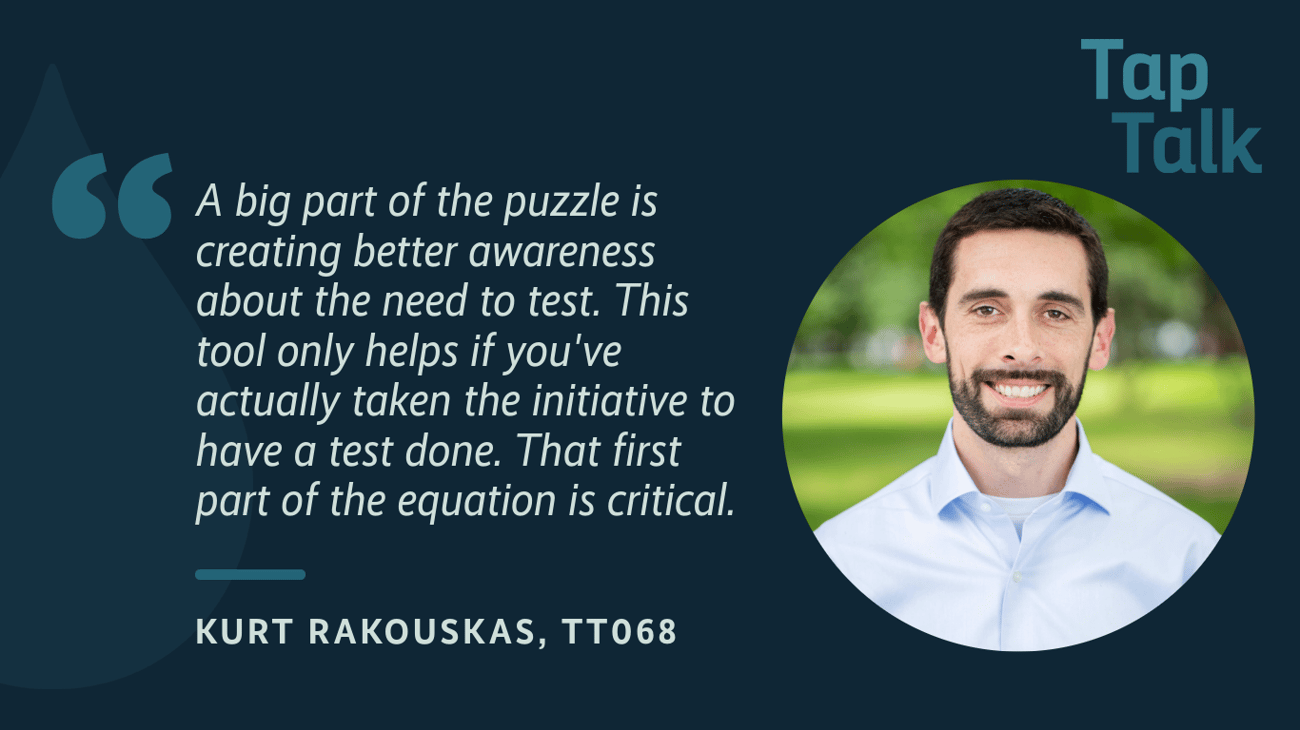
How the Be Well Informed Tool Educates Well Owners
In Tap Talk’s 68th episode, Steve and Jennifer chat with Kurt Rakouskas — a project manager at the Environmental Council of the States — about the organization’s cross-disciplinary work and its stewardship of the Be Well Informed tool. This free tool helps well users understand the results of water tests performed on their wells by translating the scientific and technical
notation into plain language. This helps make clear if there is a problem indicated by the results, what the risks of any present contaminants are, and what the next steps should be for the well owner.
|
|
|
|
|
|
|
Featured Video |
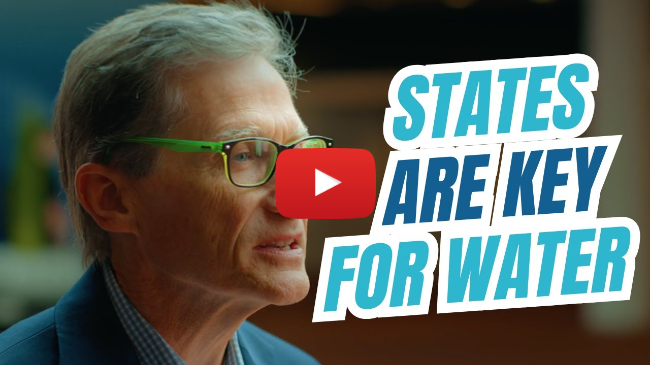 |
Top Water Expert Ben Grumbles Shares BEST Solutions for Clean Water
waterloop
"Every state in America is grappling with the same urgent mission: ensuring clean, safe, and affordable water for their communities.
That’s where Ben Grumbles and the Environmental Council of the States are focused.
As the national nonprofit that brings together all 50 state environmental secretaries, ECOS helps leaders educate, collaborate, and advocate so states can keep making real progress on the water challenges that matter most.
Grumbles says states are under immense pressure — from emerging contaminants like PFAS, to nutrient pollution, to damaged infrastructure struggling under extreme weather and climate change. They’re also working to make regulatory systems more resilient and adaptive as science and risks continue to evolve.
But one issue rises above the rest: funding.
States implement more than 90% of the nation’s environmental and water laws, and rely on federal support to keep Clean Water Act and Safe Drinking Water Act programs running. Recent federal investments have helped — but looming budget cuts threaten to push states off a fiscal cliff.
“States are very focused on the need for a fair share of federal funding as one of the unifying priorities all communities are going to benefit from.” Grumbles notes."
|
|
|
|
|
Free Natural Hazard Risk Assessment Technical Assistance |
Are you interested in this opportunity from EPA’s Strengthening Water Infrastructure for Tomorrow (SWIFT) Initiative?
SWIFT provides location-specific natural hazard data and practical risk assessment tools to identify and evaluate resilient strategies. Technical assistance under SWIFT promotes a better understanding of natural hazard threats and their impacts on vulnerable assets, providing the guidance needed to make risk-informed infrastructure and investment decisions. SWIFT also makes connections to infrastructure financing that help utilities fund the implementation of their hazard resilience projects.
If you are interested in receiving SWIFT technical assistance, please contact Aliza Furneaux.
|
|
|
|
|
Featured Video |
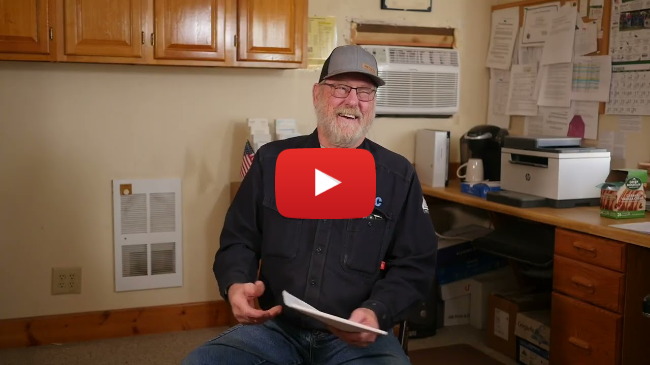 |
The Story of Hysham | RCAP Environmental Finance Center (EFC) NarrativeRural Community Assistance Partnership
"Hysham is a small community of 276 people on the Yellowstone River in eastern Montana. The town has struggled to keep a certified operator and was on a Do-Not-Consume order for more than a year due to the buildup of Manganese in the transmission mains and treatment plant piping. The treatment plant and transmission piping are quite old and need replacement. The Town is pursuing emerging contaminant funding through the SRF program to replace the transmission mains and piping with excess manganese buildup. The town is 53% low to moderate income and is considered disadvantaged by USDA under the Climate Change, Energy, Health, and Legacy Pollution categories. Hysham is in the 90th percentile for heart disease and the 95th percentile for cancer rates. As
far as climate change is concerned, Hysham is in the 80-90th percentile for both flood and wildfire risk.
Watch their story and see how the Midwest Assistance Program (MAP) assisted them in getting off the Do-Not-Consume order."
|
|
|
|
|
|
|
Private Wells and Septic Systems: Vital Parts of Rural Living
December 9, 2025 | 1:00 PM EST
Rural Community Assistance Partnership
This free webinar will provide the attendee with information on the types of wells and aquifers found in the United States. Information on private septic systems will also be presented, along with how the private wells can be impacted by septic systems.
|
|
|
Water Quality in the Distribution System
December 11, 2025 | 1:00 PM EST
Environmental Finance Center Network
This free one-hour webinar explores the key practices and concepts needed to maintain water quality in drinking water distribution systems. Join to strengthen your understanding of how to protect water quality throughout the distribution process.
|
|
|
Bridging the Gap Between Limited Budgets and Long-Term Resilience
December 16, 2025 | 11:00 AM MST
American Water Works Association
At this free webinar, presented by Mueller, the focus will be two top issues facing the water sector: aging infrastructure and limited financing required to replace it. Workforce limitations, service affordability, and non-revenue water losses further compound the challenge of maintaining a reliable and secure water supply. While many solutions for repairing, monitoring, and modeling water networks exist, most require high upfront investment, creating a barrier for many utilities—particularly smaller ones—to adopt new smart water technologies.
|
|
|
Streamlining Water Utility Operations with GIS Mapping and Smart Surveys
December 16, 2025 | 1:00 PM EST
Rural Community Assistance Partnership
In this free webinar, you will learn how to utilize GIS mapping to monitor water distribution operations and maintenance through digital surveys designed for recording and managing key field activities, including hydrant flushing with fire flow testing, valve exercising, meter replacements, and repairs. Explore ready-made ArcGIS solutions and discover how to customize them to develop tailored GIS tools for your utility’s specific needs. This training will also offer insights into using GIS to document and analyze common system problems, such as water main breaks,
inoperable valves, and other infrastructure issues, while integrating GIS layers to record repairs and fittings.
Additionally, participants will learn how to set up digital surveys for advanced uses, including lead service line inventories, OSHA confined space entry reporting, and deploying public GIS surveys for customer logs
|
|
|
|
|
|
|
|
|
|
|
Recent Blog Posts at WaterOperator.org |
|
|
|
Get Ready for the 13th Annual SepticSmart Week!
Read Here »
|
|
|
|
From Waste to Resource: Biosolids Management References for POTWs
Read Here »
|
|
|
Unlocking Rural Prosperity: The Rural Funding Guide is Here
Read Here »
|
|
|
|
|
Groundwater & Well Care for Public Water Systems is a free online course from WaterOperator.org. Certificates are provided and the course is currently pre-approved for 2 hours continuing education
credit in a number of states.
Click here to learn more.
|
|
|
|
|
|
|
|
|
WaterOperator.org is a free service, grant-funded to support small community water and wastewater operators with comprehensive resources and information in one easy-to-use place. We also serve the 800+ training, primacy, and technical service organizations, by
helping operators get to their information. We aren't selling or advertising anything. Call us at 1-866-522-2681 for assistance.
|
|
|
|
|
Visit our other websites:
|
|
|
|
|
|
|
Click here to unsubscribe | Sent to: _t.e.s.t_@example.com
Illinois State Water Survey, 2204 Griffith Drive, Champaign, IL 61820, United States
|
|
|
|
|