|
Newsletter #133 for October 2026 |
|
|
|
|
|
|
|
|
|
EPA recently launched their first agency-wide PFAS Technology, Evaluation, Coordination, and Harmonization (PFAS TECH) strategy at an event in Commerce City, Colorado. This new effort is meant to speed up innovation in PFAS treatment and destruction technologies and to give communities practical tools, funding, and technical assistance to address local PFAS challenges.
The strategy focuses on 3 goals:
-
The first is to advance research and development through funding and partnerships with states, universities, businesses, and water systems, including testing emerging/promising methods such as foam fractionation and supercritical water oxidation.
-
The second is to run pilot-scale demonstrations at drinking water systems, wastewater treatment plants, Superfund sites, and military facilities, testing performance under real operating conditions, lowering technical risk, and showing which options are practical and scalable.
-
The third is to turn that work into usable resources: user-friendly guidance, updated technology information, a new “Break the Bond Navigator” tool, and help for water systems in getting funding and technical assistance.
EPA’s Office of Water will be pursuing public-private partnerships aimed at improving PFAS removal and lowering treatment costs. The agency also plans to offer PFAS destruction research grants through its STAR and SBIR programs. In addition, EPA highlighted the need for full-scale pilot tests to optimize existing PFAS treatment methods and to make new innovations scalable to utility needs. Utilities, states, and other stakeholders interested in getting involved can visit EPA’s PFAS TECH Strategy webpage or contact PFASTECH@epa.gov.
|
|
|
|
|
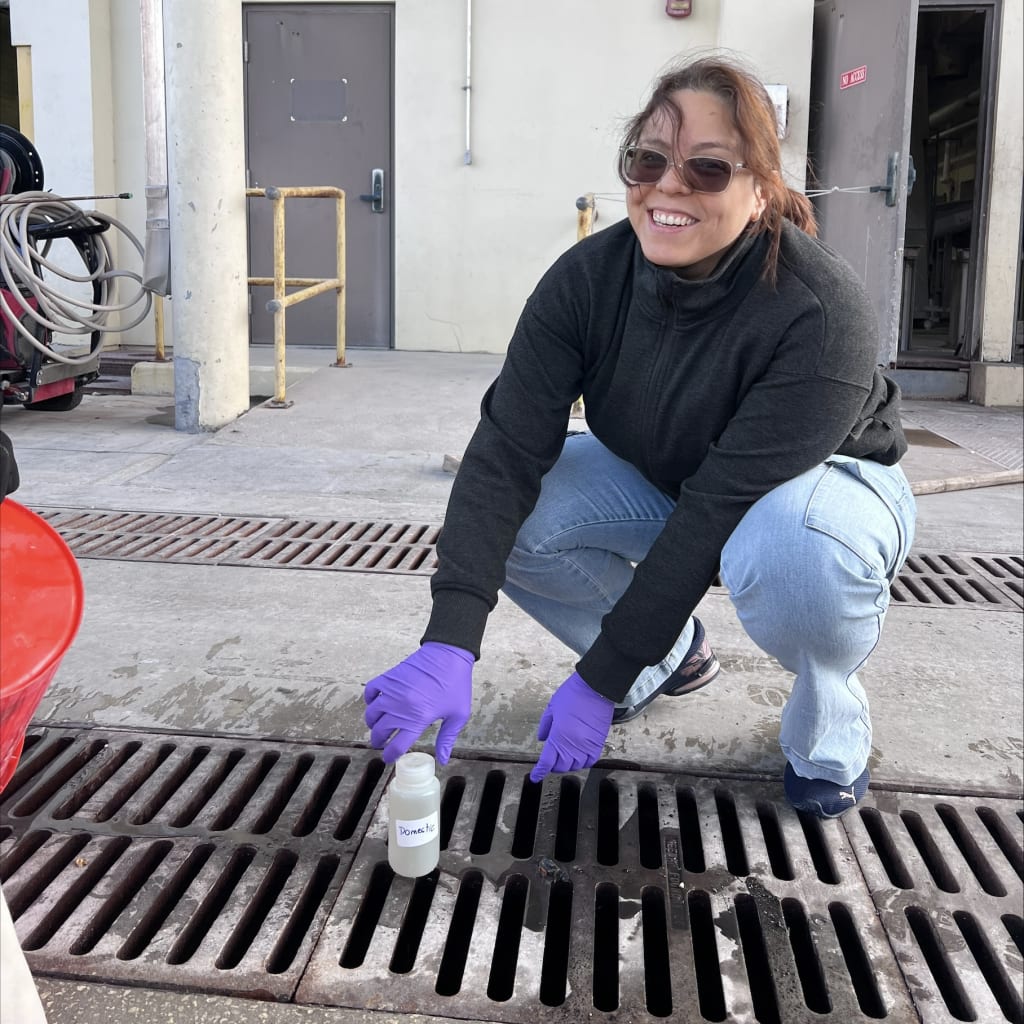
Researchers at Florida International University (FIU) have developed a faster, more efficient analytical method to detect PFAS in water, reducing testing time from over six hours to just 30 minutes. The method, which was published in the Journal of Chromatography A, focuses on automating sample cleanup, the step where PFAS are separated from the rest of the water sample and concentrated so they can be measured. This step is normally done by hand before the sample goes into the instrument. With the new method, online solid-phase extraction handles cleanup automatically, then passes the sample straight to the LC-MS/MS, a high-precision analytical instrument that measures PFAS at very low concentrations. Automating this step reduces hands-on laboratory work, lowers the risk of handling errors, and allows laboratories to process more samples. The method also requires only 10 mL of sample, compared with the roughly 500 mL used under EPA Method 1633, while still achieving detection limits as low as 1.74 ng/L for PFOA and 3.65 ng/L for PFOS.
The method successfully detected 39 of the 40 PFAS compounds listed in EPA Method 1633 and can analyze both small and large PFAS molecules at the same time. The team is now working to detect even smaller PFAS molecules, which often show up in drinking water at high concentrations as larger PFAS break down. For utilities that routinely monitor source water for PFAS, such as Miami-Dade County, which tests its groundwater wells every four months, this 30-minute method could significantly improve contamination tracking and monitoring. The researchers are urging EPA to consider incorporating this type of technology into a standard method, given the national demand for PFAS monitoring under the new drinking water regulations.
|
 |
|
Source |
|
|
|
|
|
|
Researchers at Marquette University are investigating ways to make wastewater treatment more energy efficient while recovering renewable energy from the treatment process. Traditional wastewater treatment relies heavily on aeration to supply oxygen to the aerobic microorganisms that break down organic matter and pollutants. Aeration is often one of the largest energy demands at a treatment plant, accounting for up to 60% of its energy use. The research team is studying anaerobic microorganisms that can treat wastewater without oxygen while also generating methane-rich biogas that can be recovered and used as a renewable fuel for heat and electricity. Although anaerobic treatment technologies have been used for decades, the team is working to overcome challenges that have limited their broader use for municipal wastewater treatment, particularly in colder climates. Their research aims to improve low-temperature performance and reduce energy use. With support from the Department of Defense and the U.S. Army Corps of Engineers, the team plans to move forward with a pilot-scale treatment system in partnership with the Milwaukee Metropolitan Sewerage District at one of its wastewater treatment facilities.
|
|
|
|
|
Arizona State University researchers have developed a promising new approach for destroying PFAS in water, which was published in the Proceedings of the National Academy of Sciences. Conventional PFAS treatment processes such as activated carbon, ion exchange, and membrane filtration capture PFAS, but the chemicals remain in spent media, brines, or concentrated waste streams that still require management and disposal. The new approach uses membrane fibers coated with palladium nanoparticles and hydrogen gas to create highly reactive hydrogen on the catalyst surface. PFAS molecules in the surrounding water attach to the palladium, where the reactive hydrogen helps break the strong carbon-fluorine bonds that make PFAS so persistent in the environment. In a 58-day continuous-flow test treating water containing six regulated PFAS compounds, the system removed more than 90% of each compound and stripped away about 83% of the fluorine overall, showing the PFAS were being broken down rather than just captured. While the technology requires further development before full-scale implementation and the high cost of palladium remains a challenge, the research shows promise as a complementary treatment option for destroying PFAS in concentrated waste streams generated by existing PFAS removal processes.
|
|
|
|
|
A recent Water Online article reviewed whether producing biodegradable plastics from wastewater is ready for broader utility adoption. The article focuses on polyhydroxyalkanoates (PHAs), a type of bioplastic that certain microorganisms can store within their cells using carbon from wastewater or sludge. Pilot-scale studies, including a 200-day trial using waste activated sludge and a larger demonstration system, show that PHA production from real wastewater streams is technically feasible. However, before widespread implementation can be considered, utilities need to demonstrate that they can consistently recover PHA, meet product quality requirements, and find a viable market, all without negatively affecting treatment performance or permit compliance. For smaller systems, the author suggests a utility could produce PHA-rich biomass on site and send it to a central processor, rather than building its own recovery and commercialization line, though this approach has not yet been proven. The author concludes that wastewater-derived PHA is not yet ready for widespread utility adoption, but selected utilities can begin characterizing their waste streams, identifying partners and buyers, and conducting controlled pilots.
|
|
Upcoming Events
A listing of webinars, symposia, and conferences relevant to this work. |
|
|
|
|
Finding I&I faster: Turning flow monitoring into focused investigation and action
November 4, 2026 | Virtual 11:00 - 11:45 Eastern Time Zone
Water Environment Federation
This webinar explores how wastewater utilities can use flow monitoring and rainfall data to identify and investigate I&I issues, locate defects in collection systems, prioritize rehabilitation projects, and target limited resources where they will provide the greatest benefit.
|
|
|
|
Satellites, Snouts, and Savings: An Innovative Approach to Water Loss Reduction
November 17, 2026 | Virtual 11:00 - 12:00 Mountain Time Zone
American Water Works Association
This free webinar explores how water utilities can combine satellite-based leak detection, artificial intelligence, and canine and human field investigations to identify hidden leaks, reduce nonrevenue water, prioritize repair efforts, and improve overall water loss management.
|
|
|
|
Water Reuse and Recycling: Myths, Facts, and Current Practices
December 8, 2026 | Virtual 13:00 - 14:00 Eastern Time Zone
Environmental Finance Center Network
This free webinar provides an overview of water reuse and recycling, including regulatory requirements, implementation challenges, and strategies utilities can use to expand sustainable water supplies.
|
|
|
|
|
|
|
|
|
|
|
Drinking Water | Open Access
Nationwide sustainability assessment of PFAS treatment in U.S. water utilities
Tushar, M. M. R., Pushan, Z. A., Page, C. S., Aich, N., & Rowles, L. S. (2026). Nationwide sustainability assessment of PFAS treatment in U.S. water utilities. Nature Communications. https://doi.org/10.1038/s41467-026-77509-w.
Why it's interesting: This nationwide study led by researchers at Georgia Southern University and the University of Nebraska–Lincoln evaluated the sustainability of the two most commonly used PFAS treatment technologies for drinking water utilities, granular activated carbon (GAC) and ion exchange (IX). The researchers used economic and life-cycle environmental analyses to compare treatment performance across utilities ranging from very small systems (0.03 MGD) to large systems (75 MGD). They found that IX generally produced lower environmental impacts than GAC and, in some cases, a carbon footprint nearly ten times lower for small systems. However, short-chain PFAS compounds remained challenging and expensive to treat. For example, IX treatment costs for PFHxA were more than five times higher than for PFOA at large utilities, while GAC costs were less sensitive to PFAS type.
Utility size remained the single largest factor affecting treatment sustainability, with small and rural systems facing disproportionately higher costs because they are unable to benefit from economies of scale. Estimated costs ranged from $1.63 per cubic meter (about $6.17 per 1,000 gallons) for GAC at a 72-customer groundwater system in Connecticut to $0.09 per cubic meter (about $0.34 per 1,000 gallons) for IX at Peoria, Illinois, which serves around 138,000 customers. Source water quality also played an important role, particularly for GAC systems, where elevated total organic carbon (TOC) increased media consumption, costs, and environmental impacts. For PFHxA removal, GAC became more expensive than IX when TOC exceeded 1.75 mg/L. The authors also recommend placing PFAS treatment near the end of the treatment train in high-TOC waters to improve performance. For operators and utility managers planning PFAS compliance projects, the study highlights that technology selection should consider utility size, PFAS type, and source water characteristics, not just PFAS concentrations.
|
|
|
Wastewater | Open Access
From volume to pollution: a review of real-time control potential for combined sewer systems
Kerger, S., Kroll, S., Trojan, L., & Wintgens, T. (2026). From volume to pollution: A review of real-time control potential for combined sewer systems. Water Science & Technology, 94(7), 1052-1072. https://doi.org/10.2166/wst.2026.351.
Why it's interesting: This review examines whether wastewater utilities can further reduce pollution from combined sewer overflows (CSOs) by moving beyond traditional volume-based real-time control (RTC) strategies and incorporating water quality data into operational decisions such as how wastewater is routed, stored, and released throughout the collection system during wet weather events. While most existing RTC systems focus on reducing overflow volume, research has shown that pollution-based real-time control (PBRTC) can achieve greater reductions in pollutant loads by accounting for changes in pollutant concentrations during storms. Across the case studies reviewed, PBRTC typically provided additional pollutant load reductions of about 2% to 20% compared with conventional volume-based control, with the greatest benefits occurring in systems where pollutant concentrations vary significantly between storm events or between different locations throughout the collection system. However, the review also found that PBRTC requires more sophisticated monitoring, modeling, and maintenance, and no full-scale combined sewer PBRTC implementations have yet been extensively documented. In one German case study, water quality sensors alone added about €40,000 per control site, and sensor maintenance accounted for 44% of annual operating costs. The study concluded that the most practical solutions involve a hybrid approach, where utilities continue using system-wide volume-based control while applying pollution-based control only at locations where the potential environmental benefits justify the added cost and complexity. |
|
|
Drinking Water | Open Access
Controlling 1,4-dioxane and disinfection byproducts during ozone/hydrogen peroxide–granular activated carbon drinking water treatment while maintaining ozone residuals for pathogen inactivation credit
Xian, Y., Yeung, B., Sandoval-Skeet, S., Birben, N. C., Raskin, L., Lahr, R., Chuang, Y.-H., & Szczuka, A. (2027). Controlling 1,4-dioxane and disinfection byproducts during ozone/hydrogen peroxide–granular activated carbon drinking water treatment while maintaining ozone residuals for pathogen inactivation credit. Water Research, 309, 127065. https://doi.org/10.1016/j.watres.2026.127065.
Why it's interesting: This pilot-scale study examined whether drinking water utilities can improve removal of 1,4-dioxane by adding hydrogen peroxide to existing ozone systems while still maintaining the ozone residuals needed to receive pathogen inactivation credit under current EPA regulations. Researchers found that ozone alone removed about 45% of 1,4-dioxane, while ozone/hydrogen peroxide treatment provided less than 14% additional removal when operated under conditions that maintained the required ozone residual. Although hydrogen peroxide reduced bromate formation by as much as 56%, its benefits were limited because higher peroxide doses would have lowered ozone residuals below the levels needed for CT credit. The study also found that ozone/hydrogen peroxide treatment did not significantly improve disinfection byproduct precursor control compared to ozone alone and, in some cases, increased the formation potential of certain unregulated but potentially more toxic disinfection byproducts after chlorination. Subsequent granular activated carbon (GAC) filtration helped reduce disinfection byproduct formation. Utilities wanting more 1,4-dioxane or bromate control may need other approaches, such as adding ozone at multiple points within the ozone contactor.
|
|
|
|
|
Industry News |
|
Designing Better Adsorbents to Remove PFAS from Water
Tohoku University (Japan) researchers found that designing adsorbents to target the two separate parts of a PFAS molecule (its fluorinated carbon chain and its charged end group) could lead to treatment media that capture a wider range of PFAS.
Light-activated crystals break down DNA-like molecules in water, potentially curbing antibiotic resistance
Engineers have developed a light-activated titanium dioxide catalyst which can form “singlet” oxygen in water that can break down leftover bacterial DNA that UV and chlorine disinfection leave behind.
Water innovation and treatment trains: Lessons from the UK’s first ozone-based micropollutant removal plants
This article highlights lessons learned from the United Kingdom's first ozone-based micropollutant removal plants at three Severn Trent wastewater treatment facilities and their role in reducing PFAS, pharmaceuticals, pesticides, and other micropollutants.
Low-cost 3D-printed filter removes up to 90 per cent of microplastics from water
Researchers at the University of Waterloo, Canada have developed a low-cost filter made of stacked 3D-printed biodegradable disks that removed up to 90% of microplastics from water in laboratory tests.
ACUA and PolyGone Systems Launch the World's First Commercial Microplastic Filtration System for Municipal Wastewater Treatment
The Atlantic County Utilities Authority, NJ has become one of the first U.S. wastewater utilities to deploy full-scale microplastic filtration systems, following a successful two-year pilot study that began in 2024.
UCF Researcher to Investigate Challenges Affecting Drinking Water Infrastructure
Researchers at the University of Central Florida are investigating how biofilms interact with pipe materials, disinfectants, and corrosion-control treatments in drinking water distribution systems, with the goal of helping utilities reduce corrosion, limit metal release, and improve long-term water quality and infrastructure reliability.
|
|
|
|
|
|
|
|
|
|
|
|
|
|
|
|
WaterOperator.org is a free service, grant-funded to support small community water and wastewater operators with comprehensive resources and information in one easy-to-use place. We also serve the 800+ training, primacy, and technical service organizations, by helping operators get to their information. We aren't selling or advertising anything. Call us at 1-866-522-2681 for assistance. |
|
|
|
|
|
Visit our other websites: |
|
|
|
|
|
|
|
Click here to unsubscribe | Sent to: _t.e.s.t_@example.com
Illinois State Water Survey, 2204 Griffith Drive, Champaign, IL 61820, United States |
|
|
|
|