|
Newsletter #119 for November 2025 |
|
|
|
|
"Private Well Assessment and Outreach for Environmental Health Professionals" 4-Hour Workshop Returns in December |
 |
|
|
|
Our 4-Hour Workshop: Private Well Assessment and Outreach for Environmental Health Professionals, recently held in September, is returning again in December! Now is the time to register if you missed the last one. Due to the interactive nature of this workshop, we cap the registration for this workshop at 200 registrants, so register ASAP to save your seat.
This 4-hour online workshop covers the use of our assessment tool for the evaluation of private well vulnerability to contamination and best practices for well owner outreach. Participants will learn private well fundamentals, how to assess a private well using the assessment tool, how to effectively engage private well owners, how to develop a program for outreach to well owners, and best practices for managing a well owner program.
4-Hour Workshop: Private Well Assessment and Outreach for Environmental Health Professionals
December 3, 2025 | 12 PM CT |
| Register » |
|
|
|
National Ground Water Association Releases Water Well Map, Expands Well Data Access |
|
|
 |
|
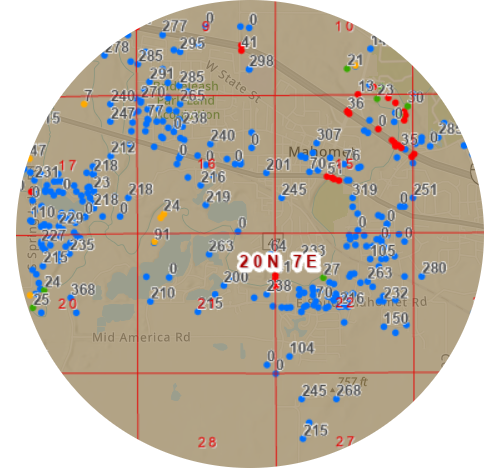
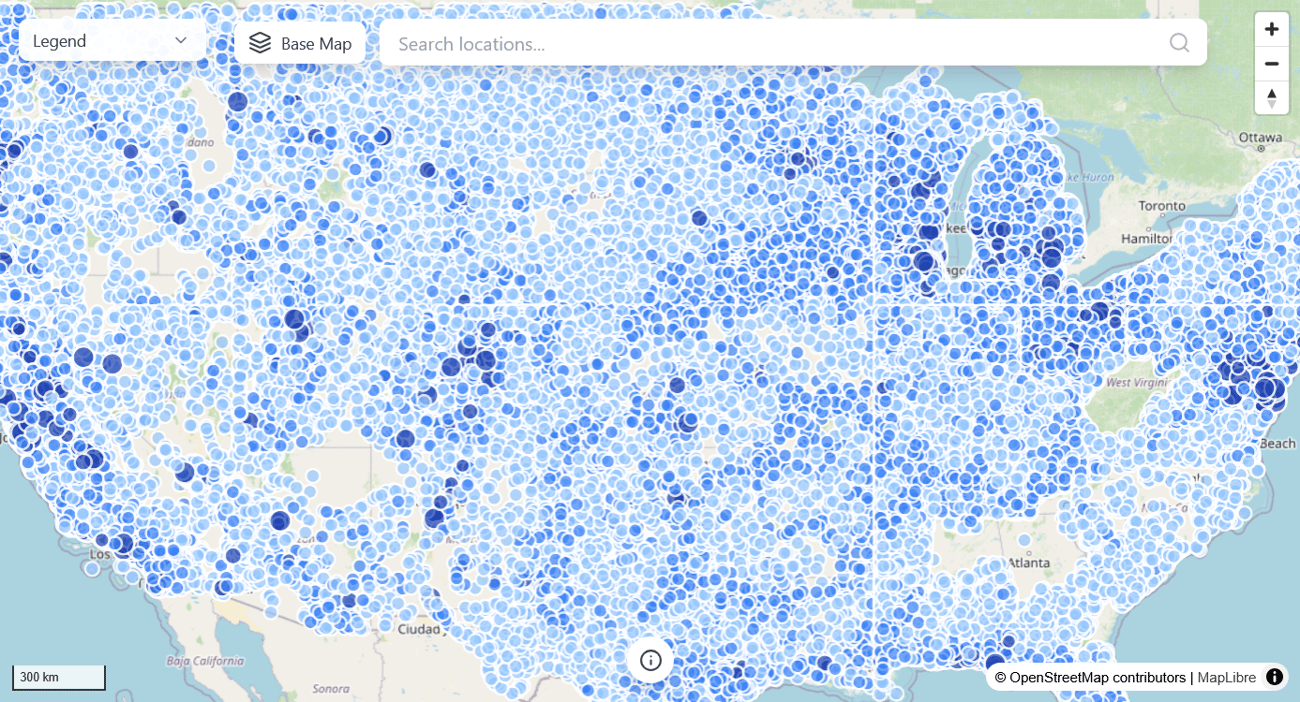
Last month, the National Ground Water Association and WellOwner.org launched a new tool to help expand access to water well data in the United States: a map of more than 14 million water wells across the country. Users are able to locate individual wells and view details including location, depth, construction date, water quality, and more.
There are two versions of the map available: a free, public map housed at WellOwner.org, which is intended to offer transparency and open access to well information for homeowners, businesses, and communities so they can make more informed decisions about water use and availability.
The second version of the tool is for groundwater industry professionals, and requires a membership in NGWA to use. This professional version features well comparisons, integrated estimating functions, and enhanced data access. It is intended to be a resource to help better estimate drilling depths and project the cost of new wells. |
|
|
|
|
|
|
|
Check Out Our New Website Design! |
 |
|
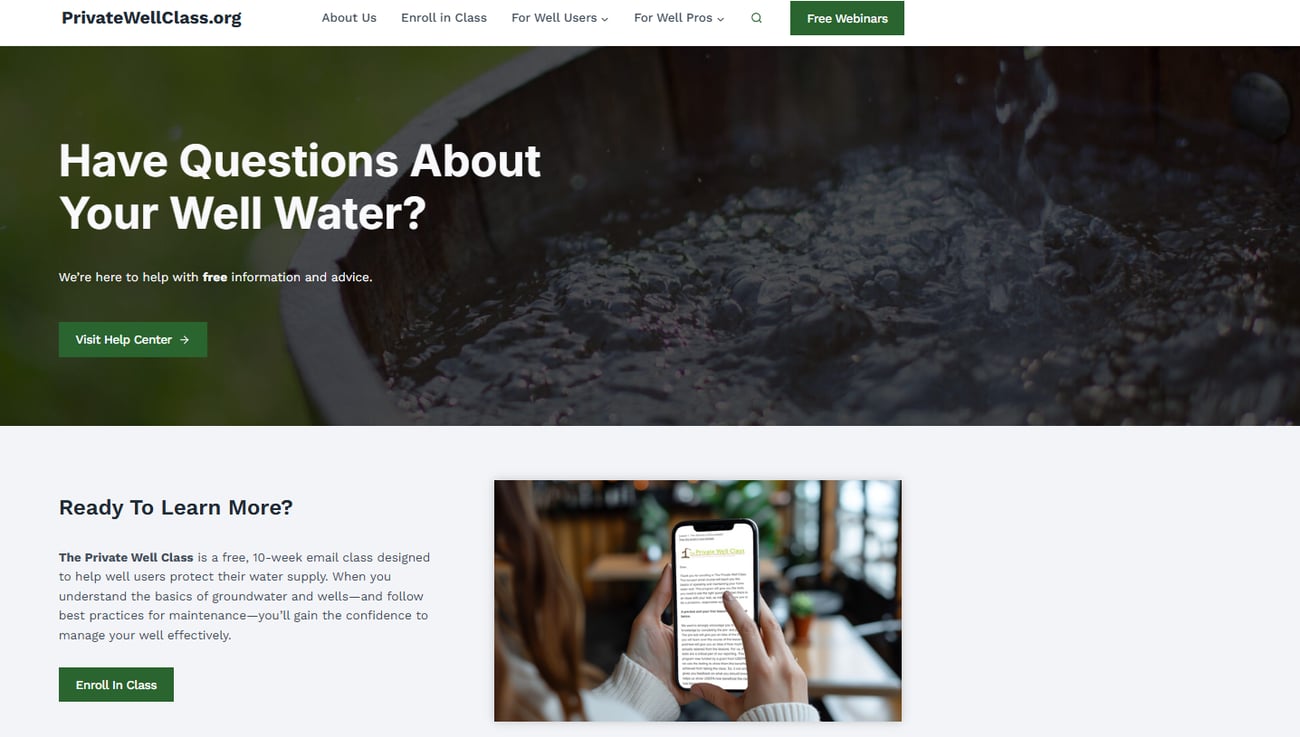
In case you haven't seen it yet: PrivateWellClass.org launched a complete website redesign in September! The new design offers a fresher web experience with all of the same features and information the site has always had available.
For those using the website to register for upcoming webinars and/or to view past sessions, please note that the webinar archive is now organized by topic, and that past sessions of each recurring webinar subject are now linked together on dedicated subject pages.
We hope you enjoy the new website experience, and if you have any feedback, please email us at help@privatewellclass.org. |
| Visit the Website » |
|
|
|
|
|
Tap Talk — Lessons from RCAP’s Private Well Technical Assistance Network |
 |
|
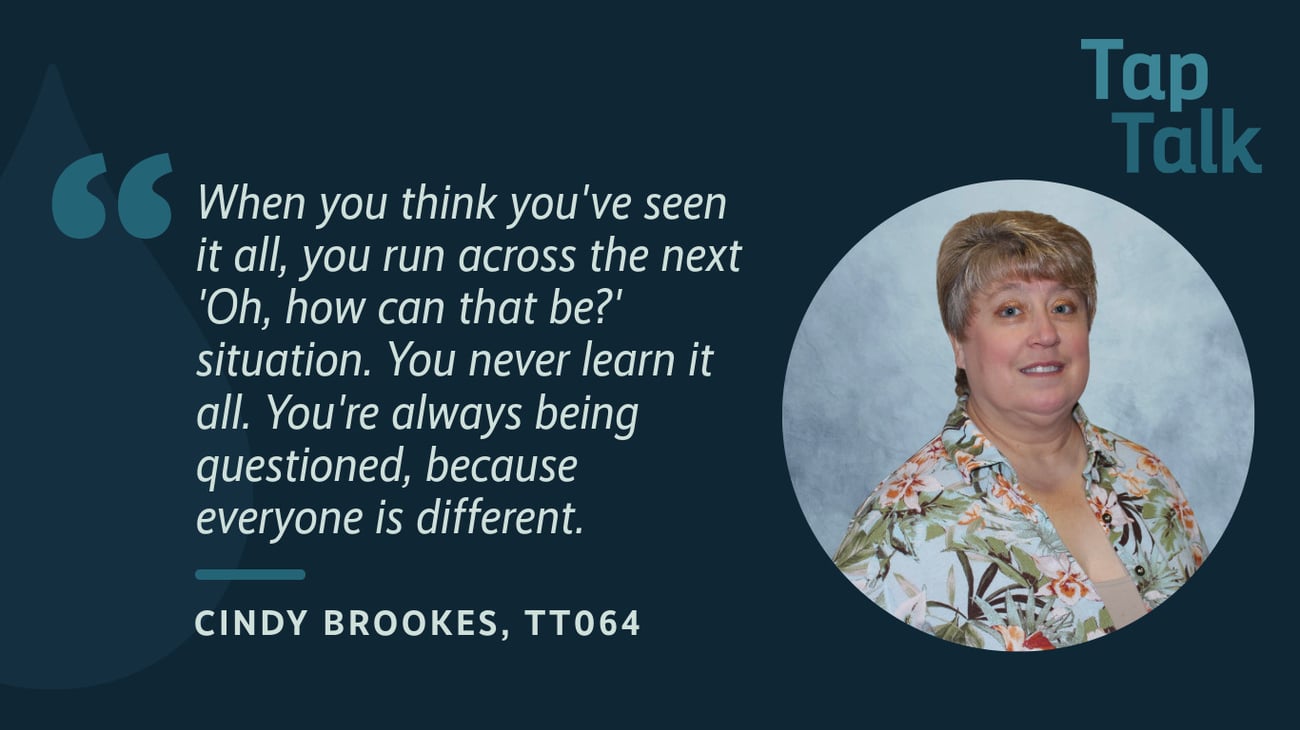
In TT064, we bring you another private well-focused episode! Our guest is Cindy Brookes, a seasoned technical assistance provider at the Great Lakes Community Action Partnership, a division of RCAP. In this role, Cindy has assessed over 300 private wells and counseled well owners on how to proceed with their well challenges, and made significant use of the Private Well and Spring Assessment Tool that our team developed in conjunction with RCAP. Cindy tells Jennifer and Steve about the ins and outs of the job, as well as the importance of these assessments in the quest to more widely educate well owners. |
| 🎧 Listen here 🎧 |
|
|
From the Help Center |
|
|
|
What can I do when my well goes dry?
Delve into the challenges well owners often face during droughts and periods of high-water usage in this article at our Help Center, and by watching its accompanying video.
For additional articles and resources for private well owners, explore our Private Well Help Center. |
|
|
|
|
Upcoming Webinars & Recent Recordings |
|
|
|
How to Find Local Information and Help
November 19, 2025 | 1 PM CT
Hosted by PrivateWellClass.org
In this webinar you’ll learn how to find local resources for well information and assistance. The webinar will address topics such as methods for finding well logs, records, and information about your well; finding well drillers, contractors, and financial help programs; and when to sample, what to sample for, and best practices to protect your well system.
Register »
We would love your support in distributing this information. Please feel free to share this link. |
|
|
|
Groundwater and Well Construction 101
December 17, 2025 | 1 PM CT
Hosted by PrivateWellClass.org
This free webinar will cover types of wells, well construction, the basic components of well systems, and water treatment options.
Register »
We would love your support in distributing this information. Please feel free to share this link. |
|
|
|
What Environmental Health Professionals Need to Know about Private Wells
Recorded on October 29, 2025
This webinar provided an introduction to groundwater, well construction, water quality, and well care best practices for environmental health professionals and others who serve well owners.
Watch Recording » |
|
|
|
What Real Estate Professionals Need to Know about Homes with Well Water
Recorded on September 3, 2025
This webinar explained what real estate agents should know when selling homes with private wells, including well water quality, how wells work, and other basic well information.
Watch Recording »
|
|
|
|
|
|
Wells Are Running Dry. Climate Scientists Say It Could Be a Sign of What’s To Come
Vermont Public Radio
Vast portions of New England are experiencing dry conditions or drought this fall. This article focuses on wells going dry in Vermont, where about 40% of residents get their water from a well — but an unknown number from springs or dug wells. Climate experts expect that this will be a continuing problem as climatic conditions continue to evolve in New England.
|
| Read here » |
|
|
|
Almost 40% of Nevada Groundwater Wells Are in Decline, Study Says
Nevada Current
At the other end of the country, groundwater wells across Nevada are also depleting. A recent study found that 40% of 6,500 analyzed wells in the state are in significant decline. More than half of Nevadan counties rely primarily on groundwater, and 20% of the state's groundwater basins are currently being pumped at a higher rate than water is returning.
|
| Read here » |
|
|
|
|
Partner Events & Workshops |
|
|
|
Septic-Water Connections
November 11 | 12 pm ET | Online
Hosted by Penn State Extension
Join this webinar for an in-depth discussion on what every buyer and seller should know about septic systems during property transfers. This session will cover the essential role septic systems play in real estate transactions, including what to expect from septic inspections, common pitfalls to avoid, and how to ensure compliance with local regulations.
Register here. |
|
|
|
Virginia 2025 Drinking Water Clinics
November 12 & 19 | Various locations
Hosted by the Virginia Household Water Quality Program & Virginia Cooperative Extension
The yearly Virginia Household Water Quality Program drinking water clinics began for 2025 on July 9, and will continue to be held in numerous cities and counties through November 19. These clinics provide homeowners a chance to have their well water testing at a reduced rate.
Find the full list of dates, locations, and registration information here. |
|
|
|
Exploring Emerging Contaminants in Wisconsin Private Water Wells
November 18 | 9 am CT | Online
(Rescheduled from October 7)
Hosted by Great Lakes Community Action Partnership
This webinar features presentations from RCAP Operator Jonathan Wollner, USGS Research Biologist Joel Stokdyk, and Wisconsin DNR DATCP Hydrogeologist Ken Potrykus. Topics covered include the RCAP Private Well Assessment program, findings from the field, and success stories; research and methods on nitrate contamination, pathogens, and antibiotic resistance genes in private water wells; and the work of DATCP as well as research on the influence of pesticides on private water wells.
Register here. |
|
|
|
On a Well? Basics Tips to Ensure Good Water Quality
November 19 | 12 pm ET | Online
Hosted by University of Maryland Extension
Wells are a significant source of drinking water for Americans. Well water is not regulated as are public water supplies, and therefore the well owner is responsible to test, if necessary, treat the water. This webinar will cover basic well design and types, wellhead protection measures, how to test your well and review basic water filtration.
Register here. |
|
|
|
Septic System Finances
November 15 | 12:00 pm ET | Online
Hosted by Penn State Extension
At the final session of Penn State Extension's Septic System Webinar Series, participants will explore the typical costs of installation and maintenance, potential long-term savings, and available financial assistance programs for homeowners.
Register here. |
|
|
|
|
|
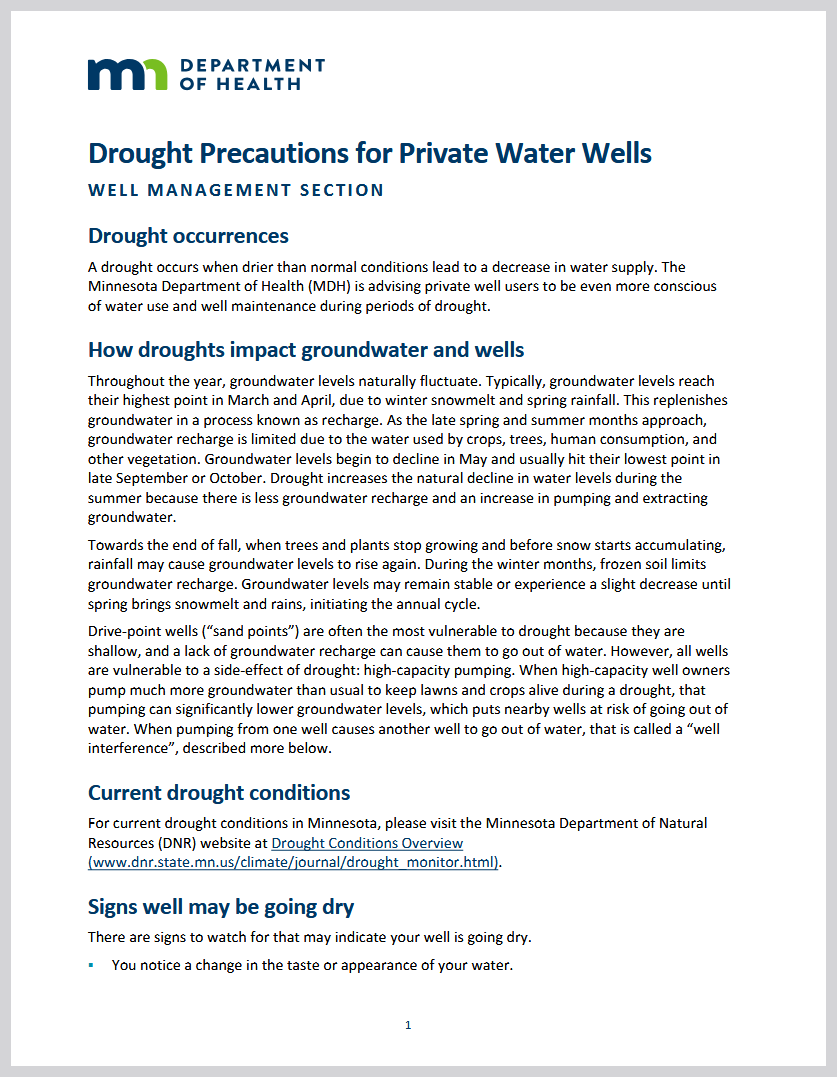
Drought Precautions for Private Water Wells
Minnesota Department of Health
This document from the Minnesota Department of Health covers what precautions can be taken for private wells during droughts. It explains how droughts impact groundwater and wells, signs wells may be going dry, how to manage water supply during a drought, and other relevant health precautions.
|
| View the Document » |
|
|
|
|
Featured Video: Hundreds of Wells Run Dry as Maine Deals With Extreme Drought |
|
|
 |
|
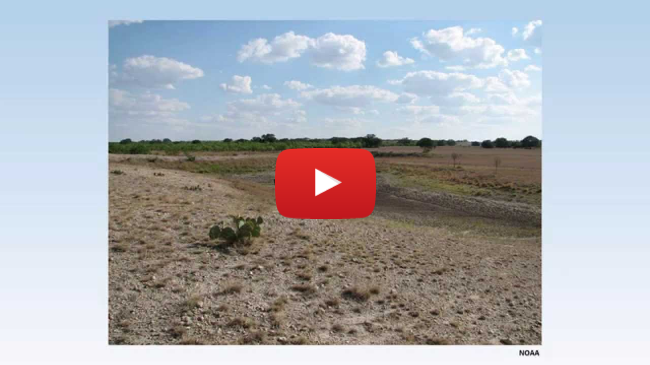
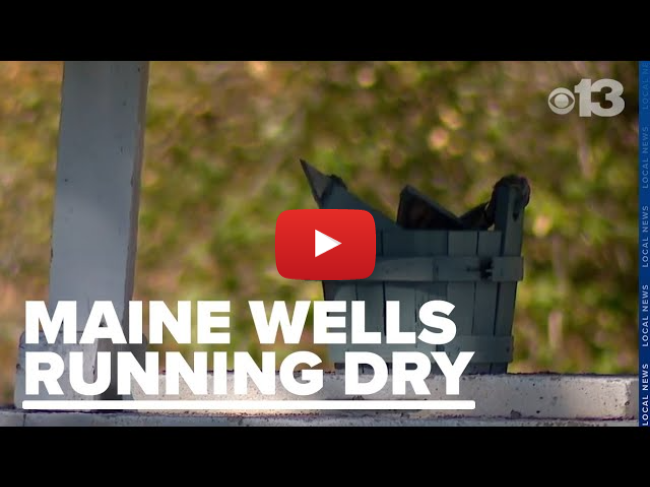
This video, brought to you by CBS 13 News, covers wells going dry due to the drought in a different part of New England: Maine. At the beginning of October, hundreds of wells had gone dry, and much of the state was already in a state of "severe" or "extreme" drought. Since then, the drought in Maine has expanded both in extent and severity, as can be seen at Maine's drought map. |
| Watch the Video » |
|
|
|
|
|
PrivateWellClass.org is a free, grant-funded service to support private well owners and the professionals that work with these wells. The program seeks to raise awareness of private well issues and help well owners understand their responsibilities to be a good steward of their well and water source. The Private Well Class, developed at the Illinois State Water Survey at the University of Illinois Urbana-Champaign, is a collaboration with the Rural Community Assistance Partnership with funding from the U. S. Environmental Protection Agency. Call us at 1-866-945-0699 for assistance. |
|
|
|
|
|
Visit our other websites: |
|
|
|
|
|
|
|
Click here to unsubscribe | Sent to: _t.e.s.t_@example.com
Illinois State Water Survey, 2204 Griffith Drive, Champaign, IL 61820, United States |
|
|