|
Newsletter #441 - September 1, 2026 |
|
|
|
|
 |
EPA Releases New Checklist to Help States Identify and Address Drinking Water System Risks |
|
The U.S. Environmental Protection Agency (EPA) has released a guidance document designed to help state drinking water programs proactively identify and address challenges that could threaten the reliability and safety of public water systems. The checklist, announced on August 13, 2026, is intended to strengthen collaboration between EPA and state primacy agencies while supporting ongoing compliance with the Safe Drinking Water Act.
The checklist provides a practical framework for identifying systemic issues and underlying conditions that may not pose an immediate threat but could eventually disrupt service or compromise water quality if left unresolved. Examples include source water demands approaching system capacity, malfunctioning treatment equipment, recurring water main breaks, and other operational vulnerabilities. According to EPA, many of these concerns can be identified and addressed during sanitary surveys before they develop into larger public health or reliability risks.
EPA developed this resource to complement existing sanitary survey programs and emphasizes that the checklist is designed to fit within current survey processes rather than to create new regulatory requirements or administrative burdens. The guidance includes tools for documenting systemic concerns and recommendations for tracking issues through long-term resolution.
The Association of State Drinking Water Administrators (ASDWA), which partnered with EPA in developing the guidance, welcomed the new resource. ASDWA's Executive Director, Anthony DeRosa, noted that proactive system management is a key component of utility resilience and that the checklist offers state agencies and utilities a structured approach for identifying emerging risks, strengthening sanitary survey programs, and supporting continuous improvement across water systems of all sizes.
For water utilities, this new checklist reinforces the growing emphasis on preventative asset management, resilience planning, and early risk identification. By helping states and utilities systematically track operational concerns before they escalate, the guidance aims to support reliable service delivery, protect public health, and strengthen the long-term sustainability of drinking water systems.
The Checklist for Identifying Systemic Issues at Public Water Systems and Reporting to EPA document is highlighted on the EPA’s sanitary survey page as well as on the EPA’s SDWA capacity development state resources webpage.
|
|
|
|
|
|
|
 |
Free Webinar TODAY at 10 AM Central! |
|
GIS Resources for POTW Asset Management
September 1, 2026 | 10:00 AM - 11:30 AM CDT
WaterOperator.org
This free webinar reviews publicly available GIS resources and tools that support asset management for publicly owned treatment works (POTWs), with a focus on mapping infrastructure assets. The session also includes a demonstration of our free search tools at WaterOperator.org to find additional free resources and training events.
This webinar series from WaterOperator.org covers topics relevant to wastewater operators, including funding, asset management, compliance, and water quality.
Certificates of attendance will be delivered upon request. Check with your certification body for acceptance criteria. |
| Register Now |
|
|
|
|
Featured Video |
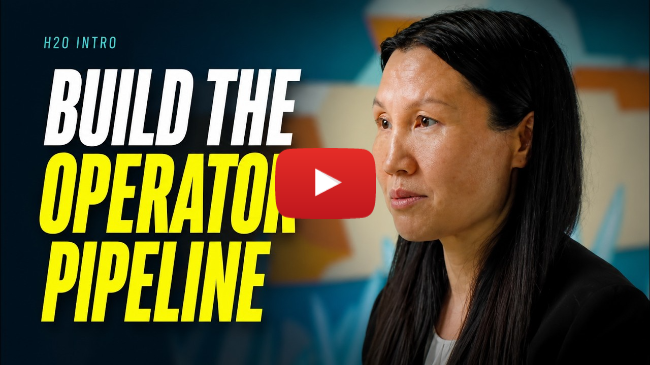 |
How Long Beach Trains New Water Operators in Nine Months
waterloop
"Meet Yan Zhang, Senior Director of Water Quality and Process at Long Beach Utilities.
A shortage of treatment plant operators can quickly become a drinking water reliability problem. At one point, Long Beach Utilities had vacancies in more than 30% of its operator positions as retirements, industry-wide shortages, and competition from larger agencies strained its workforce.
The utility responded by creating a nine-month Water Operator Academy for people with no previous water experience. Participants receive classroom instruction and field training, then complete the program with state certification and the experience needed to pursue full-time operator positions.
Over eight years, the Academy has prepared more than 80 people for water careers. Many now hold key roles within Long Beach Utilities.
The program creates a direct route into a highly skilled profession that typically requires years of training. It also gives the utility a stronger pipeline of operators responsible for keeping safe, reliable drinking water flowing across Long Beach." |
|
|
|
|
 |
Tap Talk |
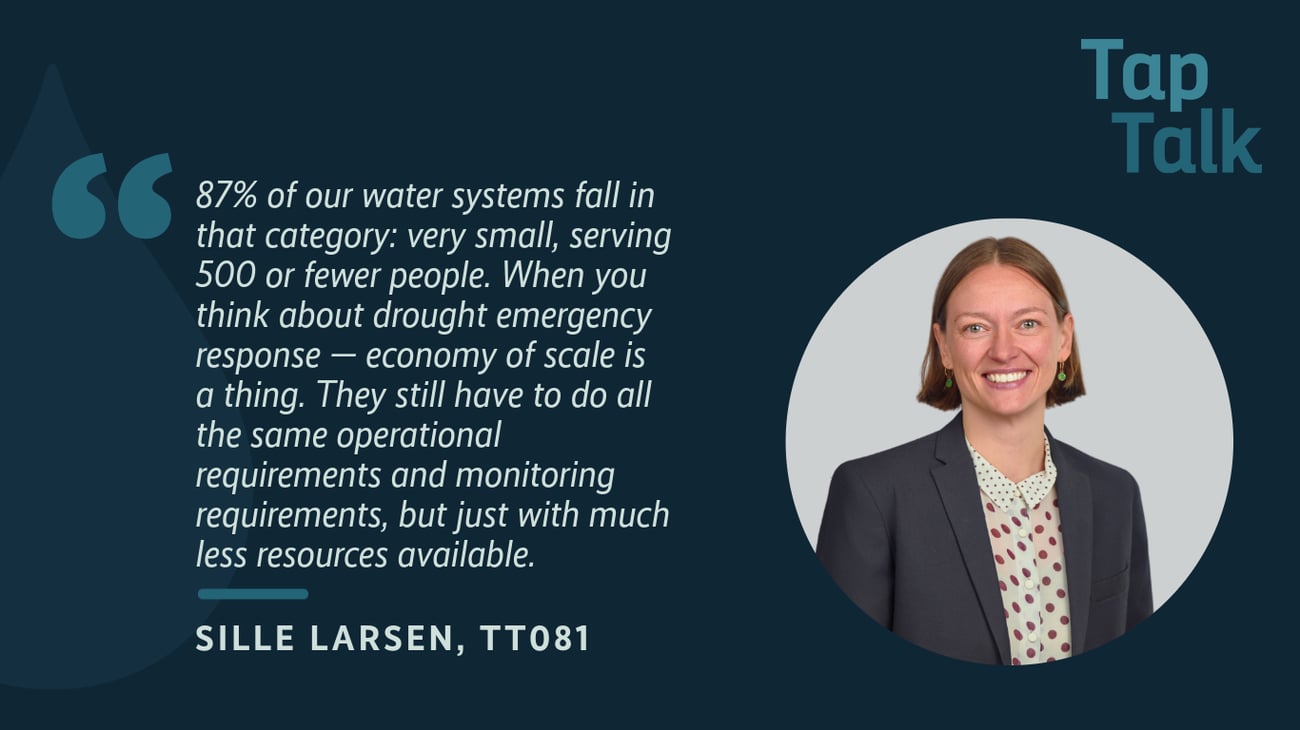
The Other Side of Vermont’s Flash Drought: Stories from Public Water Systems
This week’s episode of Tap Talk is a direct follow-up to last week’s show, “What We Can Learn from Vermont’s Flash Drought.” In that episode, we primarily discussed the impact of flash drought to private well users in Vermont. This week, we hear about the challenges from the other side of 2025’s water crisis: those experienced at public water systems. Sille Larsen, water resources program manager from the Vermont Department of Environment Conservation, tells Jennifer and Steve about the steps taken at the state’s water systems and the value of collecting data for understanding longterm drought impacts.
|
|
|
|
|
|
|
Featured Video |
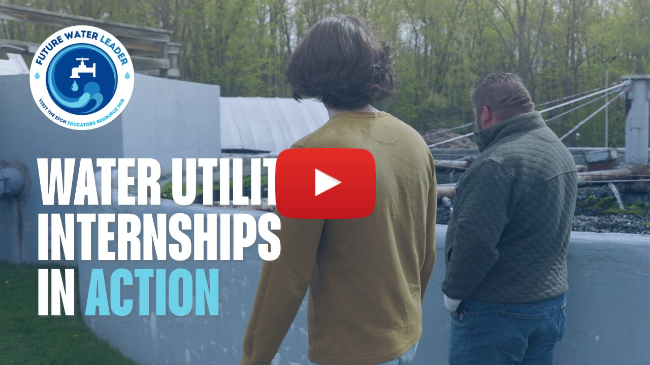 |
Future Water Leaders: Water Utility Internships in Action
Environmental Finance Center Network
"Future Water Leaders (FWL) is a national workforce development program designed to build the next generation of water professionals. The program introduces high school students to careers in the water sector through a two-pronged approach: equipping educators with career exploration resources for students and offering students paid internship opportunities with water and wastewater utilities.
In this video, we take a closer look at a FWL internship at the Village of Minoa (NY) Wastewater Treatment Plant. You will hear from the utility and its former student intern about what an internship looks like day-to-day, what utilities and students can gain from the experience, and how hands-on learning can introduce young people to careers they may not have considered before.
The video also shares practical lessons for water and wastewater utilities interested in developing internship opportunities and strengthening their future workforce."
Access resources and learn more about how FWL is helping develop the next generation of water professionals by supporting the workforce needs of today! |
|
|
|
|
Apply for AWWA Scholarships |
|
The Water Equation Scholarships program supports students and operators at the beginning of their work in water. Scholarships are available through AWWA, corporate partners, and the Water Operator Continuing Education Fund.
The Water Operator Continuing Education Fund supports non-traditional education programs, including trade schools, certification programs, and community college coursework for water operators.
-
Applications are accepted on a monthly basis throughout the year.
-
All applications are reviewed by a committee of water sector professionals.
-
Awards are made on a rolling basis throughout the year.
-
Award amount varies by program and course.
-
To finalize your application, you will need to enter the code WOE.
The Water Operator Continuing Education Fund does not fund scholarships for undergraduate, graduate, or PhD programs. To apply for academic scholarships, visit the Water Equation Scholarships webpage. Water Equation offers 23 merit-based science, technology, engineering, and match academic scholarships for higher degrees.
For questions about specific program eligibility, contact Margo Hatton (mhatton@awwa.org), CFRE – Senior Manager Development and Donor Relations.
Learn about more continuing education opportunities and section specific scholarships available through your local AWWA section.
|
| Learn More |
|
|
|
|
Featured Video |
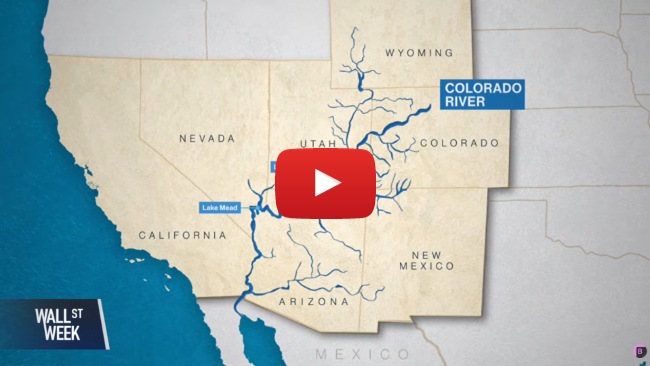 |
What the Colorado River Crisis Means for the American West
Bloomberg Television
"The Colorado River provides water to seven states, contributing to an estimated $1.4 trillion in annual economic activity. But decades of decline, record-low snowpack and shrinking reservoirs have pushed the system toward crisis, with Lake Powell nearing levels that could threaten hydropower production. As key rules expire and states fail to reach a long-term deal, the federal government is stepping in with proposed cuts to lower-basin water use, hitting Arizona especially hard. Will the Southwest be able to survive on a shrinking Colorado River?"
|
|
|
|
|
|
|
|
Advancing Sustainability and Resilience in the Water Sector
September 10, 2026 | 1:00 PM ET
Water Environment Federation
Join WEF and Xylem at this free webcast, which will explore how water sector leaders are advancing sustainability, resilience, innovation, and workforce development across utilities and communities.
This moderated discussion, sponsored by Xylem will examine why sustainability matters now, what it means to be a sustainable utility, and how organizations are putting strategies into action through decarbonization, water stewardship, capacity building, and resilient infrastructure. The conversation will center on what sustainability and resilience look like for utilities right now, and what it takes to build the workforce and capacity to keep advancing it.
Panelists will also touch on WEFTEC with a preview of this year's sustainability programming, including how to get involved in the Bring Your Own Bottle Challenge and other on-site opportunities
|
|
|
|
EPA Funding & Financial Tools for Small Water and Wastewater Utilities
September 17, 2026 | 1:00 PM ET
Rural Community Assistance Partnership
This free webinar provides an overview of the U.S. Environmental Protection Agency's (EPA) Water Infrastructure and Resiliency Finance Center resources that help small drinking water and wastewater utilities improve financial sustainability, identify funding opportunities, and build long-term infrastructure resilience. Participants will be introduced to EPA financial planning tools, the Water Finance Clearinghouse, the Smart Water Infrastructure Financing and Innovation (SWIFT) Initiative, and federal funding programs that support utility improvements.
|
|
|
|
Effective Utility Management for Wastewater Systems
September 24, 2026 | 1:00 PM ET
Environmental Finance Center Network
This free webinar will cover Effective Utility Management (EUM) for water and wastewater systems, a nationally recognized framework that optimizes utility operations, governance, and financial sustainability. Wastewater systems often lack the structured planning needed to prevent public health risks, compliance violations, and severe budget shortfalls. Mastering EUM principles empowers operators and managers to build practical strategic plans, prioritize resources, and demonstrate continuous improvement to state regulators. |
|
|
|
|
|
|
|
|
|
|
Recent Blog Posts at WaterOperator.org |
|
|
 |
|
Turning Rural Water Infrastructure Funding into Lasting Results
Read Here » |
|
|
 |
|
Monitoring, Sampling, and Data Management for NPDES Compliance
Read Here » |
|
|
|
|
|
Groundwater & Well Care for Public Water Systems is a free online course from WaterOperator.org. Certificates are provided and the course is currently pre-approved for 2 hours continuing education credit in a number of states.
Click here to learn more. |
|
|
|
|
|
|
|
|
|
WaterOperator.org is a free service, grant-funded to support small community water and wastewater operators with comprehensive resources and information in one easy-to-use place. We also serve the 800+ training, primacy, and technical service organizations, by helping operators get to their information. We aren't selling or advertising anything. Call us at 1-866-522-2681 for assistance. |
|
|
|
|
|
Visit our other websites: |
|
|
|
|
|
|
|
Click here to unsubscribe | Sent to: _t.e.s.t_@example.com
Illinois State Water Survey, 2204 Griffith Drive, Champaign, IL 61820, United States |
|
|
|
|