|
Newsletter #427 - March 3, 2026 |
|
|
|
|
 |
Guidance from EPA's Office of Water Emergency Response and Cybersecurity |
|
The U.S. Environmental Protection Agency (EPA) has issued the following alert to ensure water system owners and operators take necessary steps to strengthen their utility's cybersecurity measures in light of activities in the middle east:
"Iranian government–affiliated and aligned cyber actors have previously demonstrated the ability to exploit internet‑exposed operational technology devices at U.S. water and wastewater systems, in some cases forcing temporary reversion to manual operations and causing operational impacts. EPA urges utilities to adopt a heightened security posture and promptly report suspicious activity to CISA and the FBI.
Mitigations
All drinking water and wastewater systems are strongly encouraged to implement the following mitigations immediately to enhance resilience against low-level cyberattacks:
- Reduce Operational Technology Exposure to the Public-Facing Internet
- Replace All Default Passwords on Operational Technology Devices with Strong, Unique Passwords
- Implement Multifactor Authentication for Remote Access to Operational Technology Devices
Systems that outsource technology support may need to consult with their service providers for assistance with these mitigations.
In addition to these immediate actions, drinking water and wastewater systems are encouraged to adopt the actions outlined in the CISA, EPA, and FBI Top Cyber Actions for Securing Water Systems Fact Sheet to further reduce cyber risk and improve resilience against malicious cyber activity.
Conclusion
If you have questions about any of the information in this alert, including assistance with the mitigation steps, submit a request to EPA’s Cybersecurity Technical Assistance Program for the Water Sector. Organizations are encouraged to report information concerning suspicious or criminal activity to FBI Internet Crime Complaint Center (IC3) at IC3.gov or to CISA via CISA’s Incident Reporting System." |
|
|
|
|
 |
Missed our last webinar? Watch the recording! |
|
Workforce Development & Succession Planning for Wastewater Utilities
This webinar recording will provide an overview of workforce development and best practices for building a stronger workforce, including recruitment, training, and retention. It will include a review of publicly available resources to navigate current workforce challenges and demonstration of our search tools at WaterOperator.org to find additional free resources and training events.
This webinar series covers topics relevant to wastewater operators, including funding, asset management, compliance, and water quality.
For informational purposes only. We are unable to offer certificates for watching a video recording.
Recordings of our previous webinars:
|
|
|
|
|
 |
Calling all Illinois Utilities! IRWA needs your help! |
|
IRWA is looking for all small and rural system members, operators, and others, to get involved with a free and simple energy assessment of their water and/or wastewater utilities.
IRWA needs to conduct more of these assessments for member and other systems across the state to meet their federal grant requirements for this program year (ending June 30, 2026).
Please contact any IRWA field staff member, board member, or the IRWA office, to let them know if your organization is willing to participate in this endeavor.
You can also directly contact IRWA's Energy Efficiency Tech, Steve Stortzum by phone: 618-335-1474 or e-mail: stortzum@ilrwa.org. |
| Learn More |
|
|
|
|
Featured Video |
 |
New Jersey's Bold Plan to Eliminate Lead Pipes
waterloop
"New Jersey is three years into implementing one of the nation’s most ambitious lead service line replacement laws — a 10-year mandate to identify and remove all lead service lines statewide.
The early trends show something important: unknown service lines are declining, inventories are becoming clearer, and utilities are building the capacity to replace lead at scale. But the data also reveals complexity — verification challenges, outreach hurdles, funding constraints, and the reality that replacement is as much about logistics and trust as it is about engineering.
The report makes clear: early data is a snapshot, not the full story.
Fluctuations reflect verification processes, permitting timelines, funding structures, and customer participation. Yet the direction is encouraging.
New Jersey’s experience shows that replacing lead service lines is not just about pipe — it’s about governance, data integrity, equity, public communication, and sustained collaboration across utilities, engineers, advocates, and communities.
The work is complex. The progress is real. And the lessons matter beyond New Jersey."
Read the full report: Early Trends in Lead Service Line Inventories: Reflections from New Jersey - Jersey Water Works |
|
|
|
|
Applications for the WEF Operator Scholarship are due this month! |
|
The WEF Operator Scholarship provides funding up to $5,000 dollars for individuals who are seeking water sector operator education, training, or certification to enter the industry or to advance their knowledge, skills, abilities or license.
Application Requirements and Criteria:
-
Individuals seeking an entry-level operator’s license
-
Or, an entry or experienced operator seeking professional development in the following areas:
-
Completed online application including a brief essay on your experience and career goals.
Applications are open until March 31, 2026, and will close at 11:59 PM ET |
| Learn More |
|
|
|
|
Featured Video |
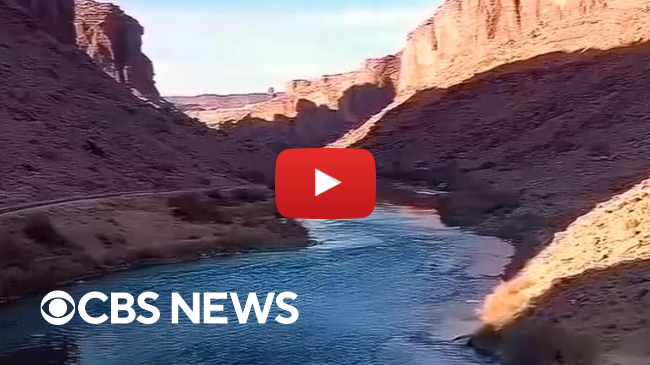 |
States miss deadline for Colorado River water-use agreement
CBS News
"After two years of negotiations, seven western states have missed the latest federal deadline to reach an agreement on sharing the Colorado River's dwindling water supply. California, Nevada, Utah, Wyoming, Colorado, Arizona and New Mexico had until this past Saturday to reach a consensus."
|
|
|
|
|
Free Natural Hazard Risk Assessment |
|
Are you interested in this opportunity from EPA’s Strengthening Water Infrastructure for Tomorrow (SWIFT) Initiative?
SWIFT provides location-specific natural hazard data and practical risk assessment tools to identify and evaluate resilient strategies. Technical assistance under SWIFT promotes a better understanding of natural hazard threats and their impacts on vulnerable assets, providing the guidance needed to make risk-informed infrastructure and investment decisions. SWIFT also makes connections to infrastructure financing that help utilities fund the implementation of their hazard resilience projects.
If you are interested in receiving SWIFT technical assistance, please contact Aliza Furneaux. |
|
|
|
|
|
|
|
The Benefits of Internships for Wastewater Systems
March 12, 2026 | 12:00 PM ET
Environmental Finance Center Network
Join EFCN for a free webinar that will explore why establishing an internship program can be highly beneficial for utilities. EFCN will share practical ways to fund internships, where to find potential interns, and the types of tasks they can support to ease supervisory workloads; and cover strategies for helping interns transition into full time roles. |
|
|
|
Distribution System Infrastructure and Water Quality Control Basics
March 17, 2026 | 1:00 PM ET
Rural Community Assistance Partnership
This free training is designed to help operators with scheduled operations to provide quality drinking water to their customers. This can be achieved through infrastructure knowledge and daily checks and balances in the system. In this presentation, we will cover several commonly missed details and practices used by operators daily to stay ahead of breakdowns or failures. Whether you are a new operator, a trainee, or a seasoned operator, this presentation will give you a strong first step in daily operations or a helpful reminder. |
|
|
|
Lagoon Viability and Maximization of Performance Through Optimization & Maintenance
March 24, 2026 | 1:00 PM ET
Rural Community Assistance Partnership
This free webinar will include strategies for saving your municipal lagoon, a comparison of operational costs versus the sticker shock often associated with mechanical treatment plants, and affordable polishing treatment options that can help communities meet regulatory standards. |
|
|
|
Building Drought and Wildfire Resilience for Water Sector Utilities: Technical Assistance and Resources from EPA SWIFT
March 25, 2026 | 1:00 PM ET
U.S. Environmental Protection Agency
In this free webinar, learn about the SWIFT technical assistance process, explore online tools for understanding and assessing system risk to these hazards, and review resources for identifying resilient infrastructure projects. SWIFT’s experts can provide hands-on technical assistance to help your utility build resilience to drought and wildfire hazards through risk-informed project planning and investment. |
|
|
|
|
|
|
|
|
|
|
Recent Blog Posts at WaterOperator.org |
|
|
 |
|
Essential Safety Resources for Wastewater Operators
Read Here » |
|
|
 |
|
Preparing for LCRI Compliance: Key Insights from NRWA
Read Here » |
|
 |
|
Community Engagement Resources for Wastewater Utilities
Read Here » |
|
|
|
|
|
Groundwater & Well Care for Public Water Systems is a free online course from WaterOperator.org. Certificates are provided and the course is currently pre-approved for 2 hours continuing education credit in a number of states.
Click here to learn more. |
|
|
|
|
|
|
|
|
|
WaterOperator.org is a free service, grant-funded to support small community water and wastewater operators with comprehensive resources and information in one easy-to-use place. We also serve the 800+ training, primacy, and technical service organizations, by helping operators get to their information. We aren't selling or advertising anything. Call us at 1-866-522-2681 for assistance. |
|
|
|
|
|
Visit our other websites: |
|
|
|
|
|
|
|
Click here to unsubscribe | Sent to: _t.e.s.t_@example.com
Illinois State Water Survey, 2204 Griffith Drive, Champaign, IL 61820, United States |
|
|
|
|