|
Newsletter #153 for October 2026 |
|
|
|
|
 |
EPA Announces $3.5 Million in Grant Funding to Help Tribes Restore and Protect Local Waterbodies |
|
The U.S. Environmental Protection Agency (EPA) is accepting applications from Tribes for approximately $3.5 million in competitive funding through its Clean Water Act Section 319 grant program. The funding is designed to support Tribal projects that reduce nonpoint source pollution, a leading cause of water quality impairment that occurs when contaminants are carried into waterways through rainfall, runoff, and other diffuse sources.
According to EPA, the Section 319 program has helped improve water quality in more than 16,300 miles of rivers and streams and over 230,000 acres of lakes since 2009. EPA officials say the grants provide Tribes with resources to implement practical, locally driven projects that protect and restore water resources while leveraging additional partner investments. An EPA analysis found that partners contributed an estimated eight additional dollars for every Section 319 dollar invested in successful water quality restoration projects.
Eligible projects may include streambank restoration, erosion control, livestock exclusion fencing, stormwater management improvements, and watershed-based planning efforts. Tribes and intertribal consortia may apply for awards of up to $175,000, and EPA expects to fund approximately 20 projects through this competitive opportunity.
The funding builds on EPA’s broader Tribal Nonpoint Source Program, which provides annual support to more than 200 eligible Tribes. In 2026, EPA is providing more than $175 million nationally through Section 319 grants, including $10.5 million in Tribal base grants and the additional $3.5 million available through this round of funding.
The 2026 Notice of Funding Opportunity (NOFO) is available on grants.gov and application packages must be submitted by November 9, 2026.
Information about past funded projects under the Tribal competition is available online in EPA’s Tribal NPS Projects Mapper.
Visit EPA’s website to learn more about success stories from this grant funding.
|
| Read the Press Release |
|
|
|
|
 |
Now Open for Registration |
|
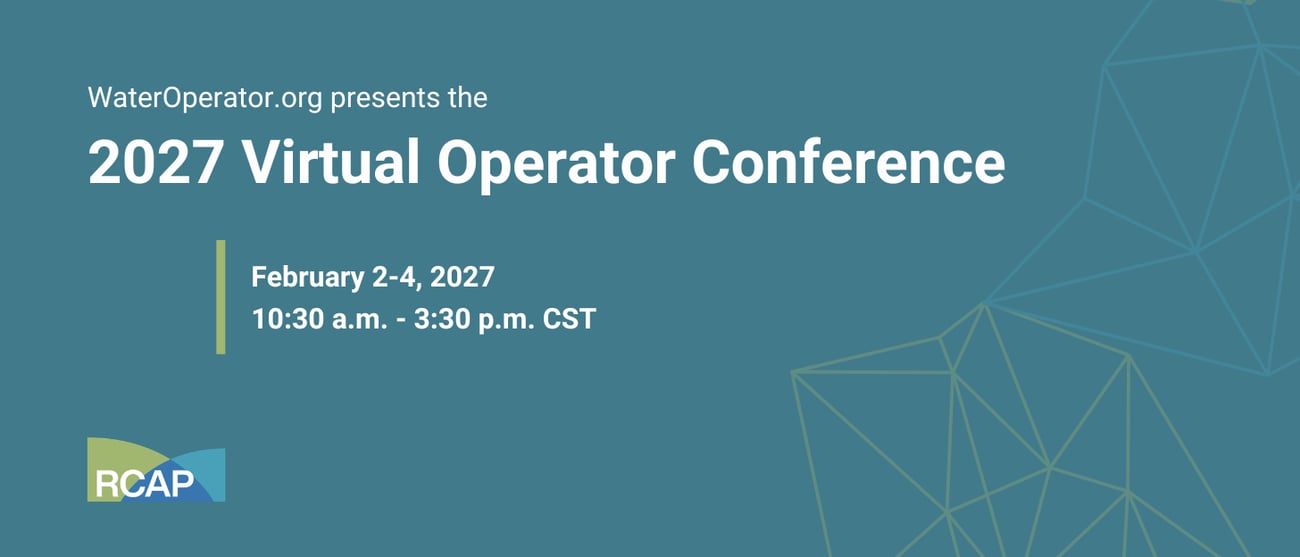
Our 4th annual Virtual Operator Conference on drinking water topics returns February 2-4, 2027. This is a free, 3-day online event with up to 12 contact hours of continuing education credit available, depending on your certification authority.
We have just begun the process of CEU pre-approval for the 2027 agenda, but here's what our 2026 event looked like:
- Pre-approved in: Alaska, Arkansas, Colorado, Florida, Illinois, Indiana, Kentucky, Louisiana, Maine, Massachusetts, Michigan, Minnesota, Mississippi, Missouri, Montana, New Hampshire, New York, Ohio, Oklahoma, Oregon, Rhode Island, South Dakota, Tennessee, Texas, Utah, Vermont, Washington, Wisconsin, Wyoming
- Acceptable in: Alabama, Arizona, California, Idaho, North Carolina, North Dakota, South Carolina, Virginia
|
|
|
|
|
|
|
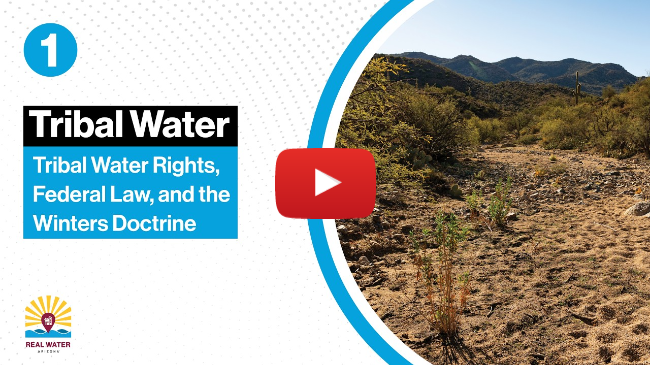
Tribal Water Rights, Federal Law, and the Winters Doctrine
|
 |
|
This video features an interview with tribal water attorney, Robyn L. Interpreter of Montgomery & Interpreter, PLC. In it, Interpreter answers questions related to:
-
How her work intersects with other industries and municipalities
-
Where tribal water rights come from in a legal context
-
What the Winters Doctrine is and what it established
-
The meaning of "priority date" and "first in time, first in right"
-
Why many tribal water rights have very senior priority dates
-
What "future water needs" means when it comes to tribal water rights
-
What could happen if a tribe exercises a senior water right
Find more videos like this on Real Water AZ's YouTube Channel. |
|
|
|
|
|
|
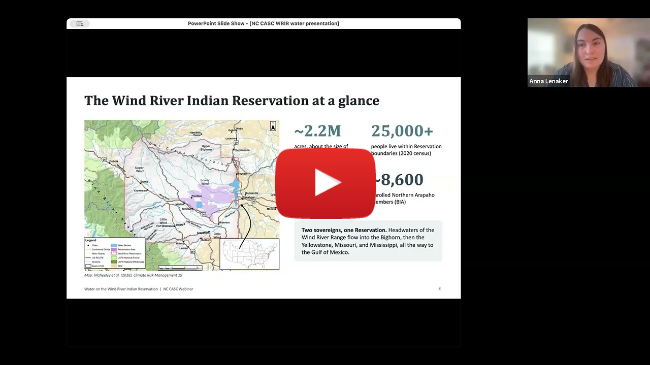
The Past, Present and Future of Water on the Wind River Indian Reservation: October 8, 2026
|
 |
|
"The Wind River Reservation offers a powerful case study on the historical and contemporary challenges Tribal Nations across the American West face in quantifying and using their water in alignment with their values. On paper, the Eastern Shoshone and Northern Arapaho Tribes hold some of the most senior water rights in the West — Wyoming didn't become a state until decades after treaties were signed — with a reserved right to roughly 40% of the water flowing through the Reservation in an average year. Yet in practice, the Tribes face significant barriers to using their water.
This webinar [recording] covers the history and legal context behind today's challenges, including the 37-year legal battle that quantified the Tribes' water right while restricting its use, chronic federal underinvestment, and decades of broken promises. We'll then survey pressing present-day challenges: a severely dilapidated irrigation system, insufficient water storage, and a changing climate reshaping water availability. Most importantly, we’ll conclude with the solutions Tribal water managers and leaders are pursuing to utilize their water in ways that will nourish their communities for seven generations to come."
Find more videos like this on North Central CASC's YouTube channel. |
|
|
|
|
EPA Invests in Innovative Wetland Projects Throughout the Pacific Southwest |
|
Several Tribal Nations across the Pacific Southwest will receive a share of the U.S. Environmental Protection Agency’s latest wetland funding awards, supporting projects that blend environmental stewardship with tribal priorities and traditional knowledge.
Tribal Recipients include:
- $454,832 to the Buena Vista Rancheria of Me-Wuk Indians to inventory wetlands and other aquatic resources on Tribal trust lands, create a unique planting guide for culturally significant vegetation, and complete a small-scale wetland restoration demonstration project.
- $210,585 to the Hualapai Tribal Council to update a Wetland Program Plan that includes water quality monitoring and analysis, reduction of polluted runoff, wetlands identification and protection, and Tribal outreach and education.
- $127,894 to the Summit Lake Paiute Tribe to restore a wetland meadow next to Summit Lake using experimental restoration techniques that mimic a naturally occurring beaver dam.
- $399,965 to the Tolowa Dee-Ni Nation to plan watershed and aquatic resource restoration and to develop assessment methods using Indigenous and Traditional ecological knowledge.
- $406,972 to the White Mountain Apache Tribe to update wetland ecosystem mapping databases, conduct wildlife surveys, and conduct outreach and education to partner organizations and community representatives.
- $499,727 to the Yurok Tribe to protect and restore the Klamath River headwater wetlands.
These funds will help to advance efforts ranging from wetland restoration and ecosystem mapping to water quality monitoring and watershed protection. These investments recognize the critical role Tribal Nations play in protecting culturally significant lands and waters while strengthening local capacity to manage wetland resources for future generations. |
| Read the Press Release |
|
|
|
|
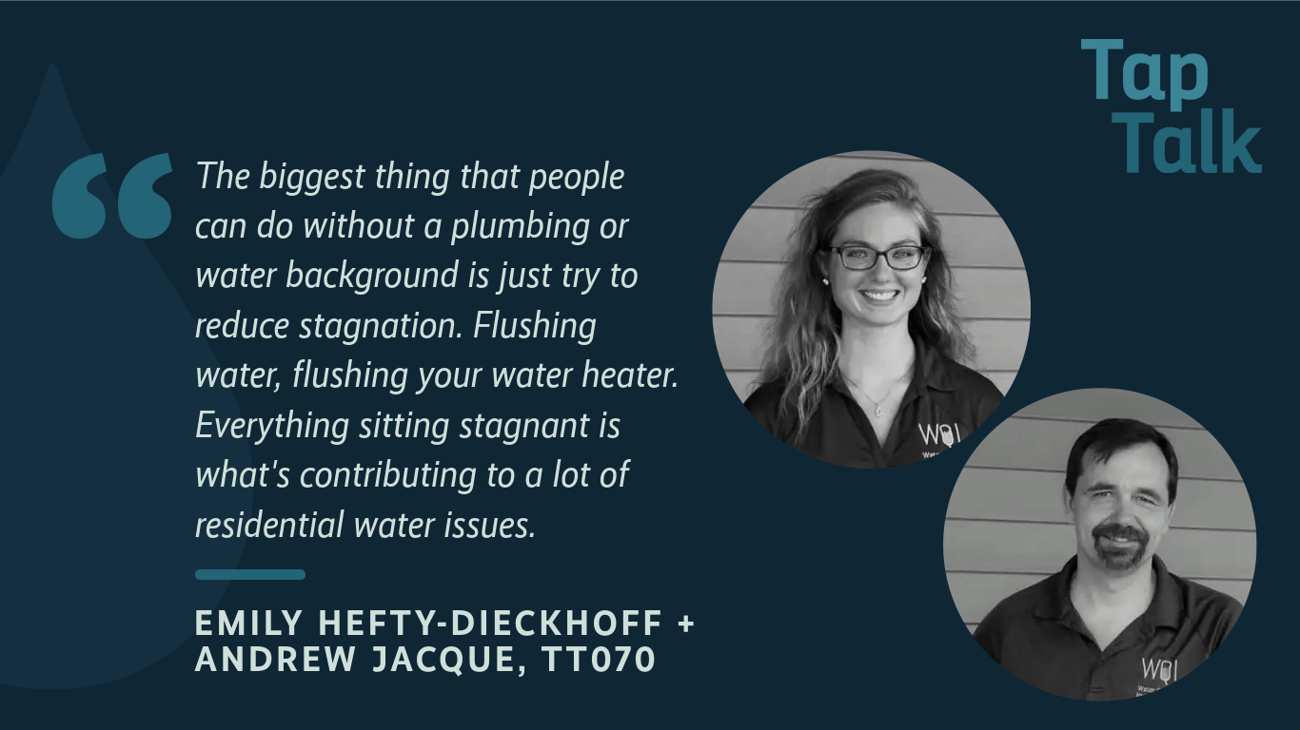 |
Tap Talk Episode 70
Diving Into Biofilms With Water Quality Investigations (Part 2)
In the second episode of our series featuring Andrew Jacque and Emily Hefty-Dieckhoff from Water Quality Investigations, we continue exploring the world of biofilms and other common water quality issues in household water systems. Make sure you’ve caught Part 1 first that covers a lot of biofilm basics, and then here in Part 2 hear Andrew, Emily, Steve, and Jennifer further discuss biofilm-induced water quality issues, water chemistry, microbial corrosion, the effectiveness of home treatment, and more advice for homeowners!
|
|
|
|
|
|
|
 |
Missed our last webinar? Watch the recording! |
|
This webinar, recorded in September 2026, reviews publicly available resources for wastewater utilities that support emergency preparedness and resilience. The session also includes a demonstration of our free search tools at WaterOperator.org to find additional free resources and training events.
This webinar is part of a series that covers topics relevant to wastewater operators, including funding, asset management, compliance, and water quality.
For informational purposes only. We are unable to offer certificates for watching a video recording.
Recordings of our previous webinars:
|
|
|
|
|
Featured Events for Tribal Water Systems |
|
|
|
AutoCAD 4-hr Webinar: Building Pressure Networks
October 21, 2026 | 10:00 AM MT
Indian Health Service
This free session is presented by Arkance and IHS and is for CAD technicians and engineers. In this session, we will step through a workflow to create a draft and final water main network from start to finish using the Feature Line and Pressure Network functionality in Civil 3D 2026. The workflow will begin with a Pasted surface (Civil 3D point cloud and surveyed surface) then continue with a draft piping design being adjusted for design changes and displaying labeling. Upon approval, the draft design will be used to create the final design with minor editing and bury depth applied. Labels will be added to the final pressure piping, fittings and appurtenances.
Existing sanitary sewer crossings will be identified and labeled in the profile view and vertical offsets added. In this session, a suggested workflow will be discussed as well as how the network parts are affected and update when the location of the pressure pipe network needs to be modified and what options are available for this type of change. |
|
|
|
Water Webinar: Tribal Sovereignty in the Colorado River Basin & Beyond
October 27, 2026 | 12:00 PM MT
Water Resources Research Center
Join this free webinar examining tribal sovereignty among the 30 Native Nations in the Colorado River Basin, drawing on a collaborative policy brief from the Water & Tribes Initiative. Covers an historical perspective on tribal sovereignty in the United States, foundational principles of modern tribal sovereignty, and tribal governance and intergovernmental relations as they relate to sustainable Colorado River management amid climate challenges. Speakers: Jason Robison (Jerry W. Housel/Carl F. Arnold Distinguished Professor of Law, University of Wyoming College of Law) and Jay Weiner (Of Counsel, Rosette, LLP). Registration details will be posted on the event page. |
|
|
|
Hawaii’s Wastewater Alternatives & Innovation (WAI) Online Training Approach for Small, Rural, and Tribal Communities
November 5, 2026 | 2:00 PM ET
Wastewater Alternatives & Innovations, U.S. Environmental Protection Agency
Discover how WAI is reshaping workforce development in Hawaii's water sector through its Work-4-Water program. The free 8-week pre-apprenticeship program features a flexible, learn-at-your-own-pace hybrid model designed to remove barriers to entry. The program delivers real-world, collaborative learning experiences for pre-apprentices and equips participants with both scientific knowledge and practical skills.
Originally piloted using U.S. Department of Labor (DOL) funding, Work-4-Water was expanded with EPA funding through the Innovative Water Workforce grant program to cover all Hawaiian Islands, incorporate on-the-job training (OJT) support, and establish the WAI Decentralized Training Center. |
|
|
|
|
|
|
|
|
|
Recent Blog Posts at WaterOperator.org |
|
|
 |
|
Build Your Own Cybersecurity Awareness Month Campaign
Read Here » |
|
|
 |
|
Resilience and Emergency Preparedness Resources for Wastewater Utilities
Read Here »
|
|
|
|
|
|
Groundwater & Well Care for Public Water Systems is a free online course from WaterOperator.org. Certificates are provided and the course is currently pre-approved for 2 hours continuing education credit in a number of states.
Click here to learn more. |
|
|
|
|
|
WaterOperator.org is a free service, grant-funded to support small community water and wastewater operators with comprehensive resources and information in one easy-to-use place. We also serve the 800+ training, primacy, and technical service organizations, by helping operators get to their information. We aren't selling or advertising anything. Call us at 1-866-522-2681 for assistance. |
|
|
|
|
|
Visit our other websites: |
|
|
|
|
|
|
|
View archive of past issues. | Click here to unsubscribe | Sent to: _t.e.s.t_@example.com
Illinois State Water Survey, 2204 Griffith Drive, Champaign, IL 61820, United States |
|
|
|
|