|
Newsletter #127 for April 2026 |
|
|
|
|
|
|
|
|
|
U.S. Environmental Protection Agency (EPA) and U.S. Department of Health and Human Services (HHS) has announced a coordinated effort to address microplastics in drinking water by adding the contaminants as a priority contaminant group on EPA’s draft Sixth Contaminant Candidate List (CCL 6), which will drive future monitoring, research, and potential regulation. To support this, HHS has launched a parallel $100M+ “STOMP” initiative to improve detection, characterization, and removal of microplastics in the environment and human body. There won't be any regulatory limits until microplastics have been extensively researched by the agency, but this effort shows a clear sign that microplastics are moving toward standardized monitoring requirements and eventual regulatory consideration, similar to PFAS. |
|
|
|
|
EPA has launched a new PFAS OUTreach (PFAS OUT) program, which aims to help drinking water systems reduce exposure to PFOA and PFOS ahead of upcoming federal compliance deadlines by directly connecting utilities with funding, technical assistance, and practical implementation resources. EPA plans to engage roughly 3,000 systems with known PFAS challenges, particularly small, rural, and disadvantaged water systems, through targeted outreach, webinars, and site-specific guidance to prepare for compliance with national PFAS standards.
For questions related to PFAS OUT, please contact PFASOUT@epa.gov. |
|
|
|
|
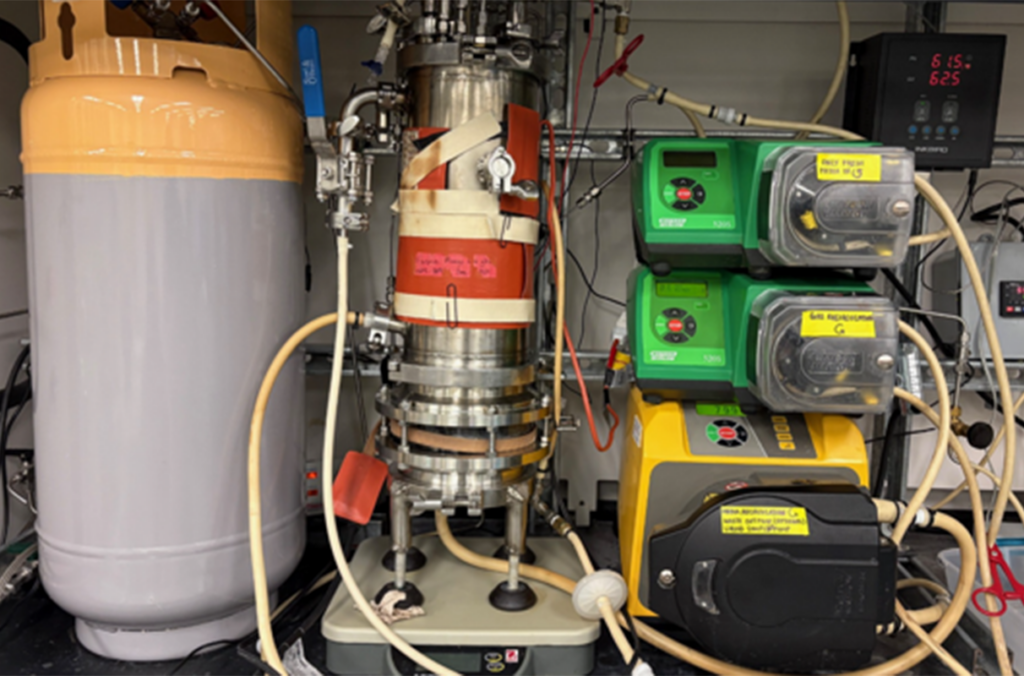
Researchers at Washington State University have developed a new method to convert wastewater sludge directly into renewable natural gas (RNG), combining a high‑temperature, oxygen-assisted pretreatment step with a novel microbial upgrading process to significantly improve energy recovery from biosolids. The pilot study reported up to 200% higher RNG production, conversion of roughly 80% of sludge into usable energy, and nearly 50% lower disposal costs compared to conventional anaerobic digestion, while also producing higher-purity methane. This research highlights a promising approach to resource recovery that could enhance digester performance, reduce biosolids handling costs, and improve overall plant sustainability. |
 |
|
Source |
|
|
|
|
|
|
EPA is seeking public input on its Interim Guidance on the Destruction and Disposal of PFAS and Materials Containing PFAS, which presents currently available information on the destruction and disposal of PFAS and PFAS-containing materials that are not consumer products. The updated guidance includes:
-
Recommendations for managers of PFAS-containing materials to protect human health and the environment.
-
A new technology evaluation framework to help analyze the safety and effectiveness of new destruction and disposal technologies.
-
Scientific information on current understanding of PFAS and the three widely used and commercially available destruction and disposal technologies: Underground injection, landfills, and thermal treatment (ex. incineration).
EPA is accepting comments through June 29, 2026, through Regulations.gov under Docket ID EPA-HQ-OLEM-2020-0527. |
|
|
|
|
The Water‑AI Nexus Center of Excellence has released a new report, Principles for AI and the Future of Work in Water, which outlines a “worker-first” approach to integrating AI into water utilities. The report highlights AI’s potential to improve efficiency, reduce costs, and support operations, and the considerations to ensure some level of human oversight is implemented. To guide implementation, the report identifies four key principles 1) protecting mission‑critical work, 2) establishing sector-wide AI governance standards, 3) building workforce capacity across utilities, and 4) starting with high-value, transparent use cases to build trust. As AI becomes adopted more as a routine tool for improving day-to-day operations and decision support, proper workforce training will ensure successful implementation.
To complement the report, Watura has released a new virtual training course, AI 101 for Water Professionals, to educate water professionals at all levels on AI, establishing a common baseline of AI literacy to support informed decision-making. |
|
Upcoming Events
A listing of webinars, symposia, and conferences relevant to this work. |
|
|
|
|
PFAS Destruction Technologies: Current Methods, Effectiveness, and Unknowns
May 7, 2026 / Virtual 13:00 - 14:00 Central Time Zone
American Association for Advancement of Science
This webinar will provide an overview of current and emerging PFAS destruction technologies and discuss their effectiveness, limitations, and the challenges associated with incomplete destruction and byproduct formation. |
|
|
|
Microplastics Sampling: Pioneering Practices, Experiences, and Lessons Learned
May 7, 2026 / Virtual 15:00 - 16:00 Eastern Time Zone
The Water Research Foundation
This webcast will present early findings and lessons learned from a first‑of‑its‑kind utility-led microplastic sampling program, highlighting the challenges, emerging best practices, and need for greater institutional knowledge around microplastics monitoring in drinking water systems. |
|
|
|
Time-Based Batch Technologies
May 13, 2026 / Virtual 11:30 - 12:15 Eastern Time Zone
Water Environment Federation
This webinar will provide an overview of time‑based biological treatment technologies, comparing activated sludge, densified sludge, and aerobic granular sludge systems and highlighting how "true batch" treatment can enhance process performance and intensification.
|
|
|
|
|
|
|
|
|
|
|
Drinking Water | Open Access
Trihalomethane Concentrations Measured at the Tap are a Poor Predictor of Haloacetonitrile Concentrations in Small Rural Drinking Water Systems
Byers, E. N., Ormsbee, L. E., Christian, W. J., McCoy, N., Mooney, M., Sexton, D., & Unrine, J. M. (2026). Trihalomethane concentrations measured at the tap are a poor predictor of haloacetonitrile concentrations in small rural drinking water systems. Environmental Health. https://doi.org/10.1021/envhealth.6c00095.
Why it's interesting: This study evaluates whether trihalomethanes (THMs) that water systems routinely monitor are a reliable indicator of more toxic, unregulated DBPs, particularly haloacetonitriles (HANs), that may also be forming in their systems. Using two years of tap sampling across 34 homes, the authors found that THMs and HANs were only weakly correlated, meaning THM results alone may not reflect the presence or risk of these more toxic byproducts.
The study also shows that HANs respond differently than THMs to common system conditions, such as source water quality (especially bromide), temperature, treatment practices (ex. prechlorination), and water age in the distribution system. The study highlights that water systems that use chlorination or experiencing variable source water quality should consider additional monitoring or operational adjustments to ensure other DBPs are also under control. |
|
|
Wastewater | Open Access
Comprehensive review of conventional and emerging technologies for advanced primary wastewater treatment with an insight into future perspectives
Askari Lasaki, B., Manoj, M. C., & Schönberger, H. (2026). Comprehensive review of conventional and emerging technologies for advanced primary wastewater treatment with an insight into future perspectives. Water Science & Technology, 93(7), 1039–1060. https://doi.org/10.2166/wst.2026.253.
Why it's interesting: This review compares conventional primary treatment (settling) with a range of advanced primary treatment (APT) technologies, such as chemically enhanced primary treatment (CEPT), microsieving, flotation, electrocoagulation, and integrated systems, to evaluate how they perform in removing solids, organics, and nutrients from wastewater. The review shows that most advanced options significantly outperform traditional settling, especially for removing suspended solids and organic matter, with technologies like electrocoagulation and integrated systems achieving the highest overall removal efficiencies. The review does also highlight how lower-cost options like sedimentation and microsieving remain attractive due to their simplicity, lower energy use, and lower carbon footprint, while higher-performing systems come with increased capital, operational costs, and complexity. For wastewater systems considering upgrading or optimizing their primary treatment, this review offers practical information such as energy use and cost considerations. |
|
|
Wastewater | Open Access
Microbial electrochemical technologies can support sustainable energy, waste treatment, and resource recovery
Korth, B., & Harnisch, F. (2026). Microbial electrochemical technologies can support sustainable energy, waste treatment, and resource recovery. Communications Sustainability, 1, 69. https://doi.org/10.1038/s44458-026-00073-3.
Why it's interesting: This review looks at microbial electrochemical technologies (MET), which use naturally occurring bacteria in combination with electrodes to help treat wastewater, recover energy, and remove pollutants. These systems can treat wastewater while producing electricity (microbial fuel cells) or generate useful byproducts like hydrogen or methane (microbial electrolysis), offering an opportunity to reduce energy demand through resource recovery. The paper provides insight into where these technologies may realistically fit into treatment plants, such as reducing aeration energy, improving removal of difficult contaminants, or capturing renewable energy. It also highlights common operational challenges, including electrode fouling, system complexity, and scale-up limitations, helping utilities understand what to expect if piloting or adopting these systems. |
|
|
|
|
Industry News |
|
Stantec partners with WSSC Water and Prince William Water on new Water Research Foundation AI initiative
Stantec, WSSC Water, and Prince William Water have launched a 31‑month Water Research Foundation–funded initiative to develop and test AI tools that translate wastewater treatment data into real‑time operational guidance, aiming to improve process performance, support operators, and optimize energy and resource use.
Common Asian plant in Brazil shows potential for removing microplastics from water
Researchers at São Paulo State University found that a natural extract from moringa seeds can effectively remove microplastics from water during coagulation and filtration, performing similarly to conventional chemicals like aluminum sulfate, offering a more sustainable treatment option.
Efficient degradation of short-chain PFAS achieved with new method
Researchers at the Helmholtz Centre for Environmental Research developed a two‑stage electrochemical process that first concentrates and then breaks down difficult‑to‑remove short‑chain PFAS in water, offering a more efficient and lower‑energy method for removal.
Husker engineers tackle water systems fouling
University of Nebraska–Lincoln engineers have launched a $1.5 million project to reduce membrane fouling in water systems by developing more adaptable filtration technologies and finding ways to convert captured waste into useful byproducts, such as ammonia or hydrogen peroxide.
Emerging Technologies In Municipal Water Treatment: Trends And Challenges For Utility Operators
A recent Water Online article outlines how technologies like real‑time monitoring, AI‑based optimization, and advanced treatment processes are helping utilities improve operations, while also introducing new challenges related to data quality, maintenance, and increasingly complex water and wastewater streams. |
|
|
|
|
|
|
|
|
|
|
|
|
|
|
|
WaterOperator.org is a free service, grant-funded to support small community water and wastewater operators with comprehensive resources and information in one easy-to-use place. We also serve the 800+ training, primacy, and technical service organizations, by helping operators get to their information. We aren't selling or advertising anything. Call us at 1-866-522-2681 for assistance. |
|
|
|
|
|
Visit our other websites: |
|
|
|
|
|
|
|
Click here to unsubscribe | Sent to: _t.e.s.t_@example.com
Illinois State Water Survey, 2204 Griffith Drive, Champaign, IL 61820, United States |
|
|
|
|


