|
Newsletter #128 for May 2026 |
|
|
|
|
|
|
|
|
|
The U.S. Environmental Protection Agency (EPA) has proposed updates to its 2024 PFAS drinking water rules as part of a broader lifecycle strategy, maintaining enforceable Maximum Contaminant Levels (MCLs) for PFOA and PFOS while aiming to make compliance more achievable for water systems.
-
The proposal includes an opt-in extension allowing public water systems to request up to two additional years, extending the compliance deadline from 2029 to 2031, to plan, fund, and install treatment. Systems must apply through their state primacy agency and meet specific criteria, and they may still be required to take interim actions (such as public notification or early response measures) if PFAS levels are elevated.
-
Additionally, EPA is proposing to rescind and reconsider requirements for PFHxS, PFNA, GenX (HFPO‑DA), and PFBS, which are currently regulated through a combined Hazard Index. This change is intended to address Safe Drinking Water Act (SDWA) procedural issues and signals that, while current limits for these compounds could be removed, they may be re‑evaluated and potentially re‑regulated in the future.
To support this implementation, EPA is making nearly $1 billion in new funding available through the Emerging Contaminants in Small or Disadvantaged Communities (EC‑SDC) Grant program. For operators, this means PFAS compliance requirements for PFOA and PFOS remain in place, but with more flexibility, a clearer pathway to request additional time, and expanded access to funding to cover monitoring and treatment costs. |
|
|
|
|
The Water Research Foundation (WRF) has announced a $6.4 million investment in 22 new research projects through its Research Priority Program, aimed at addressing key challenges and opportunities facing the water sector. The projects span a wide range of One Water topics, including drinking water, wastewater, stormwater, and reuse, and are designed to deliver practical, utility-focused solutions to improve system performance, resilience, and sustainability. By prioritizing applied research that directly supports utility needs WRF is working to generate actionable results that can be implemented by systems. Projects funded include:
-
Developing Camera-Based AI Algorithms to Monitor Water Quality at Water and Wastewater Utilities (Project #5417)
-
Optimizing PFAS Treatment Systems for Multi-contaminant Removal and Operational Benefits (Project #5418)
-
Investigation of Non-Point Sources of PFAS in Sewersheds and Potential Mitigation Strategies (Project #5426)
-
Innovative Approaches to Extend Lifetime and Minimize O&M for Nature-Based Installations (Project #5416)
|
|
|
|
|
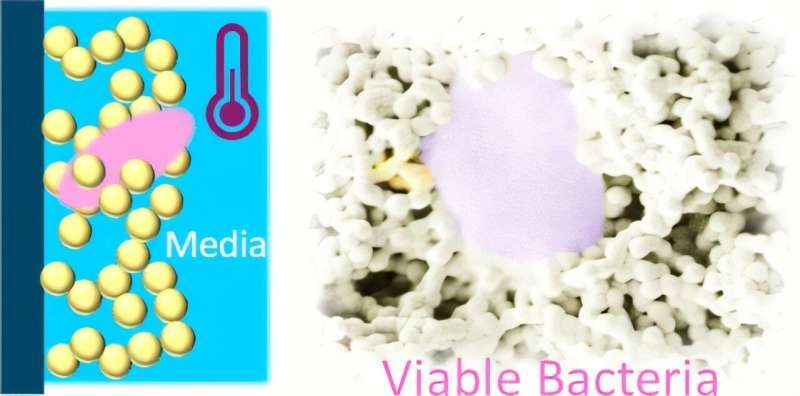
Researchers at the University of Surrey and the University of Warwick, England, have developed a new “permanently wet” coating method that could significantly improve wastewater treatment by implementing bacteria‑embedded coatings as a more compact and efficient alternative to traditional biological processes. The research, which was published in ACS Applied Materials & Interfaces, highlights how conventional methods of applying biocoatings, or thin layers of polymer that contain living bacteria, require the coating to be dried in warm air after manufacturing. This process ends up killing most of the bacteria.
This new method keeps the bacteria submerged throughout the entire manufacturing process, increasing survival rates by up to 500 times and allowing them to remain active within a durable, porous coating. These coatings could be applied to treatment media or modular panels inside treatment systems, concentrating biological treatment activity into a smaller footprint and improving treatment performance compared to conventional large tank systems. This innovative process can provide a more modular, high-efficient treatment, but full-scale implementation will require consideration such as integration with existing infrastructure, long‑term durability, and operational performance under varying loading conditions. |
 |
|
Source |
|
|
|
|
|
|
The Water Research Foundation, in partnership with the California State Water Resources Control Board, announced the launch of seven new research projects funded through a $1.5 million grant to advance potable and non‑potable water reuse across California.
The multi‑year effort (2025–2030) focuses on improving treatment performance, validation, and regulatory implementation, including projects on reverse osmosis concentrate management, ultrafiltration virus removal, alternative treatment approaches for direct potable reuse (DPR), and improved pathogen reduction credits. By targeting key technical and regulatory challenges such as streamlining permitting and compliance, improving monitoring and validation protocols, and reducing uncertainty for reuse systems, the research aims to accelerate the adoption of safe, reliable, and sustainable water reuse solutions, helping utilities strengthen long‑term water resilience and delivering meaningful benefits to communities. |
|
|
|
|
Municipal water treatment is rapidly evolving, with new technologies such as smart sensors, AI‑driven process controls, and advanced treatment chemistries, offering utilities with improved real‑time monitoring, process optimization, and more efficient operations. These tools enable operators to move from reactive to proactive management, using continuous monitoring and predictive analytics to optimize chemical dosing, detect equipment issues early, and maintain compliance.
However, these innovations also bring practical challenges for utilities, including the need for reliable data management, ongoing sensor/process calibrations, operator training, and integration with existing systems. At the same time, increasing complexity from industrial discharges and emerging contaminants add an additional strain on treatment processes, meaning operators must balance the benefits of new technologies with implementation costs, operational risks, and system compatibility as they modernize their facilities. This article highlights what operators need to consider as they adapt to these new technologies.
|
|
Upcoming Events
A listing of webinars, symposia, and conferences relevant to this work. |
|
|
|
|
|
|
|
|
Water 2050: Innovative Technologies Shaping the Future of the Water Sector
June 10, 2026 / Virtual 11:00 - 12:30 Mountain Time Zone
American Water Works Association
This webinar will highlight AWWA’s Water 250 Strategic Implementation Team (SIT) efforts, showcasing case study results and strategies across five key focus areas, including digital infrastructure, cybersecurity, and equitable technology deployment. |
|
|
|
|
|
|
|
|
|
|
Drinking Water | Not Open Access
A Systematic Literature Review of Solutions for Shrinking Water Systems
Mahmood, O., & Lane, K. (2026). A systematic literature review of solutions for shrinking water systems. ACS ES&T Water, 6, 2684–2702. https://doi.org/10.1021/acsestwater.6c00191.
Why it's interesting: This study reviews various solutions for shrinking water systems, defined as systems experiencing long-term population decline, and highlights how reduced demand and revenue create serious technical, managerial, and financial (TMF) capacity challenges for operators. The authors found that regionalization and consolidation are the most studied and commonly applied strategies, helping smaller systems improve regulatory compliance, share operators and infrastructure, and reduce costs through economies of scale. However, the paper also shows that these strategies are not one-size-fits-all. Success depends heavily on community buy-in, governance structure, and geographic feasibility, and some systems may instead need to consider alternatives such as point-of-use/point-of-entry (POU/POE) treatment, rainwater harvesting, or decentralized systems (private wells) depending on local conditions.
This paper outlines the practical pros and cons of each approach and emphasizes that decisions must be system-specific. For example, POU/POE can help meet SDWA compliance for contaminants but adds long-term monitoring and maintenance burdens, while private wells reduce infrastructure costs but can increase water quality concerns. Across all strategies, the study reinforces that operators must evaluate their system’s TMF capacity, infrastructure condition, water quality challenges, and community preferences before making decisions. It also highlights the need for better data collection, long-term planning, and strong governance to maintain compliance and service reliability as systems shrink. |
|
|
Wastewater | Open Access
Treatment of real municipal wastewater in a sponge anaerobic baffled reactor with cultivation-based microbial characterization
Ullah, N., Sheikh, Z., Khan, M. S., Alotaibi, S. B., & Saddam. (2026). Treatment of real municipal wastewater in a sponge anaerobic baffled reactor with cultivation-based microbial characterization. Water Science & Technology, 93(9), 1346–1362. https://doi.org/10.2166/wst.2026.271.
Why it's interesting: This study evaluates a sponge anaerobic baffled reactor (SABR) for treating real municipal wastewater and shows how adding low-cost polyurethane sponge media can significantly improve biological treatment performance by increasing biomass retention and microbial attachment. The study highlights how the reactor was able to achieve 79% COD, 96% TSS, and 60% total nitrogen removal efficiencies, at an optimal hydraulic retention time of 8 hours, meeting discharge limits for key parameters like COD, TSS, and TN.
The sponge media (with >80% porosity) created more surface area for biofilm growth, helping maintain treatment performance even at shorter HRTs, while cultivation-based 16S rRNA microbial analysis identified diverse bacterial communities responsible for organic degradation and nutrient removal. However, phosphorus removal remained limited and may require additional post-treatment. Additionally, long-term performance, maintenance, and scale-up will still need to be evaluated. Overall, the study provides practical insight into how modifying existing anaerobic treatment processes can enhance performance and offer a more cost-effective, modular solution for municipal wastewater systems. |
|
|
Wastewater | Open Access
Addressing contaminants of emerging concern in the United States public water systems
Siame, T., Willis, A. B., Nyarko, A. J., Karimi, S., & Tonade, E. (2026). Addressing contaminants of emerging concern in the United States public water systems. Environmental Science and Pollution Research. https://doi.org/10.1007/s11356-026-37822-9.
Why it's interesting: This review looks at how US public water systems are dealing with contaminants of emerging concern (CECs), including PFAS, pharmaceuticals, agrochemicals, and personal care products, and highlights that many of these contaminants are widely detected in drinking water but remain unregulated or under‑regulated. The authors show how conventional treatment processes often do not fully remove trace organic contaminants, allowing substances like PFAS, hormones, and pharmaceuticals to remain throughout treatment and finished drinking water. A key finding is that regulatory capacity varies significantly by state, with only about 8% of states having strong, multi‑contaminant policy frameworks, while most states focus narrowly on PFAS or have limited monitoring and enforcement. This highlights a fragmented regulatory landscape and the need for more comprehensive approaches such as class‑based regulation, expanded monitoring (UCMR), and improved detection tools like high‑resolution mass spectrometry. |
|
|
|
|
Industry News |
|
AECOM selected to conduct PFAS pilot program for the Massachusetts Department of Environmental Protection
AECOM has been selected by the Massachusetts DEP to pilot and evaluate multiple emerging PFAS treatment and destruction technologies at municipal wastewater plants, generating real‑world data to identify effective and scalable solutions for reducing these contaminants.
Digital twin innovation cuts energy costs in water purification
Researchers at Oak Ridge National Laboratory developed a real‑time digital twin system for water purification that uses a virtual model to continuously optimize operations.
AI guardians: Bridging digital innovation and sustainability for cleaner water
Researchers have developed a new "twin transition" framework that uses artificial intelligence to monitor wastewater treatment in real time, ensuring environmental safety while maximizing resource recovery.
U.S. Geological Survey grant to fund ag study of PFAS in small watersheds
Penn State researchers, supported by a U.S. Geological Survey grant, are studying how PFAS move through small agricultural watersheds in the Chesapeake Bay region, focusing on how these contaminants accumulate in soil, water, and aquatic ecosystems.
New AI-Designed Materials Show Promising Potential to Remove "Forever Chemicals" from Drinking Water in Industry-First Breakthrough
Kemira, in partnership with CuspAI, has developed AI‑designed materials capable of removing PFAS from drinking water at trace concentrations, using generative artificial intelligence to rapidly design and screen thousands of novel, high‑performance materials. |
|
|
|
|
|
|
|
|
|
|
|
|
|
|
|
WaterOperator.org is a free service, grant-funded to support small community water and wastewater operators with comprehensive resources and information in one easy-to-use place. We also serve the 800+ training, primacy, and technical service organizations, by helping operators get to their information. We aren't selling or advertising anything. Call us at 1-866-522-2681 for assistance. |
|
|
|
|
|
Visit our other websites: |
|
|
|
|
|
|
|
Click here to unsubscribe | Sent to: _t.e.s.t_@example.com
Illinois State Water Survey, 2204 Griffith Drive, Champaign, IL 61820, United States |
|
|
|
|