DecentralizedWastewater.org Newsletter for May 2026
|
|
|
|
|
|
Updates from the National Onsite Wastewater Recycling Association (NOWRA)
|
 |
|
2026 Emerging Professionals Scholarship Applications Due May 31
NOWRA is seeking applicants for their 2026 Emerging Professionals Scholarships. The scholarship supports the professional development of both young and early career professionals in the sector. Two applicants will receive the scholarship, based on their aspirations and commitment to onsite/decentralized wastewater.
Applicants must be enrolled at least part time in a trade school, university, or college while pursuing a degree or certification in a topic related to wastewater treatment and/or environmental policy and management. Applicants must be under 35 years of age or have less than 5 years of experience in the onsite wastewater field.
The application window will close at 11:59 pm ET on May 31, 2026. The scholarship recipients will be announced at the 2026 Onsite Wastewater Mega-Conference in Westminster, Colorado.
|
| More information on the scholarship » |
|
Mega-Conference Call for Posters Open Until June 30
Speaking of the Mega-Conference, the organizers are accepting poster presentation abstract submissions until June 30, 2026. The Mega-Conference section of NOWRA's website contains guidelines for poster proposals and the poster submission form.
The conference will also feature a poster and oral presentation contest for Emerging Professionals.
|
| More information on poster submissions » |
|
|
|
|
|
|
|
|
We Hope to See You at the Private Well Conference!
|
|
|
 |
|
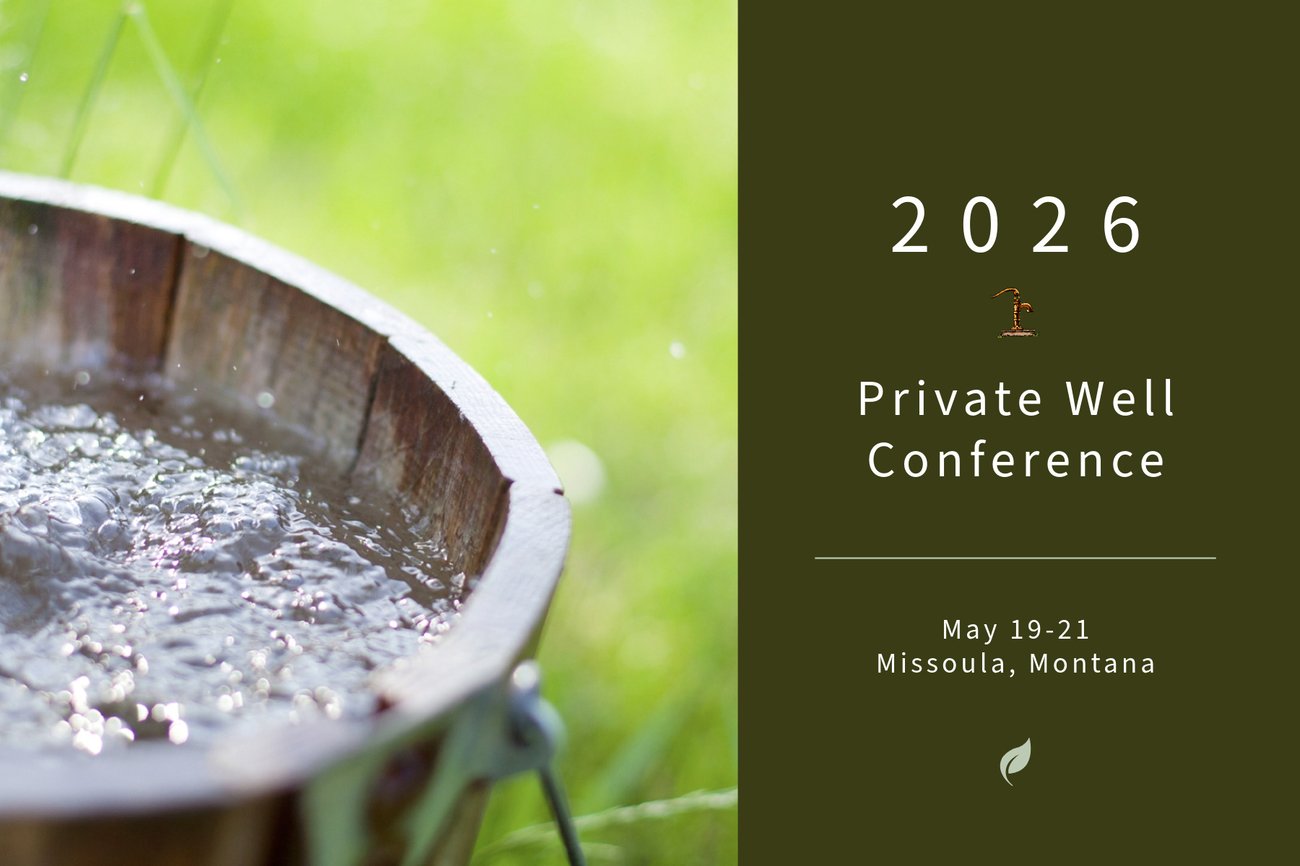
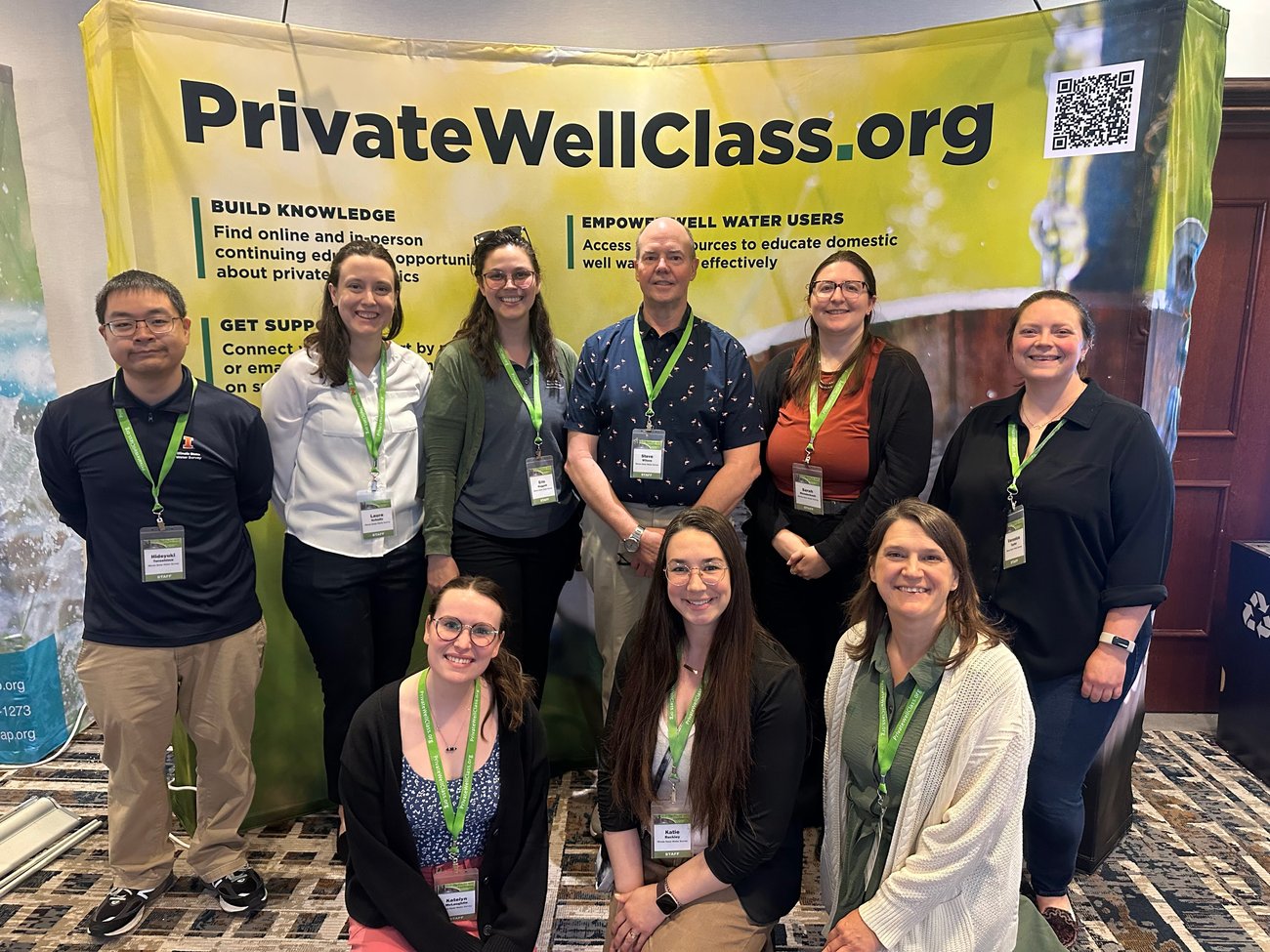
We hope to see some of you this week at our sister program's Private Well Conference in Missoula, Montana! Our teams have been working hard all spring and are so excited to share our program with the private well, septic system, and environmental health community from across the country.
For any last minute planning you need to do, follow these links to:
Please contact us at info@privatewellclass.org or at 1-866-945-0699 with any further questions. |
|
|
|
|
"Where Wastewater Systems Fail, Health Disparities Follow"
|
|
|
|
|
|
In the May 2026 edition of the National Environmental Health Association's Journal of Environmental Health, the disparities in children's health outcomes in the Black Belt Region of Alabama are explored in the journal's cover story. The article connects the major challenges the region faces in managing household wastewater with the higher rates of adverse health conditions that are associated with environmental exposure to fecal pathogens. Conditions including sepsis, asthma, and anemia are found in children at higher rates in Alabama's Black Belt.
The article's authors came to the conclusion that better understanding the health impacts of the region's wastewater challenges (which include failing septic systems and straight-pipe waste disposal) is needed to determine the best interventions to address these issues.
Follow the link in the button below to find both English- and Spanish-language versions of the Journal of Environmental Health. |
|
|
|
|
|
|
TT073 – Behind the Scenes of Water and Environment Reporting
|
|
|
 |
|
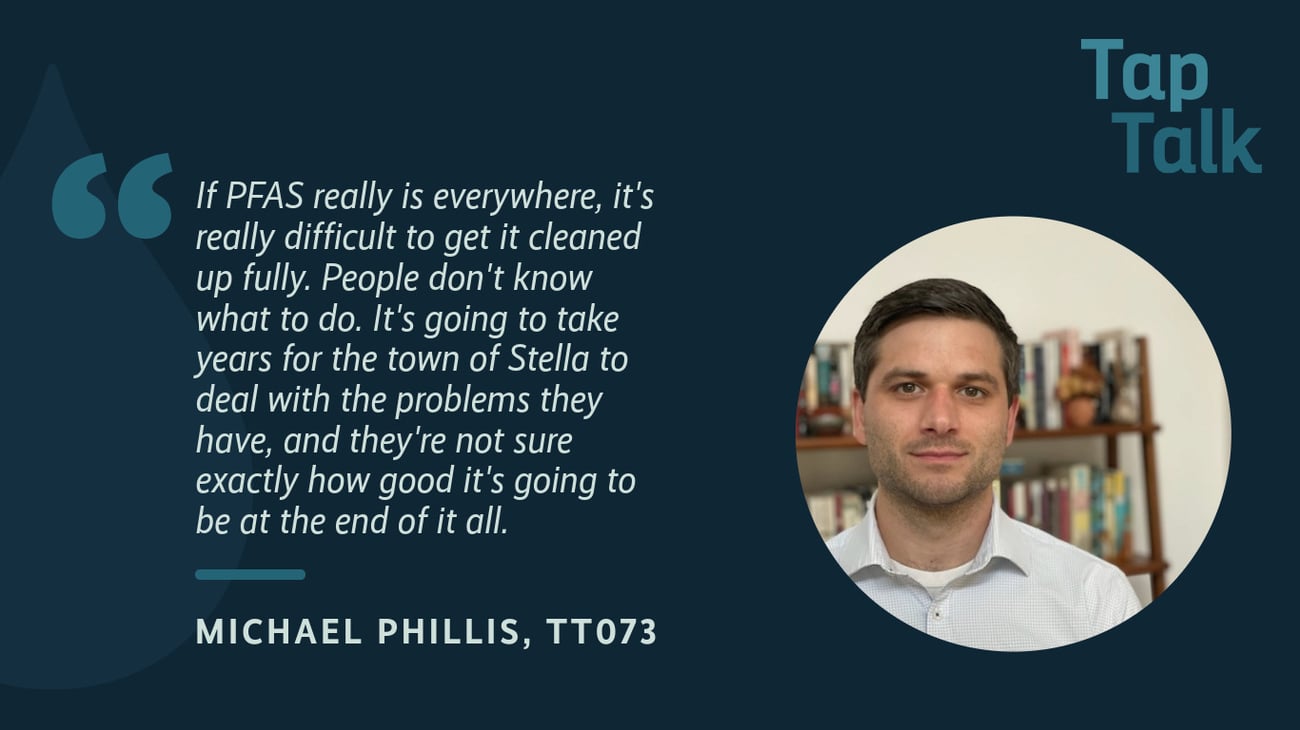
Tap Talk Season 7 is here! Check out the first episode of the season, which features water & environment journalist Michael Phillis of the Associated Press. Michael has reported a number of important water stories for the AP, including a recent long-form investigation of PFAS contamination in drinking water wells near industrial pollutant sources. Michael tells Jennifer & Steve about the process of reporting that story, how he became an environmental journalist, how scientists and journalists can have productive dialogues, and more.
You can listen at the Tap Talk website, linked in the button below, or find the show on audio platforms such as Spotify, Apple Podcasts, iHeartRadio, Amazon Music, and Audible. |
| Listen to TT073 on our website » |
|
|
|
|
|
|
Featured Webinars & Training |
|
|
|
Encore: Commercial Conundrums
May 20 | 1:00 pm ET | Infiltrator Water Technologies (IWT)
Onsite wastewater systems can face challenges when dealing with commercial facilities, the usual suspects can include higher flow rates, highly variable flows, large peak flows, high strength waste, and difficult waste composition. This presentation will help designers, engineers, and contractors be able to recognize and respond properly for an improved system design, installation efficiency, and how best to cover their liabilities.
Register to attend with IWT »
|
|
|
|
Pumps 101
May 27 | 9:00 am PT | Orenco Systems
Wastewater pumps are an integral part of most onsite septic systems, and they come in all shapes and sizes. In this webinar, Orenco will cover the differences between various types of pumps and explain how to size and use pumps for onsite systems.
Register to attend with Orenco »
|
|
|
|
Tribal Online Training:
Managing Septic Systems in a Changing Climate
June 3 | 12:00 pm ET | Environmental Finance Center Network (EFCN)
This training will examine how decentralized wastewater systems operate and how changing climate patterns are affecting their reliability. Participants will learn practical approaches for monitoring and inspecting septic systems, understanding the implications for community health and culturally important resources. The session will also cover practical strategies and resources for supporting homeowners, strengthening system oversight, and developing long-term planning initiatives.
Register to attend with EFCN »
|
|
|
|
Septic System Challenges Across Scales:
Collaborative Approaches to Outreach and Management
June 9 | 12:30 pm ET | Environmental Finance Center Network (EFCN)
This free session explores the role of watershed-based groups, local governments, counties, and academic institutions in improving septic system management. Using examples from New York State, panelists will share the partnerships and management strategies that they have used to strengthen outreach, support homeowners, and address shared water quality challenges. It also discusses opportunities for future collaboration to address the governance and public education barriers that persist in onsite wastewater management.
Register to attend with EFCN »
|
|
|
|
|
Highlights from Onsite Installer Magazine
|
|
|
|
Turning Sustainability Into a Competitive Advantage
Sustainability is often seen as a constraint in business operations, especially for fields like construction. In this article for Onsite Installer, representatives of the Association of Equipment Manufacturers outline how using sustainable business practices can actually be a competitive advantage. They cover how sustainability can transform a project, how technology can be an enabler, and steps to get started at your business.
|
| Read at Onsite Installer » |
|
|
|
|
|
When the Power Goes Out
Make It Clear | Orenco Systems
What happens to a septic system or other onsite wastewater system when the power goes out? That's the focus of this episode of Orenco's Make It Clear podcast. The hosts also explain why some system setups are more vulnerable than others, the differences between these systems, and the steps that septic users can take to protect their systems when the power is out.
|
| Listen at the Orenco website » |
|
|
|
|
|
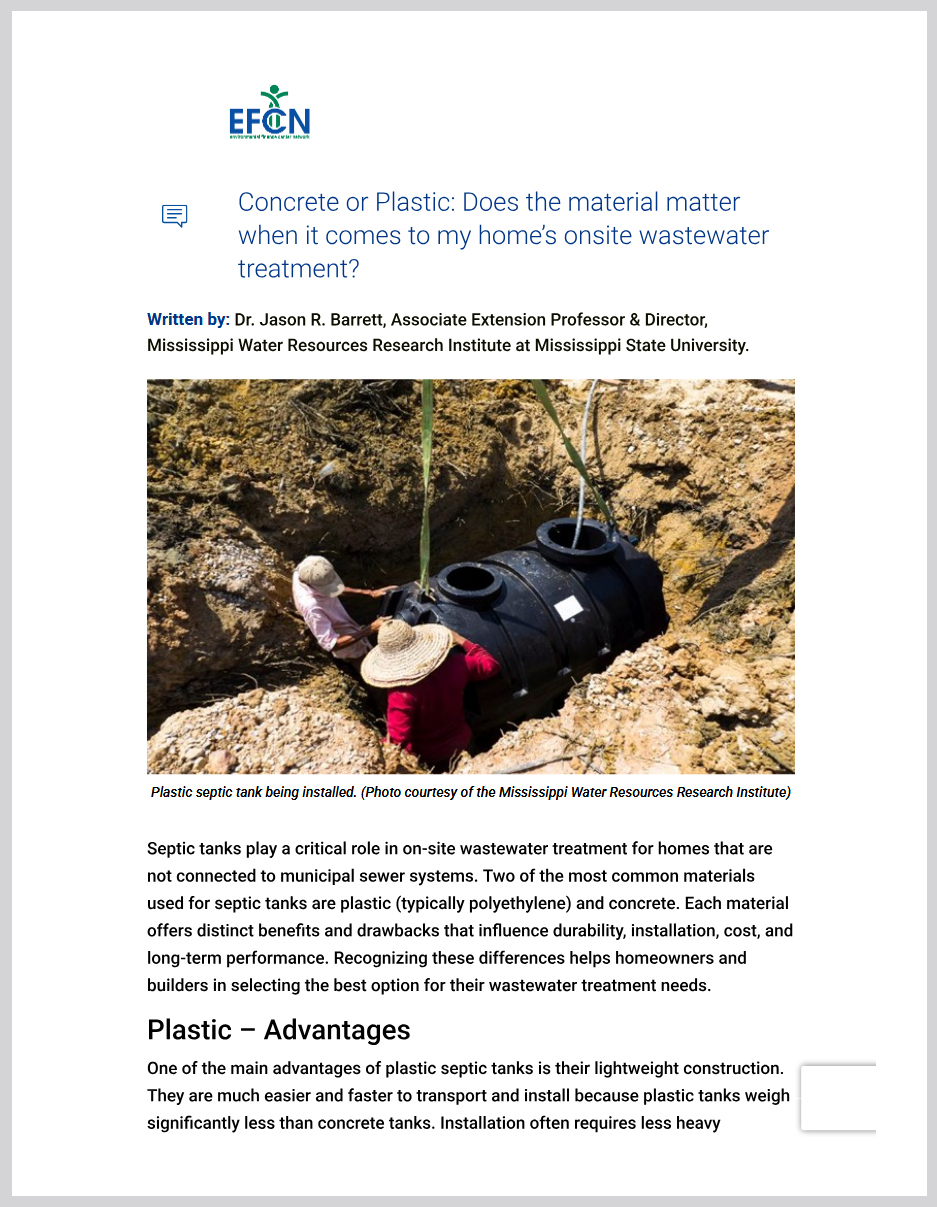
Concrete or Plastic: Does the material matter when it comes to my home’s onsite wastewater treatment?
Environmental Finance Center Network (EFCN)
For those who need guidance to better understand the nuances of the materials used in building an onsite wastewater treatment system, point them to this blog post from EFCN. It breaks down concrete and plastic — from the pros and cons of each to the financial considerations.
|
| Read at the EFCN website » |
|
|
|
|
|
|
|
Visit our other websites: |
|
|
|
|
|
|
|
Click here to unsubscribe | Sent to: _t.e.s.t_@example.com
Illinois State Water Survey, 2204 Griffith Drive, Champaign, IL 61820, United States |
|
|