|
Newsletter #150 for July 2026 |
|
|
|
|
 |
EPA Announces $227 Million for Tribal Water Infrastructure Improvements |
|
The U.S. Environmental Protection Agency (EPA) has announced more than $227 million in funding to help American Indian Tribes and Alaska Native Villages improve drinking water and wastewater infrastructure. The investment is designed to strengthen public health protections, support environmental stewardship, and expand access to safe, reliable water services in tribal communities.
According to EPA's Assistant Administrator for Water, Jess Kramer, the funding reflects EPA’s ongoing commitment to working closely with Tribal partners to protect human health and ensure access to clean drinking water and effective wastewater services.
The FY 2026 funding will be distributed through several federal programs, including:
- $71 million: Clean Water Indian Set-Aside (CWISA), including $4.5 million for CWISA Emerging Contaminants (CWISA-EC)
- $134 million: Drinking Water Infrastructure Grants
- $19 million: Emerging Contaminants in Small or Disadvantaged Communities (EC-SDC) Tribal Grant Program
- $3 million: Small, Rural, and Tribal (SmaRT) Drinking Water Assistance Grant Program (formerly known as the Small, Underserved, and Disadvantaged Communities (SUDC) Tribal Grant Program)
These resources can be used for critical infrastructure projects such as water system upgrades, wastewater treatment improvements, lead service line replacement, and addressing contaminants like PFAS. The funding also helps tribal communities meet Safe Drinking Water Act and Clean Water Act requirements while supporting long-term system sustainability. |
|
|
|
|
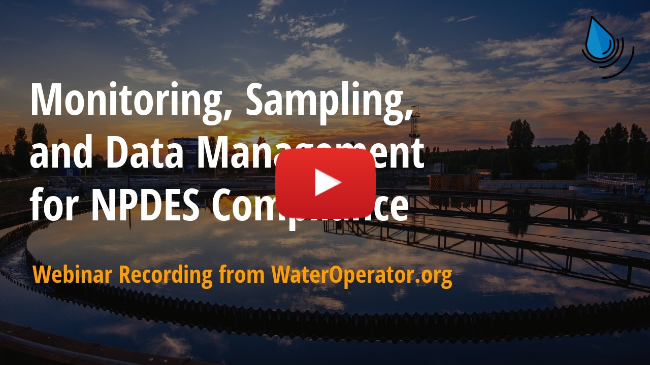 |
Missed our last webinar? Watch the recording! |
|
This webinar, recorded in June 2026, provides a practical overview of wastewater monitoring, sampling, and data management as they relate to National Pollutant Discharge Elimination System (NPDES) permits. It explores common compliance challenges, review best practices for collecting and managing discharge monitoring data, and learn about publicly available resources to support permit compliance. This recording also includes a demonstration of our free search tools at WaterOperator.org to find additional free resources and training events.
This webinar is part of a series that covers topics relevant to wastewater operators, including funding, asset management, compliance, and water quality.
For informational purposes only. We are unable to offer certificates for watching a video recording.
Recordings of our previous webinars:
|
|
|
|
|
EPA Removes Financial Barriers for Small Community Water Projects |
|
The U.S. Environmental Protection Agency (EPA) has announced a new initiative to make critical water infrastructure funding more accessible for small and rural communities. Beginning in fiscal years 2026 and 2027, the agency will waive key application fees associated with its Water Infrastructure Finance and Innovation Act (WIFIA) loan program, potentially saving eligible communities nearly $200,000 during the loan application process.
Under the new policy, communities with populations of 25,000 or fewer will no longer be required to pay the $25,000 WIFIA application fee. EPA will also waive the program’s credit processing fee, which currently averages about $156,000 per loan. According to the agency, these costs have often been a significant obstacle for small communities seeking funding for essential drinking water and wastewater projects.
EPA officials say the change is part of a broader effort to support small and rural communities by improving access to clean, safe drinking water and reliable wastewater services. The WIFIA program currently has approximately $11 billion in available financing and can cover up to 80% of eligible project costs, providing long-term, low-cost funding for major water infrastructure improvements.
The WIFIA program, established in 2014, is designed to accelerate investment in the nation’s water systems through flexible federal loans for regionally and nationally significant projects. EPA reports that the program’s active project pipeline is expected to generate billions of dollars in water infrastructure investments while supporting thousands of jobs across the country.
Communities interested in pursuing funding can currently submit letters of interest through the WIFIA program as EPA continues to expand access to these resources.
|
|
|
|
|
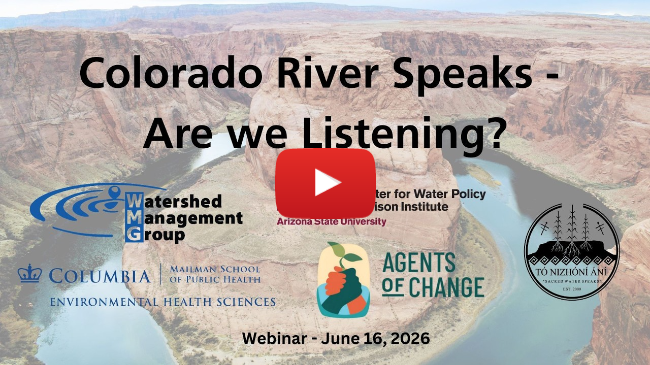
Colorado River Speaks - Are we Listening?
|
 |
|
"On June 16, 2026 Watershed Management Group, Agents of Change in Environmental Justice, Arizona State University's Kyl Center for Water Policy and Tó Nizhóní Ání came together to discuss the status of the Colorado River and the impacts it is having on Tribes in the Arizona and the Navajo Nation."
Find more videos like this on Watershed Management Group's YouTube channel. |
|
|
|
|
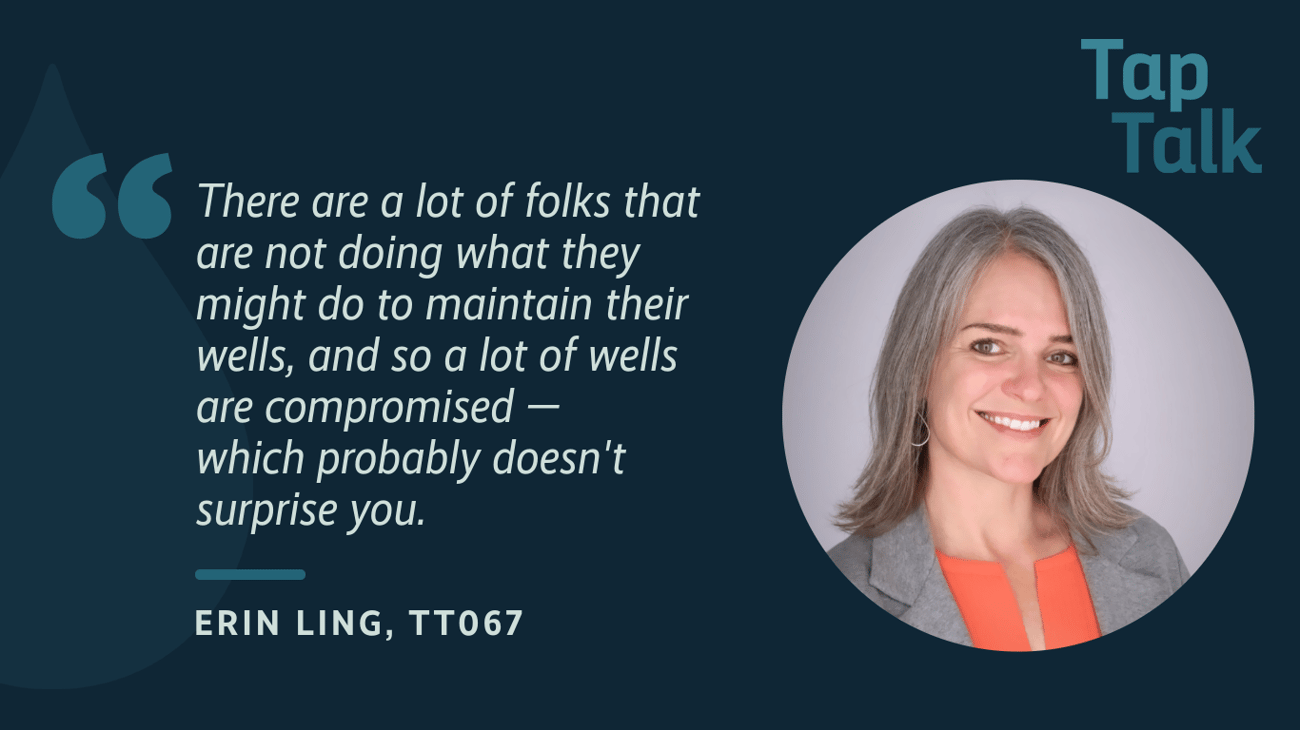 |
Tap Talk Episode 67
The Value of Well Data in Serving Well Owners
This week on Tap Talk we are pleased to welcome guest Erin Ling, a senior extension specialist at Virginia Tech University who coordinates the Virginia Household Water Quality Program (VAHWQP). The unique program provides a wealth of services to well owners in Virginia, including affordable testing, educational programming & workshops, water quality data collection & publication, and youth outreach for high school students. In particular, Erin emphasizes the value of the program’s data on Virginia’s private wells, and discusses with Steve and Jennifer how other states might learn from Virginia’s model. |
|
|
|
|
|
|
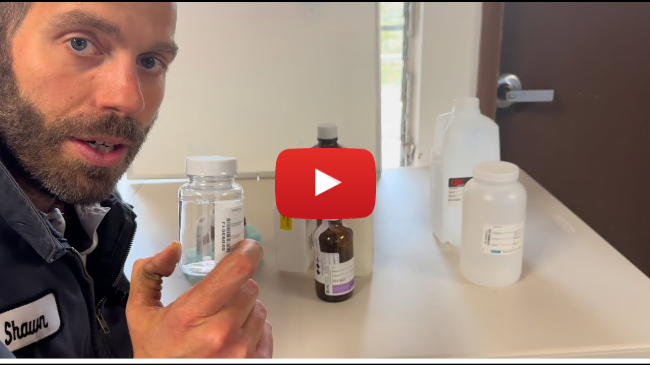
Wastewater Sampling Overview: Sample Types, Bottle Types, Labeling, and Chains of Custody
|
 |
|
"Welcome! I am a CA Grade 4 Wastewater Treatment Plant Operator and Chief Plant Operator. I also hold a CA D3 Drinking Water Distribution Operator Certificate and a CA T2 Drinking Water Treatment Plant Operator Certificate.
Today we discuss Wastewater Sampling! We go over grab samples, representative samples, composite samplers, labeling bottles, chains of custody, and discuss the different kinds of bottleware. This info is relevant to all grades and all levels of test takers out there. Like, subscribe, and comment any questions. Enjoy!"
Find more videos like this on The Wastewater Enthusiast's YouTube channel.
|
|
|
|
|
Featured Events for Tribal Water Systems |
|
|
|
Water Project Permits: Virtual Roundtable
July 15, 2026 | 11:00 AM Mountain Time
American Water Works Association, Indian Health Service
This free, interactive dialogue with leaders from water utility, legal, and the consulting sectors will take a closer look at key aspects and strategies for successfully managing the challenges in navigating federal permitting and review processes for water utility projects.
As water utility leaders know, large capital projects often trigger federal environmental review requirements, either because they require a federal permit or because they might receive federal funding. In addition, requirements have shifted significantly due to Supreme Court decisions, regulatory overhauls, executive orders, and more.
This program will provide attendees with up-to-date information from experts on permitting aspects of the National Environmental Policy Act (NEPA), the Clean Water Act (CWA), and more. Practitioners will share how they’ve overcome the risks and challenges of permitting to deliver essential infrastructure projects. |
|
|
|
Designing Affordability Programs
July 22, 2026 | 11:00 AM Mountain Time
American Water Works Association, Indian Health Service
This free webinar builds on an AWWA Journal article that demonstrates how utilities can utilize existing operating information to inform the development, tracking, and refinement of programs for low-income customers. Presenters will discuss examples of how utilities are proactively using these metrics. |
|
|
|
The Modern Leak Detection Ecosystem
July 30, 2026 | 11:00 AM Mountain Time
American Water Works Association, Indian Health Service
For today's aging water systems, achieving meaningful reductions in real water loss requires more than isolated fixes—it demands a truly holistic, system-wide approach. In this free webinar, we’ll explore how to embed leak detection across every stage of the distribution network and build a comprehensive, end-to-end strategy using the most effective tools available.
Our expert panelists will review the full lifecycle of leak detection, highlighting both the latest innovations and traditional practices at each stage. You’ll learn how each tool fits into an integrated strategy and how leading utilities are combining these technologies to proactively reduce real water loss and optimize system performance. Whether you’re launching a new leak detection program or looking to optimize a mature one, this session will deliver practical, actionable insights to strengthen your leak detection capabilities and drive measurable, sustained reductions in real water loss. |
|
|
|
|
|
|
|
|
|
Recent Blog Posts at WaterOperator.org |
|
|
 |
|
Lagoon Wastewater Systems Practical Tools and Resources for Compliance
Read Here » |
|
|
 |
|
Energy Optimization and Cost‑Saving Strategies for Wastewater Utilities
Read Here »
|
|
|
|
|
|
Groundwater & Well Care for Public Water Systems is a free online course from WaterOperator.org. Certificates are provided and the course is currently pre-approved for 2 hours continuing education credit in a number of states.
Click here to learn more. |
|
|
|
|
|
WaterOperator.org is a free service, grant-funded to support small community water and wastewater operators with comprehensive resources and information in one easy-to-use place. We also serve the 800+ training, primacy, and technical service organizations, by helping operators get to their information. We aren't selling or advertising anything. Call us at 1-866-522-2681 for assistance. |
|
|
|
|
|
Visit our other websites: |
|
|
|
|
|
|
|
View archive of past issues. | Click here to unsubscribe | Sent to: _t.e.s.t_@example.com
Illinois State Water Survey, 2204 Griffith Drive, Champaign, IL 61820, United States |
|
|