|
Newsletter #426 - February 17, 2026 |
|
|
|
|
 |
Upcoming Compliance Deadlines: RRAs & ERPs |
|
As compliance deadlines approach, now is a great time to review America's Water Infrastructure Act (AWIA) section 2013 to ensure your system is on track. AWIA requires all community water systems serving more than 3,300 people to complete a certified Risk and Resilience Assessment (RRA) and update their Emergency Response Plan (ERP) within the established five‑year cycle. To assist with this, U.S. EPA continues to offer tools, templates, and technical assistance to help systems strengthen physical security, cybersecurity, and overall resilience.
Below is a reminder of the upcoming deadlines to help you stay in compliance and plan ahead:
Risk and Resilience Assessments (RRA)
Due by June 30, 2026
Emergency Response Plans (ERP)
Due six months after your RRA submission
If you have already submitted or certified completion of your plans, no further action is needed at this time.
Further Resources:
NOTE: Systems that serve less than 3,301 people are not required to certify the completion of these plans to U.S. EPA but are encouraged to conduct RRAs and ERPs in order to prepare for potential risks or emergencies. |
|
|
|
|
 |
Register for our upcoming webinar! |
|
Workforce Development & Succession Planning for Wastewater Utilities
February 24, 2026 | 10:00 AM Central
This webinar will provide an overview of workforce development and best practices for building a stronger workforce, including recruitment, training, and retention. It will include a review of publicly available resources to navigate current workforce challenges and demonstration of our search tools at WaterOperator.org to find additional free resources and training events.
This webinar series from WaterOperator.org covers topics relevant to wastewater operators, including funding, asset management, compliance, and water quality.
Certificates of attendance will be delivered upon request. Check with your certification body for acceptance criteria. |
| Register Now! |
|
|
|
|
 |
The Elimination of PFAS from Drinking Water in Two Arizona Communities |
|
The Arizona Department of Environmental Quality (ADEQ), in partnership with the City of Globe and the Town of Star Valley, has completed four major PFAS mitigation projects that bring affected communities into compliance with the EPA’s new drinking water standards well ahead of the federal deadline. With support from Governor Katie Hobbs’ $5 million investment, the state linked small water systems with PFAS contamination to nearby municipal systems that already meet federal requirements. This approach was chosen because it offers long-term cost savings and helps communities avoid the much higher expenses associated with building and maintaining PFAS treatment systems.
The new interconnections now provide safe drinking water to more than 300 residents, and additional work is underway to expand protections to even more households in 2026. Local leaders praised the effort for improving public health and strengthening trust in local water supplies. These projects represent a significant step in ADEQ’s broader statewide strategy, which also includes $84 million in federal funding to evaluate and address PFAS contamination across Arizona.
|
|
|
|
|
Featured Video |
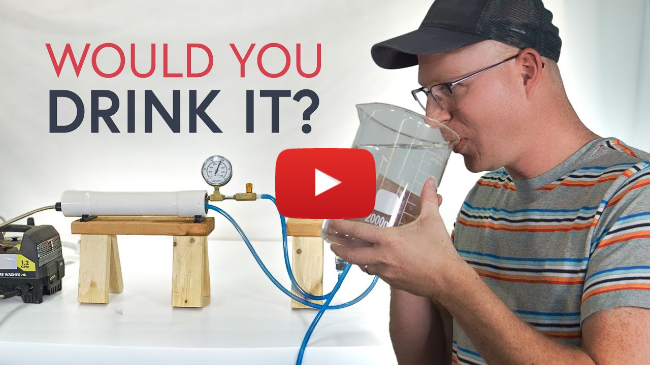 |
Why Is Desalination So Difficult?
Practical Engineering
"An overview of seawater desalination: removing salt to make drinkable water from the ocean.
It might surprise you to learn that there are more than 18,000 desalination plants operating across the globe. But, those plants provide less than a percent of global water needs even though they consume a quarter of all the energy used by the water industry. The oceans are a nearly unlimited resource of water with this seemingly trivial caveat, which is that the water is just a little bit salty. It’s totally understandable to wonder why that little bit of salt is such an enormous obstacle.
Fact Correction: The Carlsbad plant produces 50 MGD, which is roughly 190,000 cubic meters per day (not 23,000 as stated in the video)."
|
|
|
|
|
Apply for the WEF Operator Scholarship! |
|
The WEF Operator Scholarship provides funding up to $5,000 dollars for individuals who are seeking water sector operator education, training, or certification to enter the industry or to advance their knowledge, skills, abilities or license.
Application Requirements and Criteria:
-
Individuals seeking an entry-level operator’s license
-
Or, an entry or experienced operator seeking professional development in the following areas:
-
Completed online application including a brief essay on your experience and career goals.
Applications are open until March 31, 2026, and will close at 11:59 PM ET |
| Learn More |
|
|
|
|
Featured Video |
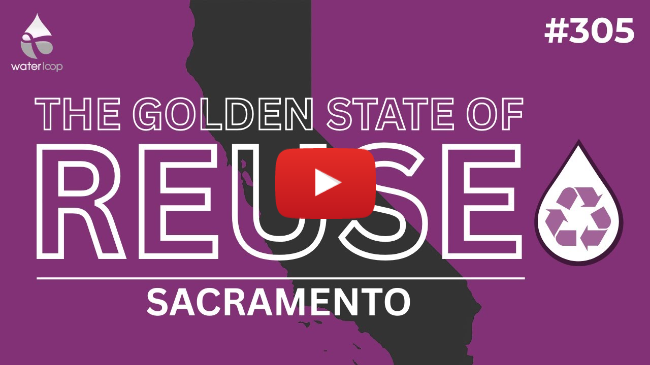 |
Carrots & Sticks: How Regulations Are Shaping Sacramento's Water Reuse
waterloop
"In Sacramento, the shift to viewing wastewater as a critical resource is transforming regional water security and ecological health. In this episode, Christoph Dobson, General Manager of Sacramento Area Sewer District, explains how the landmark $1.7 billion EchoWater project has elevated treatment standards to tertiary levels, protecting the sensitive Bay Delta while creating a massive new supply of recycled water.
This advanced infrastructure enables the Harvest Water project, which will deliver 50,000 acre-feet of reclaimed water annually to 16,000 acres of farmland, effectively reducing groundwater pumping and restoring local aquifers by up to 35 feet over the next 15 years. By leveraging state revolving fund loans and nearly $400 million in grants, the utility has successfully mitigated ratepayer impacts while simultaneously restoring 5,000 acres of riparian habitat and boosting streamflows for Chinook salmon.
These efforts demonstrate a scalable blueprint for agricultural reuse, turning environmental regulatory "sticks" into sustainable "carrots" that support both local economies and resilient ecosystems. This episode is part of The Golden State of Reuse, a series exploring the past, present, and future of water recycling across California."
|
|
|
|
|
|
|
|
Finding a Unicorn! Small Wastewater System Funding Series: Federal Award Management
February 24, 2026 | 1:00 PM ET
Environmental Finance Center Network
This free webinar will focus on the core aspects of managing a public award or loan including compliance, reporting and tracking allowable costs. This session will also cover typical federal award terms and conditions as well as updates to the federal uniform administrative guidance.
|
|
|
|
Water Sector Threat Briefing
February 26, 2026 | 2:00 PM ET
U.S. Environmental Protection Agency
The U.S. Environmental Protection Agency’s (EPA) Office of Water Emergency Response and Cybersecurity (OWERC), in partnership with the Water Information Sharing and Analysis Center (WaterISAC), Federal Bureau of Investigation (FBI), National Institute of Standards and Technology (NIST), and Cybersecurity and Infrastructure Security Agency (CISA) is offering a threat briefing that will be held virtually on February 26, 2026.
This free briefing will be unclassified, meaning that no clearance is required and it will provide an overview of information on the following topics related to drinking water and wastewater security threats and preparedness:
-
Potential threats to critical infrastructure (cyber and physical)
-
What to do in the event of a cyber or physical intrusion
-
Water security and preparedness products and services
|
|
|
|
Introduction to Cross-Connection Control & Backflow Prevention for Small Public Water Systems
March 5, 2026 | 1:00 PM ET
Rural Community Assistance Partnership
This free training introduces federal and state regulatory expectations, common sources of cross-connections, types of backflow prevention devices, inspection and testing requirements, and best practices for program implementation and documentation. Real-world examples and visual diagrams will be used to support understanding and field application. By the end of the session, participants will be able to recognize high-risk connections, understand basic device selection and maintenance, and strengthen compliance efforts to protect public health and water quality. |
|
|
|
|
|
|
|
|
|
|
Recent Blog Posts at WaterOperator.org |
|
|
 |
|
Essential Safety Resources for Wastewater Operators
Read Here » |
|
|
 |
|
Preparing for LCRI Compliance: Key Insights from NRWA
Read Here » |
|
 |
|
Community Engagement Resources for Wastewater Utilities
Read Here » |
|
|
|
|
|
Groundwater & Well Care for Public Water Systems is a free online course from WaterOperator.org. Certificates are provided and the course is currently pre-approved for 2 hours continuing education credit in a number of states.
Click here to learn more. |
|
|
|
|
|
|
|
|
|
WaterOperator.org is a free service, grant-funded to support small community water and wastewater operators with comprehensive resources and information in one easy-to-use place. We also serve the 800+ training, primacy, and technical service organizations, by helping operators get to their information. We aren't selling or advertising anything. Call us at 1-866-522-2681 for assistance. |
|
|
|
|
|
Visit our other websites: |
|
|
|
|
|
|
|
Click here to unsubscribe | Sent to: _t.e.s.t_@example.com
Illinois State Water Survey, 2204 Griffith Drive, Champaign, IL 61820, United States |
|
|
|
|